
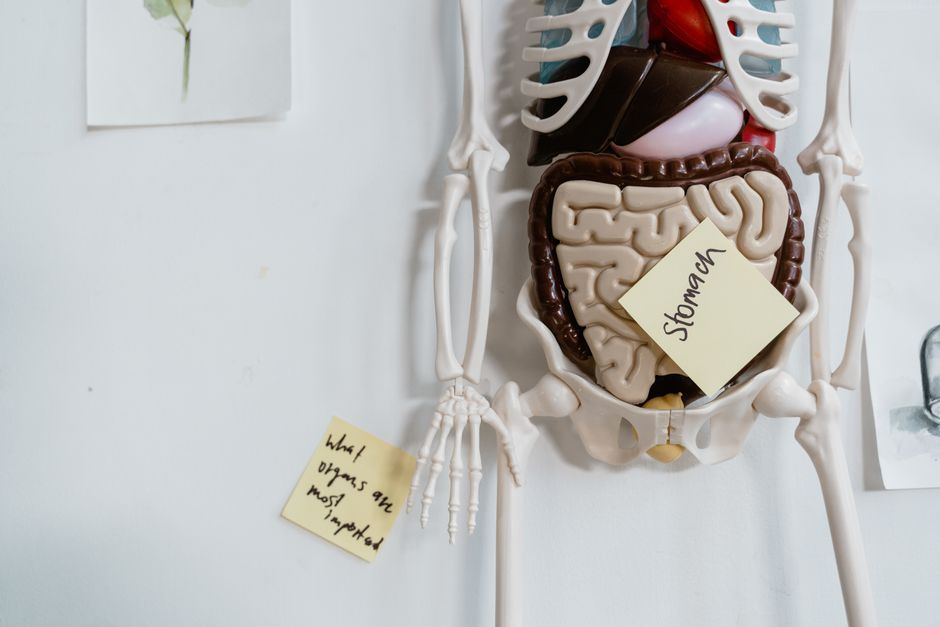
Your stomach is a muscular pouch that holds roughly 1 to 1.5 liters when relaxed and empty, and it can stretch to hold about 3 to 4 liters after a large meal. The empty stomach is small — about the size of your closed fist. It does not stay that size. The stomach is one of the most elastic organs in the body, and its size changes constantly depending on what and how much you eat.
How Big Is Your Stomach Really, and How Much Can It Hold?
A completely empty stomach is a collapsed, folded tube. It holds only a few tablespoons of fluid at rest. When you eat, the walls expand to accommodate the food, and the folds flatten out. A comfortable meal might fill it to about 1 liter. A very large meal can push the volume to 3 or 4 liters.
The stomach has two main regions. The upper portion, called the fundus, is the stretchy part. It relaxes and balloons to hold food. This is called receptive relaxation, and it happens automatically before and during eating. The lower portion, called the antrum, is more muscular. It mixes food with digestive juices and pushes it into the small intestine.
Because the fundus does the stretching, the stomach can expand far beyond its resting size without any damage. This is normal. It is not a sign of anything wrong.
Does Your Stomach Stretch Permanently If You Eat a Lot?
No. The stomach returns to its resting size after food moves through. It does not stay stretched.
There is a common belief that people who eat large amounts have permanently larger stomachs. This is partly true but often misunderstood. Research on gastric capacity shows that people with obesity tend to have a larger fasting stomach volume than people of average weight. But the stomach still shrinks back when empty. The difference is in how much it can comfortably hold before signaling fullness.
The stomach wall is made of smooth muscle. Like any muscle, it can adapt over time with repeated stretching. Someone who regularly eats very large meals may feel comfortable with more food before feeling full. Someone who eats smaller meals regularly may feel full sooner. This is a change in sensation and capacity, not a permanent structural change.
When someone loses a large amount of weight, the stomach’s maximum capacity tends to decrease. This is one reason weight regain is not simply about willpower — the physical sensation of fullness changes with body weight.
Why Does Your Stomach Feel Smaller After Eating Less?
Your stomach does not shrink in the way a balloon shrinks when air is let out. The change is in how your brain and stomach communicate.
Stretch receptors in the stomach wall send signals to the brain when the stomach fills. These signals create the feeling of fullness. If you consistently eat smaller meals, those receptors become more sensitive. The same volume of food now triggers a stronger fullness signal.
Hormones also play a role. Ghrelin, often called the hunger hormone, rises before meals and falls after eating. Leptin signals satiety. These hormones respond to your eating patterns. Eating less over time can shift how these signals behave, though the effect varies from person to person.
The feeling of a “smaller stomach” is real. It is a change in signaling, not a change in physical size.





Can Your Stomach Burst From Overeating?
Rupture of the stomach from eating is extremely rare. It has been reported in medical literature, but it is not something that happens from a normal large meal. The stomach can hold several liters, and the body usually triggers vomiting or severe pain long before rupture occurs.
When stomach rupture does happen, it is typically associated with binge eating disorders, massive food intake in a short time, or certain medical conditions. It is a surgical emergency. This is not a risk for most people.
What is more common is severe discomfort, nausea, and reflux after overeating. These are uncomfortable but not dangerous for most healthy people.
How Does Stomach Size Compare to Other Digestive Organs?
The stomach is often pictured as a large organ, but it is modest compared to the small intestine. The small intestine is about 6 meters long. The large intestine is about 1.5 meters. The stomach is a holding tank, not the main site of digestion and absorption.
Most nutrient absorption happens in the small intestine. The stomach’s job is to store food, mix it with acid and enzymes, and release it slowly into the intestine at a controlled rate. That slow release is why you feel full for hours after a meal.
What Changes Stomach Size or Capacity?
Several factors affect how much your stomach can hold and how full you feel.
- Body weight: People with higher body weight tend to have a larger fasting stomach volume and may tolerate larger meals before feeling full.
- Eating habits: Regular large meals can increase comfortable capacity over time. Regular smaller meals can increase sensitivity to fullness.
- Weight loss surgery: Procedures like gastric sleeve or gastric bypass physically reduce stomach size or bypass part of it. This is a permanent change to anatomy.
- Age: Stomach capacity does not change much with age in healthy adults, but the speed of emptying can slow.
- Medical conditions: Conditions like gastroparesis affect how the stomach empties, not its size. Other conditions can cause swelling or fluid buildup.
Does Drinking Water Expand Your Stomach?
Water passes through the stomach quickly. It does not stretch the stomach the way food does. Drinking water with a meal can add volume temporarily and may increase fullness, but the effect is short-lived.
Some research suggests that drinking water before a meal may help reduce how much you eat. The effect is modest. It is not a weight loss strategy on its own.
Carbonated drinks are different. The gas in them can distend the stomach and create a feeling of fullness or bloating. This is temporary and not harmful for most people.
How Big Is Your Stomach Compared to What You Eat?
A typical meal of about 1 liter of food and liquid fills the stomach comfortably. That is roughly the size of a large bowl of soup plus a glass of water. A holiday dinner might reach 2 liters or more. The stomach handles this by stretching and by slowing its emptying.
The sensation of being “stuffed” comes from stretch receptors and from the volume of food. It is not a sign that the stomach is at its limit. The limit is much higher than most people ever reach.
Understanding this helps explain why portion sizes matter. The stomach can hold more than you need. The feeling of fullness is a signal, not a measurement of how much space is left.
Frequently Asked Questions
How big is your stomach when it is empty?
An empty stomach is about the size of your closed fist and holds only a few tablespoons of fluid. It is collapsed and folded, not a large empty bag.
Can your stomach shrink if you eat less?
Your stomach does not shrink in physical size, but it can become more sensitive to fullness signals. This makes you feel full with less food over time.
How much food can your stomach hold?
A relaxed stomach holds about 1 to 1.5 liters, and it can stretch to hold 3 to 4 liters after a very large meal. Most meals fill it to about 1 liter.
Is it possible to stretch your stomach permanently?
No, the stomach returns to its resting size after food leaves. However, regular large meals can increase how much you can comfortably eat before feeling full.
