
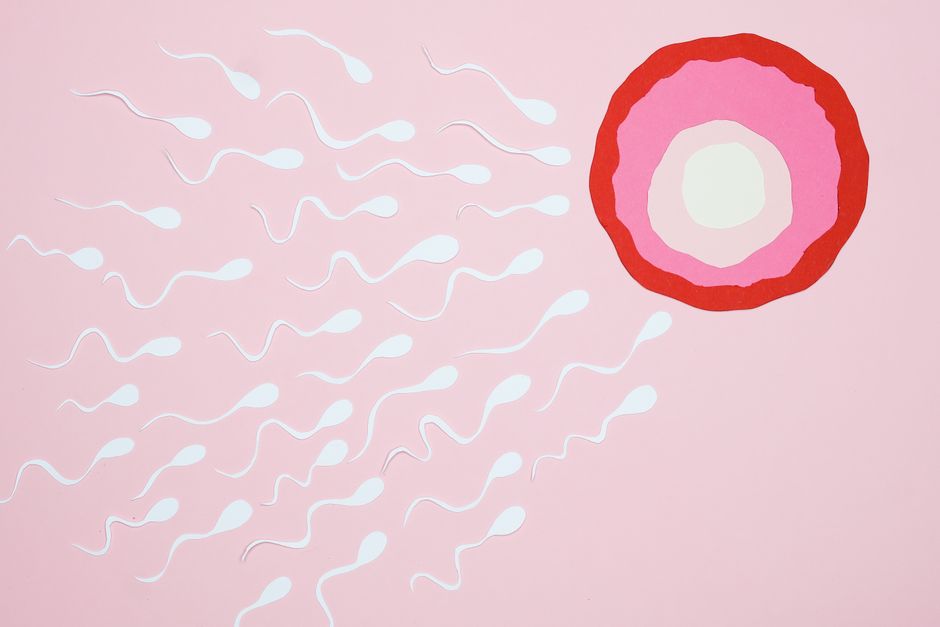
How big is a sperm cell? The head of a human sperm cell is about 5 micrometers long and 3 micrometers wide — roughly 1/20th the width of a human hair. The tail adds another 45 to 50 micrometers, giving the whole cell a total length of about 50 micrometers. That makes sperm one of the smallest cells in the human body, yet every part of its structure is built for a single purpose: reaching and fertilizing an egg.
How Big Is A Sperm Cell Compared to Other Human Cells?
Sperm cells are among the smallest human cells, but not the smallest. That distinction belongs to red blood cells, which are about 7 to 8 micrometers in diameter but shaped as flat discs rather than elongated cells.
Size matters here because a sperm cell is essentially a delivery vehicle. It carries genetic material and almost nothing else. Compare that to a human egg cell, which at roughly 100 micrometers in diameter is one of the largest cells in the body. A sperm is about 20 times smaller than the egg it needs to fertilize. That size difference is one of the most dramatic in human biology.
For context, here is how a sperm cell compares to other well-known cells:
| Cell Type | Approximate Size |
|---|---|
| Sperm cell (head) | 5 micrometers long, 3 micrometers wide |
| Sperm cell (total, including tail) | About 50 micrometers |
| Red blood cell | 7–8 micrometers in diameter |
| Human egg cell (ovum) | About 100 micrometers in diameter |
| Typical body cell (somatic cell) | 10–30 micrometers |
This table uses well-established measurements from standard histology and reproductive biology references. Individual sperm can vary slightly, but the range is narrow.
What Are the Main Parts of a Sperm Cell?
A sperm cell has three distinct regions: the head, the midpiece, and the tail. Each has a specific job, and each is structurally suited to that job.
The head contains the nucleus, which holds the father’s genetic material in the form of tightly packed DNA. It also contains the acrosome, a cap-like structure filled with enzymes. When the sperm reaches the egg, those enzymes help it penetrate the egg’s outer layer. The head is covered by a thin membrane that plays a role in recognizing and binding to the egg.
The midpiece sits just behind the head. It is packed with mitochondria — the energy-producing structures of the cell. These mitochondria generate the ATP that powers the tail’s movement. Interestingly, the midpiece is relatively short compared to the tail, but it is densely packed with these energy generators.
The tail (also called the flagellum) is a long, whip-like structure that propels the sperm forward. It is made of a core of microtubules arranged in a specific pattern — a 9+2 arrangement that is common to cilia and flagella across many species. The tail beats in a wave-like motion, pushing the sperm through fluid.
One non-obvious detail: the sperm’s mitochondria are inherited from the father but are typically destroyed after fertilization. This means mitochondrial DNA is almost always passed down from the mother, not the father. That is why mitochondrial DNA testing for ancestry traces maternal lines only.
How Does Sperm Structure Support Its Function?
Every structural feature of a sperm cell exists to help it swim and fertilize. The streamlined shape reduces drag. The tail provides propulsion. The midpiece supplies energy. The acrosome carries the tools to break through the egg’s protective layers.
The sperm’s journey is demanding. From the cervix to the fallopian tube, it must navigate cervical mucus, the uterus, and the narrow fallopian tube. Most sperm do not survive this trip. Those that do rely on the tail’s rhythmic beating and on chemical signals from the egg that guide them — a process called chemotaxis.
Once a sperm reaches the egg, the acrosome releases its enzymes to digest a path through the zona pellucida, the egg’s outer coat. The sperm membrane then fuses with the egg membrane, and the sperm’s nucleus enters the egg. At that point, the egg immediately changes its outer coat to block other sperm from entering — a block to polyspermy.
The sperm’s structure is not just about movement. The head’s shape and membrane proteins are involved in binding to the egg. A sperm with an abnormal head shape may have difficulty fertilizing an egg, which is one reason why semen analysis includes evaluation of sperm morphology.





Does Sperm Size Affect Fertility?
Sperm size itself is not a standard measure of fertility. What matters more in clinical settings is sperm count, motility (movement), and morphology (shape). These are the three main parameters assessed in a semen analysis.
According to the World Health Organization’s reference values for semen analysis, a normal sperm concentration is at least 15 million sperm per milliliter, total sperm number at least 39 million per ejaculate, total motility at least 40%, and progressive motility at least 32%. Normal morphology — meaning a high percentage of properly shaped sperm — is at least 4% by strict criteria. These are reference limits, not guarantees of fertility or infertility. Many men with values below these thresholds father children, and many with values above them do not.
Sperm size can vary slightly, but there is no established clinical threshold where a sperm is “too small” or “too large” to function. The more relevant issue is structural defects — for example, a sperm with two tails, a coiled tail, or a misshapen head. These abnormalities can impair movement or egg penetration. However, even among fertile men, a large percentage of sperm are morphologically abnormal. The body produces far more sperm than needed, and only one is required to fertilize an egg.
If you are concerned about fertility, semen analysis is the standard first step. It is non-invasive and provides information about count, motility, and morphology. No test currently measures sperm size as a routine clinical parameter.
How Does Sperm Size Compare Across Species?
Human sperm are not unusually large or small compared to other mammals. In general, sperm size varies widely across species, and there is no simple relationship between body size and sperm size. For example, some fruit flies produce sperm that are several centimeters long — far longer than the entire fly. Some rodents also have exceptionally long sperm.
Human sperm are relatively small and follow the typical mammalian pattern: a compact head, a short midpiece, and a long tail. The size is suited to the environment of the female reproductive tract, where sperm must swim through viscous fluids and navigate narrow passages.
There is an evolutionary trade-off between sperm size and sperm number. Species that produce larger sperm tend to produce fewer of them. Humans produce millions of sperm per ejaculate, which aligns with a reproductive strategy that favors quantity over individual sperm size.
Can Sperm Size Change Over Time?
Sperm size is largely determined by genetics and the process of sperm production, called spermatogenesis. It does not change significantly in response to diet, lifestyle, or environmental factors. What can change is sperm count, motility, and morphology.
Factors that can affect sperm quality — not size — include temperature, smoking, alcohol use, certain medications, and some medical conditions. For example, prolonged exposure to high heat, such as frequent sauna use or tight clothing, can temporarily reduce sperm count. Smoking is associated with lower sperm count and poorer motility. These effects are on sperm production and function, not on the physical dimensions of individual sperm cells.
Spermatogenesis takes about 74 days in humans, followed by a period of transit through the epididymis where sperm mature and gain motility. This means any change in sperm quality — whether from a lifestyle change or a medication — may not show up in a semen analysis for about three months. That timeline is well established in reproductive medicine.
What Is the Clinical Relevance of Sperm Size?
Sperm size is not a routine clinical measurement. In fertility clinics, the focus is on sperm count, motility, and morphology. However, researchers do study sperm dimensions in the context of understanding fertilization and developing new diagnostic tools.
Some research has explored whether subtle differences in sperm head size or shape correlate with fertility outcomes. The evidence is mixed. No large clinical trial has established sperm size as a reliable predictor of fertility on its own. For now, size remains a descriptive feature rather than a diagnostic criterion.
If you are trying to conceive and have concerns, speak with a healthcare provider. A semen analysis can provide useful information, and a fertility specialist can help interpret the results. Do not rely on any single measurement — including size — to draw conclusions about fertility.
Frequently Asked Questions
How big is a sperm cell in micrometers?
A human sperm head is about 5 micrometers long and 3 micrometers wide, with a total length of about 50 micrometers including the tail. This makes it one of the smallest cells in the human body.
What are the three main parts of a sperm cell?
The three main parts are the head, which carries genetic material and enzymes; the midpiece, which provides energy; and the tail, which propels the sperm forward. Each part is structurally specialized for fertilization.
Does sperm size affect fertility?
No established clinical evidence shows that sperm size alone determines fertility. Fertility is better assessed through sperm count, motility, and morphology in a semen analysis.
How long does it take for sperm to mature?
Spermatogenesis takes about 74 days, followed by maturation in the epididymis. This means changes in sperm quality may take roughly three months to appear in a semen analysis.
