
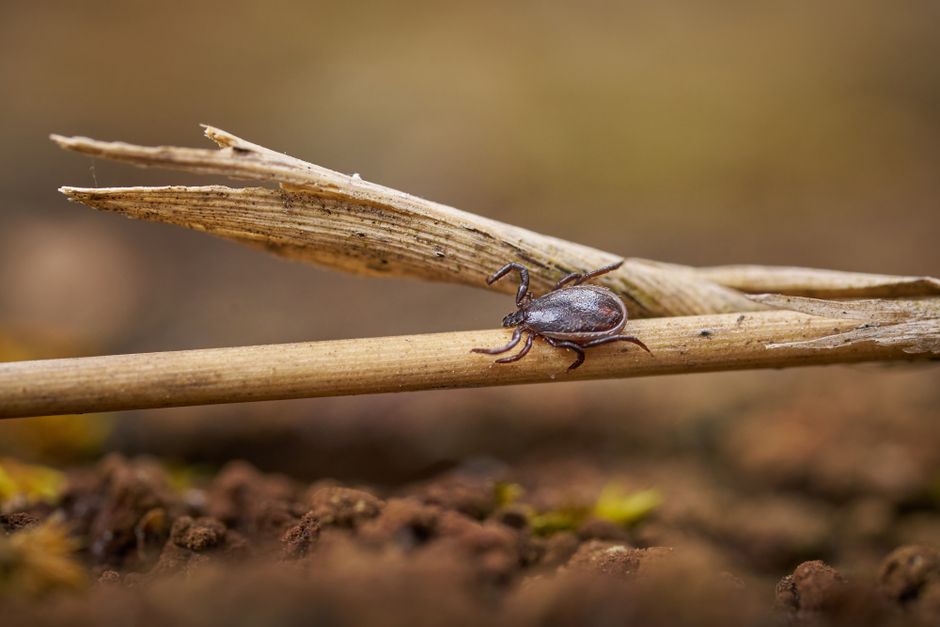
Most ticks you find on your skin are smaller than a sesame seed. The largest tick species in the world, however, can grow to roughly the size of a small grape when fully engorged with blood. That size difference is not a sign of a different creature — it is the same tick at a different stage of feeding.
Understanding how big ticks get matters for more than curiosity. Size is one of the main ways people identify what bit them, decide whether to worry, and figure out how long the tick was attached. It is also one of the most misunderstood things about them.
How Big Are Ticks Before and After Feeding?
A tick’s body is built to expand. The outer shell, called the cuticle, is flexible rather than rigid, which allows the tick to swell dramatically as it takes in blood. An unfed adult tick is flat and small. A fully fed one can be many times larger in volume.
Here is the general size range across the tick life cycle:
- Larva (seed tick): About the size of a poppy seed, roughly 0.5 mm. Nearly impossible to see or feel.
- Nymph: About the size of a poppy seed to a sesame seed, roughly 1 to 2 mm unfed.
- Adult unfed: About the size of a sesame seed to a small apple seed, roughly 2 to 6 mm depending on species.
- Adult fully engorged: Can reach 10 to 20 mm or more, depending on species and how long it fed.
The jump from unfed to fully fed is the part people find surprising. A tick that was almost invisible when it attached can look like a small bean a few days later. That change is normal and expected, not a sign of something unusual.
Why Do Ticks Get So Much Bigger When They Feed?
Ticks need a large blood meal to move to their next life stage or to reproduce. A single feeding can take several days, and the tick’s body expands continuously during that time.
The expansion is not just stretching skin. The tick’s internal organs and gut are designed to accommodate a huge volume of liquid relative to its starting size. Some tick species can take in a meal many times their own unfed body weight. The cuticle stretches to hold it.
This is also why a tick’s appearance changes so much during feeding. An unfed tick is flat and somewhat oval. As it fills, it becomes rounded and eventually almost spherical or bean-shaped, with a glossy, stretched surface. Color can shift too, often becoming lighter or grayish as the body swells.
A useful clarification: the tick does not grow in the way a caterpillar grows into a butterfly. It is the same animal, same size exoskeleton, just stretched by its meal. Once it detaches and digests, it returns to a smaller, flatter form.
Which Tick Species Get the Biggest?
Size varies widely by species. The largest ticks belong to the genus Amblyomma, sometimes called bont ticks or tropical bont ticks. Fully engorged females of some of these species are among the largest ticks known.
The tick often cited as the world’s largest is the Amblyomma species found in parts of Africa and other tropical regions. Fully fed females can reach close to the size of a small grape. These are not the ticks most people in the United States encounter.
In the US, the most common ticks people find include:
- Blacklegged tick (deer tick): Adults are small, roughly 3 to 5 mm unfed. Engorged females can reach about 10 mm.
- American dog tick: Adults are larger, roughly 5 to 6 mm unfed. Engorged females can reach around 15 mm.
- Lone star tick: Adults similar in size to the American dog tick. Engorged females can also reach around 15 mm.
- Brown dog tick: Adults roughly 3 to 5 mm unfed, engorged females around 12 mm.
These figures are approximate and can vary with the individual tick, how long it fed, and how much blood it took in. A tick that fed for only a day will be smaller than one that fed for several days.





Does Tick Size Tell You Anything About Disease Risk?
Size alone does not tell you whether a tick carries a disease. A tiny nymph and a large adult can both transmit infections. What matters more is the species, whether it was attached long enough to transmit anything, and whether the tick was carrying a pathogen.
That said, size does affect how likely you are to notice a tick at all. Nymphs are the stage most often missed because they are so small. Because they are hard to see, they can stay attached longer, which increases the chance of transmission for diseases that require a longer attachment time.
For Lyme disease specifically, the blacklegged tick must generally be attached for a prolonged period before transmission becomes likely. The exact timing is often described as roughly a day or more, though this can vary. The key point is that a tick you never noticed is a tick that had time to feed.
Adult ticks are easier to spot, so they are often removed sooner. This is one reason nymphs are considered a major driver of Lyme disease cases, even though they are smaller.
How Can You Tell How Long a Tick Was Attached?
You generally cannot tell exactly, but size gives a rough clue. A flat, unfed tick was likely attached for a short time. A tick that is noticeably swollen has been feeding for a while.
Rough stages of engorgement can help:
- Unengorged: Flat, no visible swelling. Likely attached recently.
- Partially engorged: Some swelling, body still somewhat oval. Probably attached for a day or more.
- Fully engorged: Round, glossy, much larger than unfed. Likely attached for several days.
These are estimates, not precise measurements. Feeding speed varies with tick species, life stage, and temperature. A tick in warm conditions may feed faster than one in cool conditions.
If you find a tick and are unsure how long it was attached, save it in a sealed container or take a clear photo. This can help a clinician or public health office identify the species if needed.
What Should You Do If You Find a Tick?
Remove it promptly using fine-tipped tweezers. Grasp the tick as close to the skin as possible and pull straight up with steady, even pressure. Do not twist, crush, or squeeze the body. Do not apply petroleum jelly, nail polish, or heat — these methods are not supported by evidence and can increase the risk of the tick regurgitating into the bite.
After removal, clean the bite area and your hands with rubbing alcohol or soap and water. Note the date you removed it.
Watch for symptoms over the following weeks. These can include a rash, fever, fatigue, muscle aches, or joint pain. A rash that expands over time is a well-known sign of Lyme disease, though not everyone who is infected develops one.
If you develop symptoms, contact a healthcare provider and tell them you were bitten by a tick and when. Early treatment is generally more effective for many tick-borne illnesses, so timing matters.
Not all tick bites lead to disease. Many do not. But because the consequences of a missed infection can be serious, it is reasonable to take any tick bite seriously and monitor for symptoms.
Frequently Asked Questions
How big can a tick get after feeding?
A fully engorged adult female tick can reach roughly 10 to 20 mm, and some tropical species can grow close to the size of a small grape. The exact size depends on the species and how long it fed.
Can a tick grow to the size of a grape?
Some large tropical Amblyomma species can approach that size when fully engorged. The ticks most people in the US encounter generally stay smaller, closer to a small bean.
Are bigger ticks more dangerous?
No, size does not determine whether a tick carries disease. A tiny nymph can transmit infections just as an adult can, and nymphs are often missed because they are so small.
How long does it take for a tick to get big?
A tick can become noticeably engorged within a day or two of attaching, and fully engorged over several days. Feeding speed varies with species, life stage, and temperature.
