
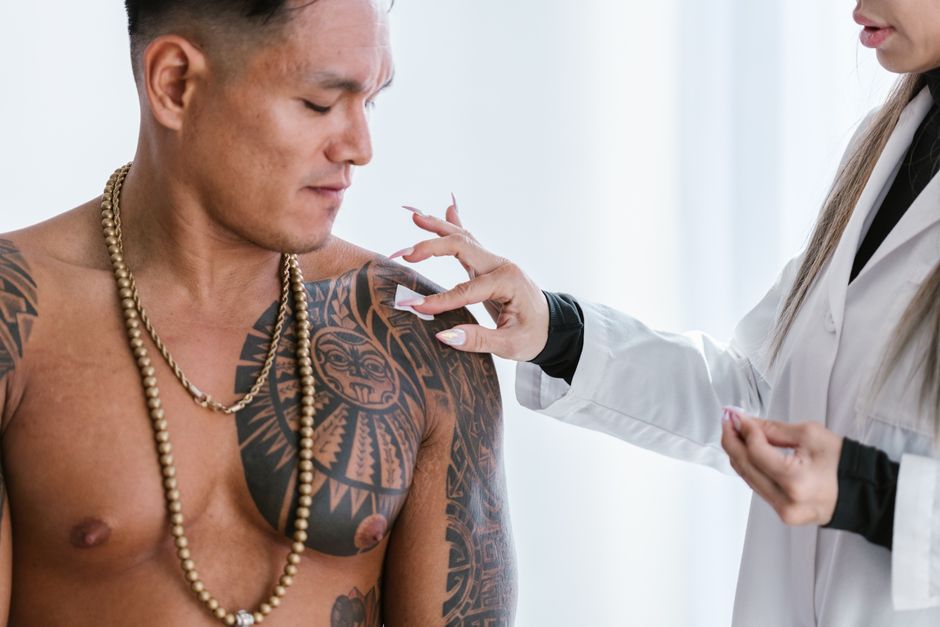
How bad a tattoo hurts depends mostly on where you get it and how long the session runs. Most people describe the pain as a persistent scratching or stinging sensation, not agony. Areas with thin skin and lots of nerve endings — ribs, sternum, collarbone, inner arm, hands, feet, and genitals — hurt the most. Fleshy areas like the outer upper arm, forearm, thigh, and buttocks hurt the least.
The pain is real but temporary. For most healthy adults, a tattoo feels uncomfortable rather than unbearable. Knowing what drives the sensation helps you plan the placement, the session length, and how to prepare.
What Does a Tattoo Actually Feel Like?
Most people compare it to a hot scratching sensation that repeats rapidly in the same spot. A tattoo machine drives a cluster of needles in and out of the skin many times per second, depositing ink into the dermis — the layer just below the surface. That rapid, repeated puncturing is what you feel.
The first few minutes often feel sharper. The body releases endorphins in response to skin injury, and many people find the sensation becomes more tolerable after the initial phase. The last stretch of a long session tends to feel worse again as the skin becomes raw and inflamed and the endorphin effect fades.
Different stages of the tattoo feel different. Lining and outlining, where the artist draws the main structure, tends to feel sharper and more intense than shading or coloring, which covers broader areas. Some people find the shading stage easier. Others find it more tiring because it lasts longer over the same region.
Which Body Parts Hurt the Most?
Placement is the single biggest factor in how much a tattoo hurts. Skin thickness, nerve density, and how close the area sits to bone all shape the sensation. Areas with thin skin over bone and dense nerve supply hurt the most.
Higher-pain areas generally include:
- Ribs and sternum
- Collarbone and neck
- Inner upper arm and inner elbow
- Hands, fingers, and wrists
- Feet and ankles
- Back of the knee
- Groin and genital area
- Head and face
Lower-pain areas generally include the outer upper arm, forearm, thigh, calf, buttocks, and upper back. These spots have thicker skin, more muscle or fat padding, and fewer nerve endings close to the surface.
One detail people often miss: the same spot can feel very different on two people. Body fat, skin thickness, and individual pain tolerance vary widely. A placement that feels mild for one person can be genuinely hard for another.
How Long Does a Tattoo Session Hurt For?
Pain lasts as long as the session does. A small design might take 20 to 30 minutes. A large piece can run several hours, and many artists work in sessions rather than finishing a big tattoo in one sitting.
Most people find the first hour the most manageable. Discomfort tends to build as the session goes on, and skin that has been worked for hours becomes sore, swollen, and more sensitive to each pass of the needle. If a piece needs multiple sessions, many people report that later sessions feel somewhat easier because they know what to expect — though the skin itself may still be healing from the previous session.
Healing continues after the session ends. The tattooed area typically feels like a sunburn for a few days. Some swelling, tenderness, and oozing of clear fluid are normal in the first day or two. The surface usually scabs and flakes over the following one to two weeks, and deeper healing continues for several weeks after that.
Does It Hurt More Than Other Common Procedures?
People who have had both often compare a tattoo to a series of quick, sharp scratches rather than a single intense pain. It is usually described as more prolonged but less sharp than a medical injection, and far less intense than dental work or a broken bone.
Comparisons are rough, though. Pain is subjective, and the duration of a tattoo session changes the experience. A five-minute tattoo and a five-hour tattoo are not the same event, even if the needle feels identical.
What Affects How Much It Hurts?
Several factors beyond placement shape the experience. None of them make a tattoo painless, but they can change how manageable it feels.
- Session length: Shorter sessions are generally easier than long ones.
- Artist technique: Experienced artists work efficiently and avoid overworking the skin.
- Needle configuration: Lining needles and shading needles feel different.
- Your sleep and hydration: Being rested and hydrated tends to help tolerance.
- Alcohol and drugs: Drinking before a tattoo is unsafe and increases bleeding. Many artists refuse to tattoo anyone who appears intoxicated.
- Menstrual cycle: Some people report more sensitivity during certain phases, though the evidence here is anecdotal rather than well studied.
- Anxiety: Feeling tense tends to make pain feel sharper. Calm preparation helps.
Pain relief options are limited. Over-the-counter pain relievers taken before a session are sometimes used, but some — particularly aspirin and other blood thinners — can increase bleeding and are generally avoided. Anyone considering medication before a tattoo should check with a pharmacist or doctor, especially if they take prescription drugs or have a bleeding disorder.
Numbing creams sold for tattoos vary widely. Some contain lidocaine, and applying these over large areas or under occlusion carries real risks, including toxicity if too much is absorbed. The evidence on how well they work during a tattoo is limited, and many artists have policies about them. Anyone considering a numbing product should follow the product label and ask a pharmacist first.
How Can You Make a Tattoo Hurt Less?
You cannot remove the pain, but you can make the experience more manageable. Preparation matters more than most people expect.
- Sleep well the night before.
- Eat a normal meal beforehand — low blood sugar makes pain feel worse and raises the risk of feeling faint.
- Stay hydrated in the days leading up to the session.
- Avoid alcohol for at least 24 hours before.
- Wear comfortable clothing that gives the artist easy access to the area.
- Ask about session length and breaks in advance.
- Bring headphones or something to focus on if distraction helps you.
- Tell the artist if you feel faint, dizzy, or unwell. They are used to it, and stopping for a few minutes is normal.
Fainting is not rare during tattoos. The combination of pain, the sight of the procedure, and going without food can cause a drop in blood pressure. Sitting or lying down and eating something usually resolves it quickly. Anyone with a history of fainting should mention it to the artist beforehand.
When Should You Not Get a Tattoo?
Some health conditions make tattooing riskier, and in some cases the risk is significant enough that a doctor should be consulted first. People with bleeding disorders, anyone taking blood-thinning medication, and people with weakened immune systems should talk to their doctor before booking. The same applies to people with poorly controlled diabetes, significant heart conditions, or a history of keloid scarring.
Skin conditions in the intended area — active eczema, psoriasis, or infection — are a reason to delay. Tattooing over inflamed skin raises the risk of complications and can worsen the underlying condition.
Pregnancy is a common question. There is no strong evidence that tattoo ink itself harms a pregnancy, but the main concerns are infection risk and the difficulty of treating an infection safely during pregnancy. Many artists decline to tattoo anyone who is pregnant, and most clinicians advise waiting. Anyone who is pregnant or breastfeeding should speak with their doctor before proceeding.
Regulation of tattoo ink and studios varies by state and country. In the United States, oversight is largely handled at the state and local level, and requirements differ. Choosing a licensed, reputable studio and asking about hygiene practices is the most reliable protection against infection.
Frequently Asked Questions
How bad does a tattoo hurt on a scale of 1 to 10?
Most people rate a tattoo somewhere between 3 and 6 out of 10, depending on placement and session length. Sensitive areas like the ribs or hands can rate higher.
Do tattoos hurt more than a shot?
A tattoo is usually described as less sharp than a medical injection but far more prolonged. A single shot lasts seconds; a tattoo session can last hours.
Is it okay to take painkillers before a tattoo?
Some over-the-counter pain relievers are used, but aspirin and other blood thinners can increase bleeding and are generally avoided. Check with a pharmacist or doctor first, especially if you take prescription medication.
How long does the pain last after a tattoo?
The needle pain stops when the session ends. The area typically feels like a sunburn for a few days, and surface healing usually takes one to two weeks.
