
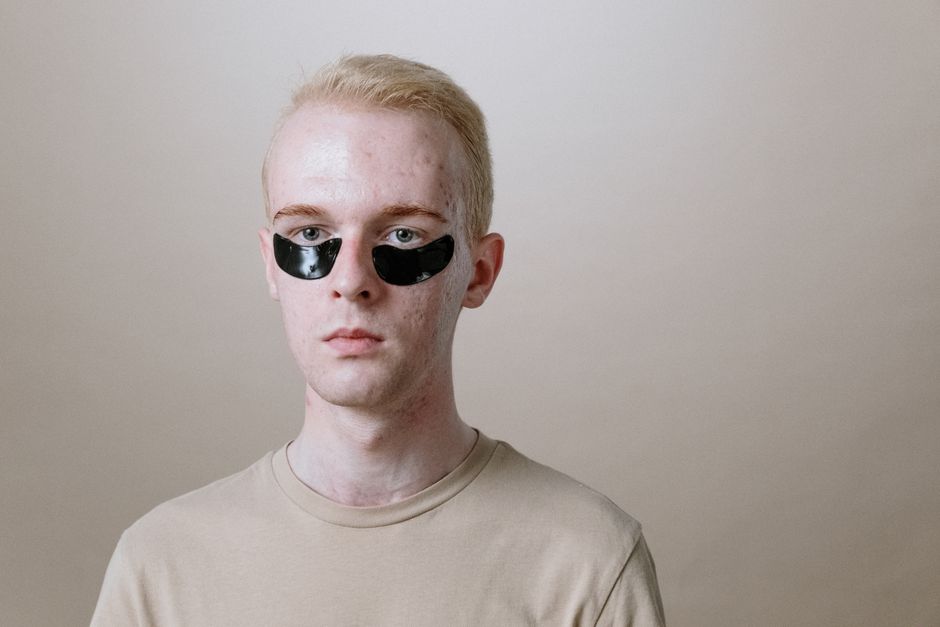
Acne scars form when a deep breakout damages the skin’s collagen, and the body’s repair process either produces too little collagen, leaving a pit, or too much, leaving a raised bump. The damage happens during the healing phase, not while the pimple is visibly red and inflamed. What makes them worse is picking at blemishes, delaying treatment, and letting inflammation run deep and long enough to destroy the tissue that holds your skin together.
How Are Acne Scars Formed And What Makes Them Worse?
Acne scars are not a single type of injury. They are the visible result of the skin’s failed attempt to repair itself after inflammation destroys collagen and elastin. Collagen is the protein that gives skin structure and firmness. Elastin lets it stretch and snap back.
When a pimple forms, white blood cells rush to the area to fight bacteria. That immune response creates inflammation. If the inflammation stays shallow, the skin heals without a trace. If it reaches deeper into the dermis — the middle layer of skin — it can destroy collagen fibers. The body then tries to patch the area. How it patches determines the scar type.
Some people produce too little collagen during healing. The skin sinks inward, creating a depressed scar. Others produce too much collagen, leaving a raised scar on the surface. The type of scar you get depends on your genetics, skin thickness, and how aggressive the inflammation was.
What Are the Different Types of Acne Scars?
Knowing the type matters because treatments target specific scar shapes. Not all scars respond to the same approach.
Ice pick scars are narrow, deep holes that look like the skin was punctured by a sharp instrument. They extend deep into the dermis and are the hardest to treat with surface-level methods.
Boxcar scars are broad, round or oval depressions with sharply defined edges. They look like the skin was stamped with a cookie cutter. They form when collagen loss happens in a contained area.
Rolling scars have a wavy, uneven appearance. The skin looks like it ripples across the surface. These form when the skin’s deeper layers are pulled down by fibrous bands of tissue that develop during healing.
Hypertrophic and keloid scars are raised. They occur when the body overproduces collagen. Keloids grow beyond the original wound boundary and can continue expanding for months. These are more common in people with darker skin tones.
A person can have multiple scar types at once. Most people with significant acne scarring have a mix of ice pick and boxcar scars on their cheeks and temples.
What Makes Acne Scars Worse?
Several behaviors and conditions turn a temporary blemish into a permanent scar. The most damaging is picking. Squeezing a pimple pushes bacteria and dead skin cells deeper into the follicle. It also tears the surrounding tissue, which extends the zone of collagen destruction. A pimple that might have healed cleanly becomes a crater because the skin was physically damaged.
Delaying treatment is another major factor. The longer inflammation goes untreated, the deeper it penetrates. A pimple that stays inflamed for weeks causes more collagen destruction than one treated early. Prescription treatments like topical retinoids or benzoyl peroxide work by shortening the inflammatory window.
Sun exposure makes existing scars look worse. UV radiation breaks down collagen further and causes hyperpigmentation — dark spots that sit on top of the scar. These spots are not true scars. They are post-inflammatory hyperpigmentation, and they often fade over time. But while they are present, they make the underlying scar more visible.
Repeated breakouts in the same location also worsen scarring. Each new inflammatory event adds another layer of collagen damage to tissue that is already weakened.
Why Do Some People Scar and Others Do Not?
Genetics play a significant role. Some people are simply prone to aggressive inflammatory responses. Their immune system overreacts to the bacteria in a clogged pore, producing more inflammation than necessary. That extra inflammation is what destroys collagen.
Skin thickness matters too. Thicker skin can withstand more collagen loss before a depression becomes visible. Thinner skin, especially on the cheeks and temples, shows damage more readily.
Age is another factor. Younger skin produces collagen more efficiently, so it can repair damage more completely. As skin ages, collagen production slows, and the same inflammatory injury leaves a more noticeable scar.
Hormonal factors influence scar formation indirectly. Hormones drive sebum production, which influences acne severity. More severe acne means more inflammation, which means a higher chance of scarring.
Can Acne Scars Fade on Their Own?
True scars do not fade on their own. A scar is permanent structural damage to the collagen matrix. The skin will not spontaneously rebuild the lost tissue without intervention.
What does fade is post-inflammatory hyperpigmentation. The dark or red marks left after a pimple heals can take months to resolve. They fade because the skin gradually sheds the excess pigment. This is not scar resolution. It is pigment clearing.
Red marks, sometimes called post-inflammatory erythema, are caused by dilated blood vessels left behind after inflammation. These can take several months to a year to subside. They are not scars either, but they are often mistaken for them.
The distinction matters because treatment expectations differ. Pigment and redness respond to time, sunscreen, and lightening agents. True scars require procedural intervention.
What Treatments Actually Reduce Acne Scars?
No topical cream removes a true scar. Over-the-counter products can improve skin texture slightly by increasing cell turnover, but they cannot rebuild lost collagen in the deep dermis. Be skeptical of any product that claims to erase scars.
Procedural treatments are the only evidence-backed approach for significant scar reduction. These are performed by dermatologists and require multiple sessions.
Laser resurfacing uses focused light to remove the top layer of skin and stimulate new collagen production. Fractional lasers treat columns of skin while leaving surrounding tissue intact, which speeds healing. Results vary based on scar type and depth.
Microneedling uses fine needles to create microscopic wounds in the skin. The body responds by producing new collagen. It is less aggressive than laser resurfacing and requires multiple sessions. Some research suggests it is effective for rolling and boxcar scars.
Chemical peels remove the outer layer of skin to improve texture and tone. They are most effective for shallow scars and hyperpigmentation. Deeper scars do not respond well to peels alone.
Subcision is a procedure where a needle is inserted under the skin to break the fibrous bands pulling the skin down. It is used specifically for rolling scars.
Dermal fillers can temporarily lift depressed scars by adding volume under the skin. The effect lasts several months to a year. This is a maintenance treatment, not a permanent fix.
For raised scars, treatments include corticosteroid injections to flatten the tissue, silicone sheets, and cryotherapy.
No single treatment works for all scar types. A dermatologist will assess your skin and often combine approaches. Expect improvement, not perfection. Most procedures reduce scar visibility by a meaningful degree, but they do not restore skin to its pre-acne state.
How Can You Prevent Acne Scars From Forming?
Prevention is far more effective than treatment. The single most important step is treating acne early. The sooner inflammation is controlled, the less collagen damage occurs.
Do not pick, pop, or squeeze pimples. This is the most common cause of preventable scarring. If you cannot stop picking, consider a behavioral intervention or keep your hands busy with another activity.
Use sunscreen daily. UV exposure darkens hyperpigmentation and breaks down collagen. A broad-spectrum sunscreen with SPF 30 or higher reduces the visible impact of existing scars and protects healing skin.
Follow a consistent skincare routine with proven acne-fighting ingredients. Benzoyl peroxide kills bacteria. Salicylic acid helps unclog pores. Topical retinoids increase cell turnover and reduce inflammation. These do not treat scars directly, but they prevent new breakouts that can lead to more scars.
See a dermatologist if over-the-counter treatments are not controlling your acne within a few months. Prescription options like oral antibiotics, hormonal therapy, or isotretinoin can stop severe acne that would otherwise cause significant scarring.
When Should You See a Dermatologist About Acne Scars?
If you already have scars, see a dermatologist sooner rather than later. New scars respond better to treatment than old ones. The collagen in a fresh scar is still remodeling, and early intervention can improve the final result.
You should also see a dermatologist if your acne is leaving scars at all. Even mild acne can scar some people. A professional can help you control breakouts before they cause more damage.
Be realistic about what treatment can achieve. Scars can be significantly improved, but complete removal is rare. A good dermatologist will tell you what is possible for your specific scar type rather than promising perfection.
Frequently Asked Questions
Can you get rid of acne scars completely?
No treatment completely removes acne scars, but most can be significantly reduced in appearance. The degree of improvement depends on scar type, depth, and the treatment method used.
Does picking at pimples always cause scars?
Picking does not always cause a scar, but it significantly increases the risk. Picking tears surrounding tissue and pushes bacteria deeper, extending the zone of collagen damage.
How long does it take for acne scars to fade?
True scars do not fade on their own because they are permanent structural damage. The red or dark marks around scars can fade over several months, but the scar itself remains.
What is the best treatment for acne scars?
There is no single best treatment because scar types respond differently. Laser resurfacing, microneedling, and subcision are common evidence-backed options, and dermatologists often combine them for best results.
