
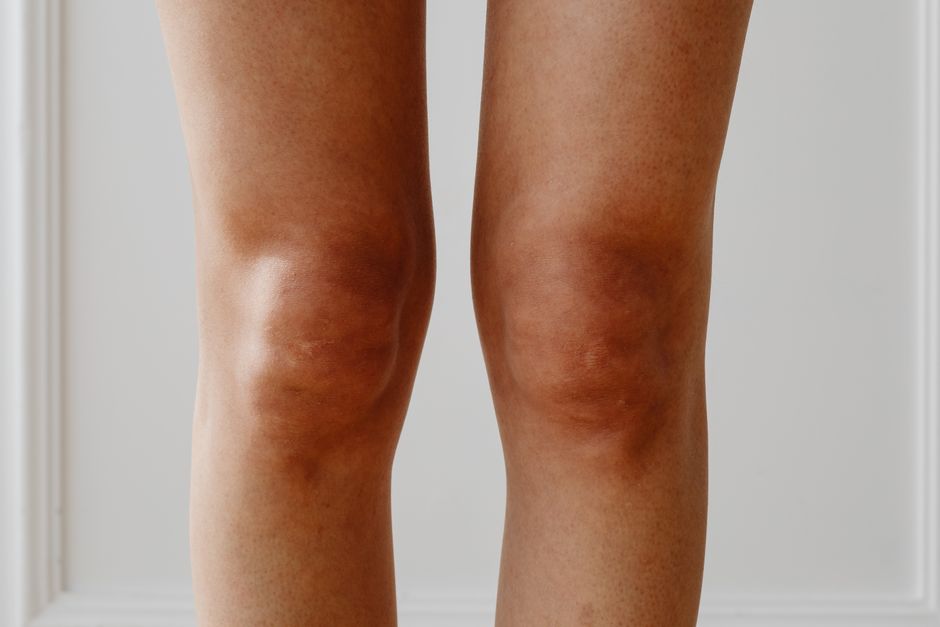
Knee pain that gets worse when you kneel, squat, or climb stairs is one of the most common reasons adults visit a doctor about their joints. The knees carry more load than any other joint in the body, and they do it through a hinge that also twists and rotates. That design makes them strong, but it also makes them vulnerable. This guide explains the main reasons kneeling hurts, what the evidence says about each one, and what actually helps.
What causes pain when you kneel or get down on your knees?
Most knee pain from kneeling comes from one of a handful of structures: the kneecap joint, the bursa sacs in front of the kneecap, the patellar tendon, or the cartilage and bone underneath. The exact cause matters because the treatments are different.
Kneeling presses the kneecap hard against the thigh bone. The force through the kneecap joint during a deep kneel can be several times your body weight. If the cartilage behind the kneecap is worn, or the joint is inflamed, that pressure translates directly into pain.
The most common causes include:
- Patellofemoral pain syndrome — pain around or behind the kneecap, often worse with squatting, kneeling, and stairs. It is common in active adults and usually not caused by visible damage.
- Patellar tendinopathy — irritation of the tendon connecting the kneecap to the shin bone. Pain is usually felt just below the kneecap and is worse after loading.
- Prepatellar bursitis — inflammation of the fluid-filled sac in front of the kneecap. It often follows repeated kneeling on hard surfaces, which is why it is sometimes called “housemaid’s knee.” It causes swelling and tenderness right over the kneecap.
- Osteoarthritis — wear of the cartilage in the knee joint. Kneeling and squatting are among the activities people with knee arthritis most often report as painful.
- Meniscus tears — a tear in the cartilage pad that cushions the joint. These can cause pain with twisting and deep bending, and sometimes a catching or locking sensation.
These conditions can overlap, and one does not rule out another. A physical exam is usually the most useful step in sorting them out.
Why does kneeling hurt more as you get older?
Knee cartilage thins with age, and the muscles that support the joint tend to lose strength if they are not used. Both changes raise the load that passes through the joint during kneeling.
Cartilage has no blood supply of its own. It gets nutrients from the fluid inside the joint, and it depends on movement and load to stay healthy. That is one reason complete rest is rarely the answer for a painful knee.
Age itself is not the whole story. Many older adults have healthy knees, and many younger adults have painful ones. What tends to track more closely with pain is muscle strength, body weight, and how much time someone spends kneeling on hard surfaces.
Is it arthritis, or something else?
Osteoarthritis is the most common form of arthritis in the knee, but not all knee pain is arthritis. The pattern of symptoms gives useful clues.
Osteoarthritis tends to cause pain that builds with activity and eases with rest, along with stiffness after sitting, and sometimes swelling. It usually develops gradually over months or years. Pain that appears suddenly after a specific movement, or that comes with locking, giving way, or marked swelling, points more toward a tear, strain, or bursitis.
Only imaging or a clinical exam can confirm which one is present. X-rays show bone and joint space but not soft tissue. MRI shows cartilage, tendons, and ligaments. Neither is always needed. Many knee problems are diagnosed and treated based on history and physical exam alone.
What helps knee pain from kneeling?
Strength training for the muscles around the knee and hip is the intervention with the strongest evidence behind it for patellofemoral pain and knee osteoarthritis. Stronger quadriceps and hip muscles reduce the load the joint has to absorb.
The evidence is strongest for exercise, weight management where relevant, and activity modification. It is weaker for many of the products sold for knee pain.
What the evidence supports:
- Progressive strength exercise — building quadriceps, hamstring, and hip strength over weeks. This is the core of most physical therapy programs for knee pain.
- Weight loss if you carry extra weight — even modest weight loss reduces load through the knee with every step. The relationship between body weight and knee load is well established.
- Knee pads or cushions for kneeling — a simple, low-risk way to reduce direct pressure on the kneecap and bursa during unavoidable kneeling.
- Activity modification — temporarily reducing deep kneeling and squatting while strength builds, rather than stopping activity altogether.
What the evidence is weaker or mixed on:
- Glucosamine and chondroitin supplements. Large trials have produced mixed results, and major clinical guidance does not recommend them as a proven treatment.
- Knee braces and sleeves. Some people report benefit, but trials have not consistently shown they change pain or function compared with exercise alone.
- Platelet-rich plasma and corticosteroid injections. Corticosteroid injections can reduce pain in the short term, but repeated use carries risks to cartilage. Evidence for platelet-rich plasma is mixed and it is not a standard first-line treatment.
Some clinicians recommend ice for swelling after activity and heat for stiffness before it. This is common practice, though the trial evidence for either is limited.
When should you see a doctor about knee pain?
See a doctor if you cannot bear weight on the knee, if the knee locks or gives way, if it swells significantly within hours of an injury, or if you have fever, redness, and warmth around the joint. Those signs can point to a fracture, a serious ligament or meniscus injury, or infection, and infection in a joint is a medical emergency.
For pain that has been building for weeks without a clear injury, an appointment is reasonable if it is limiting your daily activities or not improving with rest and gentle activity.
Some people put off getting help because they assume knee pain is just something to live with. That is not always true. Many causes of knee pain respond well to structured exercise, and catching problems early often makes them easier to manage.
Can you prevent knee pain from kneeling?
You can lower your risk, though no approach removes it entirely. The main levers are muscle strength, body weight, and how you kneel.
Keeping the quadriceps and hip muscles strong protects the joint during bending and kneeling. Regular walking, cycling, and strength work all count. Sudden spikes in activity are a common trigger for tendon and kneecap pain, so building up gradually matters.
For people whose work involves a lot of kneeling, knee pads and periodic breaks from hard surfaces reduce direct pressure on the bursa and kneecap. Kneeling on a cushion rather than a hard floor is a small change with a clear mechanical rationale.
One clarification worth knowing: “wear and tear” is a misleading way to describe knee arthritis. Cartilage loss is not simply the result of using the joint too much. Physical activity, including strength training, is generally protective for the knee rather than harmful, and people with arthritis are usually encouraged to stay active.
Frequently Asked Questions
Why does it hurt when I kneel on my knees?
Kneeling presses the kneecap against the thigh bone with force several times your body weight, which irritates the kneecap joint, the bursa, or the tendon in front of the knee. The specific cause depends on which structure is inflamed or worn.
Is knee pain from kneeling a sign of arthritis?
Not necessarily. Kneeling pain can come from patellofemoral pain, bursitis, or tendinopathy without any arthritis. Only an exam or imaging can confirm whether arthritis is present.
Should I stop kneeling if it hurts?
Reducing deep kneeling while you build strength is reasonable, but complete rest is rarely helpful for knee pain. Gentle activity and strength exercise are usually better than stopping all movement.
When is knee pain an emergency?
Seek urgent care if the knee is hot, red, and swollen with a fever, or if you cannot bear weight after an injury. Those signs can indicate infection or a fracture and need prompt medical assessment.
