
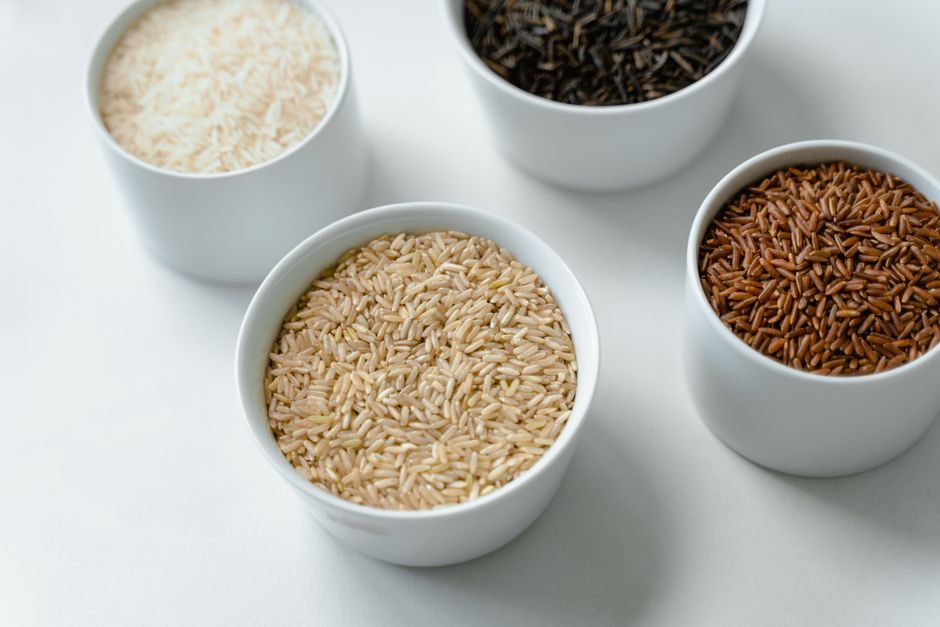
White rice does not increase DHT. No study has shown that eating white rice raises dihydrotestosterone, the potent androgen made from testosterone. The claim appears to come from a chain of reasoning about insulin and blood sugar, not from direct evidence about rice and DHT. Here is what the science actually shows, and where the reasoning breaks down.
Where Does the Idea That White Rice Raises DHT Come From?
The claim is built on a hypothesis, not an observation. It starts with a real fact: white rice is a high-glycemic food. It digests quickly and raises blood sugar faster than most foods. From there, the argument goes that repeated blood sugar spikes raise insulin, insulin affects hormone balance, and hormone balance affects DHT.
Each link in that chain is weaker than the one before it. The first link is solid. White rice does have a high glycemic index. The later links are where the argument falls apart.
There is no research that measures DHT levels in people before and after eating white rice. That kind of direct study simply does not exist. What exists instead is speculation that borrows from other areas of hormone research and applies them to rice. That is not the same as evidence.
How Is DHT Actually Made in the Body?
DHT is made from testosterone by an enzyme called 5-alpha-reductase. This conversion happens mainly in the prostate, skin, and liver. The enzyme exists in two forms, type 1 and type 2, and they are found in different tissues.
The key point is that DHT production is driven by how much testosterone is available and how active that enzyme is. It is not driven directly by the food on your plate. Diet can influence hormones indirectly over time, but there is no direct pathway from a bowl of white rice to the 5-alpha-reductase enzyme.
This is well-established physiology. Drugs that block 5-alpha-reductase, such as finasteride, lower DHT because they target the enzyme itself. That tells us the enzyme is the control point. Rice does not act on that enzyme.
Does White Rice Raise Insulin Enough to Change DHT?
White rice does raise insulin after a meal. That part is true and well documented. The question is whether that insulin spike changes DHT, and the answer is that no evidence shows it does.
Insulin does influence other hormones. It can affect sex hormone binding globulin, a protein that carries sex hormones in the blood. It can also influence testosterone production at very high or very low levels. But these effects are complex and depend on overall metabolic health, not on a single food.
Even if insulin shifted testosterone slightly, that would not automatically raise DHT. Remember that DHT comes from testosterone through an enzyme. More raw material does not mean more product if the enzyme is not more active. The logic that connects insulin to DHT through rice is a leap that research does not support.
One clarification worth knowing: a food’s glycemic index describes how fast it raises blood sugar on its own. What actually matters for most people is the whole meal. Rice eaten with protein, fat, and vegetables produces a slower blood sugar rise than rice eaten alone. This is a well-established principle in nutrition science.





What Does the Evidence on Diet and DHT Actually Show?
The honest position is that diet research on DHT is thin. Most of what we know about lowering DHT comes from medication studies, not food studies. There is no dietary equivalent of finasteride with proven DHT-lowering effects.
Some research has looked at specific foods and hormones. Green tea, soy, and certain plant compounds have been studied for possible effects on androgen levels. Results vary and are often inconsistent between studies. None of this research points to white rice as a DHT driver.
What the evidence does support is that overall body weight and metabolic health influence hormone levels. Excess body fat is associated with changes in testosterone and other hormones. This is a whole-body, long-term relationship. It is not something a single serving of rice triggers.
If someone is concerned about DHT, the more useful questions are about medications, genetics, and overall metabolic health. Blaming white rice misdirects attention away from factors that actually matter.
Is White Rice Bad for Your Hormones?
No. White rice is a staple food for billions of people and has been for centuries. It provides carbohydrate, which the body uses for energy. It is not a hormone disruptor.
White rice is lower in fiber and some nutrients than brown rice because the bran and germ are removed during milling. In many countries, white rice is fortified to replace some lost nutrients, including B vitamins and iron. This is a public health measure, not a sign the food is harmful.
The real conversation about white rice is about blood sugar and portion size, especially for people with diabetes or prediabetes. For those groups, how much rice and what it is eaten with matters more than the rice itself. That is a blood sugar issue, not a DHT issue.
For most healthy adults, white rice fits comfortably in a balanced diet. The claim that it raises DHT has no evidence behind it.
What Actually Affects DHT Levels?
DHT levels are influenced by genetics, age, and the activity of the 5-alpha-reductase enzyme. Men with more active enzyme tend to have higher DHT. This is largely determined by biology you do not control.
Certain medications lower DHT directly. Finasteride and dutasteride block the enzyme and are prescribed for conditions like enlarged prostate and male pattern hair loss. These are well-studied prescription drugs, not supplements.
Some supplements are marketed as DHT blockers. The evidence for most of them is limited or absent. Saw palmetto, for example, has been studied for prostate symptoms, but its effect on DHT is not well established. No large human trials have confirmed that common natural DHT blockers meaningfully lower DHT.
If you are concerned about DHT for a medical reason, such as hair loss or prostate symptoms, that is a conversation for a clinician. It is not something to manage by cutting out rice.
The Bottom Line on White Rice and DHT
There is no evidence that white rice increases DHT. The claim rests on a chain of assumptions about insulin and hormones that research does not support. White rice is a high-glycemic food, and that is worth knowing for people watching blood sugar, but it has no established effect on DHT.
Be cautious with any online claim that a common food raises or lowers a specific hormone. Real hormone effects usually come from medications, genetics, and overall health, not from single foods. When a claim skips the direct evidence and relies on a logical-sounding chain, that is usually a sign to be skeptical.
Frequently Asked Questions
Does white rice increase DHT?
No. No study has shown that eating white rice raises DHT levels. The claim is based on assumptions about insulin and hormones, not direct evidence.
What foods increase DHT?
No common food has been proven to raise DHT directly. DHT is mainly controlled by genetics and the activity of the 5-alpha-reductase enzyme, not by specific foods.
Does rice affect testosterone levels?
There is no strong evidence that white rice changes testosterone in healthy adults. Overall body weight and metabolic health have more influence on testosterone than any single food.
Should I avoid white rice for hormone health?
Not for hormone reasons. White rice has no established effect on DHT or other sex hormones, though people watching blood sugar may want to manage portions and pair it with protein and vegetables.
