
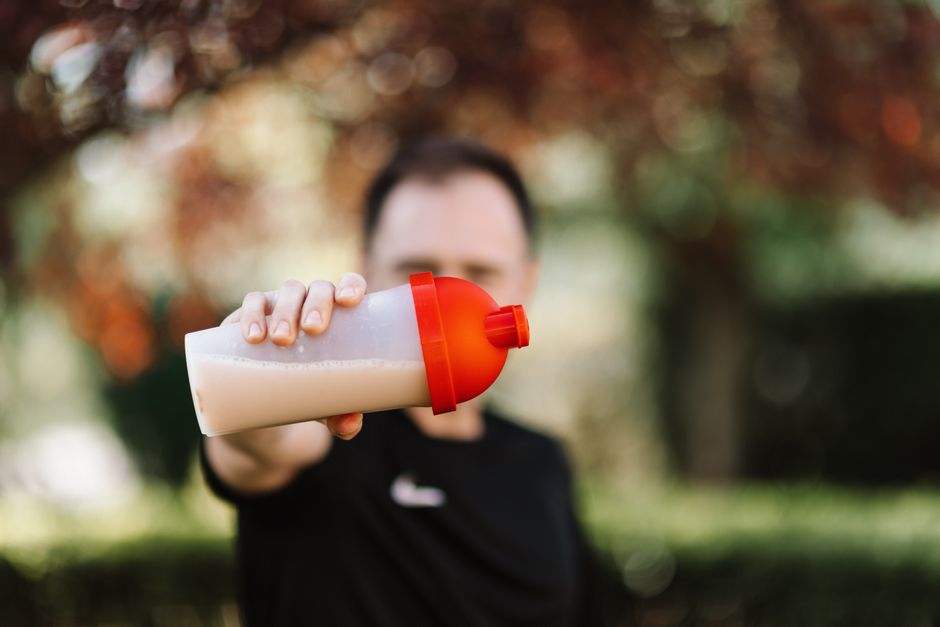
Whey protein can help you feel full, but it is not a magic appetite switch. Protein is the most satiating of the three macronutrients, and whey — a fast-digesting milk protein — triggers several fullness signals in the gut. Whether you actually feel full depends on the dose, what you eat it with, and your own biology.
The effect is real but modest. A whey shake on its own tends to blunt hunger less than a solid meal with similar calories. Where whey helps most is as a protein anchor in an otherwise low-protein diet, or as a pre-load before a meal.
Does Whey Protein Make You Feel Full Heres How?
Whey protein reduces appetite through a combination of gut hormones, slowed stomach emptying, and signals sent to the brain’s appetite centers. These effects are measurable in controlled studies. They are also smaller than most supplement marketing implies.
When you drink whey, it moves through the stomach faster than casein — the other major milk protein — because it stays soluble in stomach acid. That sounds like a disadvantage for fullness. In practice, whey still triggers strong satiety hormone release, and the speed of absorption is part of why.
Three hormones do most of the work:
- Cholecystokinin (CCK) — released when protein and fat reach the small intestine. It slows stomach emptying and signals fullness.
- GLP-1 (glucagon-like peptide-1) — released from the gut lining. It slows digestion and acts on brain regions that regulate appetite. This is the same hormone pathway targeted by newer weight-loss drugs, though whey’s effect is far smaller and shorter-lived.
- PYY (peptide YY) — released after eating. Higher levels are associated with reduced food intake.
Whey also lowers ghrelin, the hormone that rises before meals and drives hunger. These hormonal shifts are well documented in human studies. What varies is how much they change what you actually eat at your next meal.
How Long Does Whey Protein Keep You Full?
Whey’s fullness effect peaks within roughly 30 to 90 minutes of drinking it and fades over the following two to three hours. It is a short window, not an all-morning fix.
This is one reason whey is often described as less satiating than casein. Casein clots in the stomach and releases amino acids slowly, so its appetite-suppressing effect tends to last longer. Some studies comparing the two find casein keeps hunger lower for a longer stretch. The difference is real but not dramatic.
If you drink a whey shake at 7 a.m. and feel hungry by 9:30, that is expected physiology, not a sign the product failed. Whey was never designed to hold hunger for four hours. It is a fast protein.
What Makes Whey More or Less Filling?
The biggest factor is what else is in the shake. Whey mixed in water is a thin liquid that empties from the stomach quickly. The same whey blended with milk, oats, fruit, or healthy fats becomes a far more filling drink.
Several variables shift the fullness response:
- Dose. Larger protein doses generally produce stronger satiety signals, though the relationship is not linear and returns diminish.
- Liquid versus solid. Solid food tends to be more satiating than a drink with the same calories. This is a well-established pattern in appetite research.
- Fiber and fat. Adding either slows digestion and extends fullness. A plain whey-and-water shake has neither.
- Your usual protein intake. Someone eating very little protein may notice a bigger appetite effect than someone already eating plenty.
- Individual variation. Hormone responses to the same food vary widely between people. Two people can drink identical shakes and feel very different two hours later.
One clarification worth making: whey’s satiety effect is not the same as its muscle-building effect. The two are often lumped together in marketing. Feeling full and supporting muscle protein synthesis are separate processes with separate evidence.
Is Whey Better Than Other Proteins for Fullness?
Whey is comparable to other high-quality proteins for satiety, not clearly superior. The research comparing protein sources shows differences that are small and inconsistent across studies.
| Protein source | Digestion speed | Typical fullness pattern |
|---|---|---|
| Whey | Fast | Quick rise in satiety hormones, shorter duration |
| Casein | Slow | Slower onset, longer-lasting fullness |
| Egg protein | Moderate | Similar overall satiety to whey in most comparisons |
| Soy protein | Moderate | Comparable satiety; some studies show minor differences |
| Whole food protein (meat, fish, legumes) | Varies | Generally more filling per calorie than isolated powders |
The practical takeaway: if your goal is appetite control, the source of protein matters less than getting enough of it and eating it in a form that includes fiber, volume, and some fat. A chicken breast and vegetables will usually out-satiate a whey shake with the same protein content.
Does Whey Protein Help With Weight Loss Through Fullness?
Higher protein intake is associated with better appetite control and, in many trials, greater weight loss than lower-protein diets at the same calories. Whether whey specifically drives that effect is less clear.
Most weight-loss research tests total protein intake, not whey in isolation. When whey has been studied directly, results are mixed. Some trials show reduced calorie intake at later meals after a whey pre-load. Others show no meaningful difference compared with other proteins or a placebo.
A reasonable reading of the evidence: whey can be a convenient way to hit a higher protein target, and higher protein intake supports fullness. The powder itself is not a weight-loss tool. The evidence does not support claims that whey burns fat or speeds metabolism.
There is also a practical trap. Liquid calories are easy to consume quickly and register less strongly in fullness than solid food. A shake that adds several hundred calories without curbing appetite much can work against weight goals rather than for them.
When Might Whey Not Make You Feel Full?
Some people drink whey and feel no appetite change at all. That is common and not a sign anything is wrong.
Liquid whey can pass through the stomach quickly, especially on an empty stomach and mixed with water. If you are already eating a high-protein diet, the added protein may not shift hormone levels much. And individual differences in gut hormone response are substantial — some people are simply less responsive to protein’s satiety signals.
Lactose can also complicate things. Many whey products contain small amounts of lactose, and people with lactose intolerance may experience bloating or discomfort that they mistake for fullness. Whey protein isolate has less lactose than concentrate. If digestive symptoms follow your shakes, the lactose content is worth checking.
If your goal is appetite control, a few adjustments tend to help more than switching brands:
- Blend whey with milk, yogurt, oats, or fruit instead of water.
- Drink it with a meal or as a snack that includes fiber.
- Use it to reach a protein target, not as a replacement for solid meals.
- Try casein or a whey-casein blend if you want longer-lasting fullness.
Frequently Asked Questions
How long after drinking whey protein do you feel full?
Most people notice fullness within 30 to 90 minutes. The effect typically fades within two to three hours.
Is whey protein or casein more filling?
Casein generally keeps you full longer because it digests more slowly. Whey produces a faster but shorter fullness response.
Does whey protein make you feel full without a meal?
It can blunt hunger somewhat, but a whey-and-water shake is less filling than the same protein eaten with food. Adding fiber, fat, or blending with milk increases the effect.
Can whey protein make you feel bloated instead of full?
Yes, if you are sensitive to lactose or other ingredients in the product. Whey isolate contains less lactose than concentrate and may cause fewer symptoms.
