
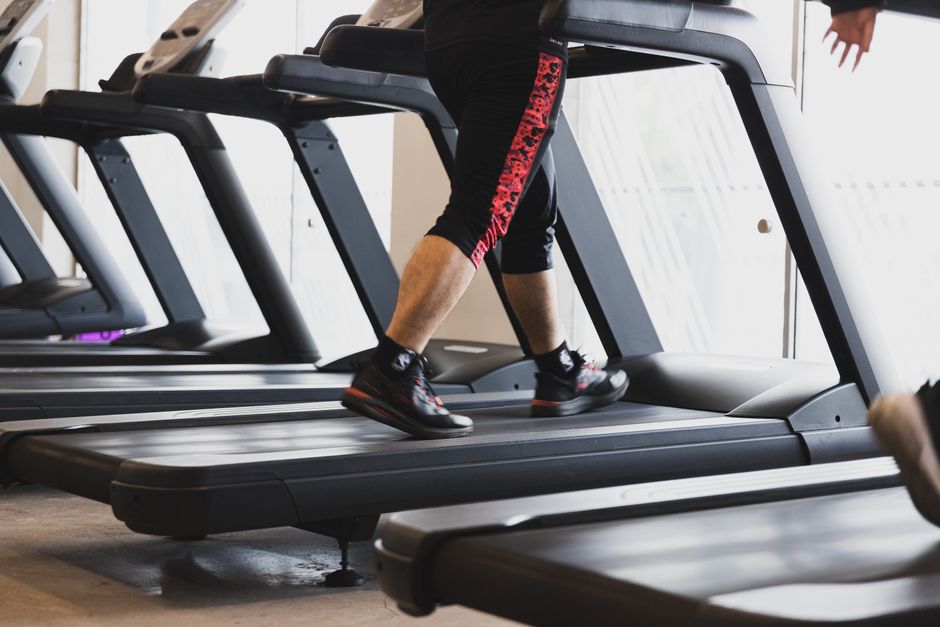
Walking on an incline burns more calories than walking on a flat surface, and that extra energy expenditure can contribute to fat loss when paired with a consistent routine and a balanced diet. The steeper the grade, the harder your muscles work, which raises your heart rate and increases the total calories you burn per mile. However, incline walking is not a magic fat-loss switch — it is a tool that makes your workout more demanding, and fat loss still depends on burning more calories than you consume.
How Does Incline Walking Change Your Workout?
Walking on a flat surface at a steady pace is a solid form of exercise, but adding an incline changes the demands on your body. When you walk uphill, your leg muscles — especially your glutes, hamstrings, and calves — must generate more force to lift your body weight against gravity.
Your heart rate rises because your muscles need more oxygen. That means your body burns more calories in the same amount of time. Research consistently shows that walking on an incline increases calorie expenditure compared to walking on flat ground at the same speed.
The difference is not trivial. At a brisk pace, adding a moderate incline can increase your calorie burn by 50 percent or more compared to flat walking. The exact number depends on your weight, your speed, and the steepness of the grade.
Does Walking on an Incline Burn Fat or Just Calories?
Fat loss happens when your body uses more calories than it takes in. That deficit forces your body to break down stored fat for energy. Incline walking helps create that deficit because it burns more calories per minute than flat walking.
During lower-intensity exercise like walking, your body relies primarily on fat for fuel. That does not mean incline walking specifically targets fat — no exercise selectively burns fat from one area of the body. What matters is the total calorie burn and the overall energy deficit.
Some studies suggest that incline walking may increase the amount of fat burned during the workout itself compared to flat walking. But the bigger picture is total daily energy balance. If you burn more calories than you eat, you lose fat. Incline walking simply helps you burn more calories in less time.
What Incline and Speed Should You Use?
There is no single best incline for everyone. Start where you are comfortable and progress gradually. A 3 to 5 percent incline is a reasonable starting point for most people who are new to incline walking.
As you get stronger, you can increase the incline to 8, 10, or even 12 percent. The key is to maintain a pace where you can still walk with good form. If you are holding the treadmill rails, the incline is too steep for your current fitness level.
Speed matters too. Walking at 3 miles per hour on a flat surface is light exercise for many people. Walking at the same speed on a 10 percent incline is a demanding workout. You may need to slow down as the incline goes up. That is fine — the calorie burn still increases.
No clinical guidelines specify an exact incline for fat loss. The evidence supports a simple principle: greater incline means greater effort, and greater effort means more calories burned. Progress gradually to avoid injury.




How Long Should You Walk on an Incline?
Duration depends on your fitness level and your schedule. Walking for 30 minutes on an incline is a reasonable workout for many people. Some people prefer 45 to 60 minutes for a higher total calorie burn.
Research on exercise and fat loss generally supports accumulating at least 150 minutes of moderate-intensity aerobic activity per week. Incline walking at a brisk pace qualifies as moderate to vigorous activity, depending on the grade.
More important than any single session is consistency. Walking on an incline three to five times per week will produce better results than a single long session once a week.
If you are new to exercise or have health conditions that affect your heart or joints, check with your doctor before starting a new routine. That is especially important if you have a history of falls, balance problems, or lower-body joint pain.
Does Incline Walking Build Muscle?
Incline walking does build some muscle, primarily in the glutes, hamstrings, and calves. The effect is modest compared to resistance training, but it is real.
Muscle tissue burns more calories at rest than fat tissue. So building a small amount of muscle through incline walking can slightly increase your resting metabolic rate over time. The effect is not large, and it is not a substitute for strength training.
If your goal is fat loss, the muscle-building effect of incline walking is a bonus, not the main event. The main event is the calorie burn and the energy deficit it helps create.
Incline Walking vs. Running on a Flat Surface
Running burns more calories per minute than walking, even walking on an incline. But running is also harder on the joints and requires more recovery time.
Incline walking offers a middle ground. It raises your heart rate substantially while keeping impact low. That makes it a good option for people who cannot run due to joint pain, injury, or lack of conditioning.
For fat loss, the best exercise is the one you can do consistently without getting injured. If incline walking allows you to exercise regularly, it can be just as effective as running for creating the calorie deficit needed for fat loss.
Some research suggests that high-intensity interval training can produce similar fat loss in less time compared to steady-state exercise. But intervals are harder to sustain and carry a higher injury risk for beginners. Incline walking is a sustainable starting point for many people.
Common Mistakes That Slow Down Fat Loss
Holding the treadmill rails is the most common mistake. When you hold the rails, your body weight is supported, and your muscles do less work. That reduces the calorie burn significantly.
Walking at a low incline that does not raise your heart rate is another mistake. A 1 percent incline is barely different from flat walking. To get the benefits, you need a grade that challenges you.
Overestimating calorie burn is also common. Treadmill displays and fitness trackers often overestimate calories burned. Do not eat back all the calories you think you burned.
Finally, relying on exercise alone without addressing diet rarely produces significant fat loss. Exercise burns calories, but a calorie surplus from food can erase that deficit quickly.
Does Incline Walking Reduce Belly Fat Specifically?
No exercise can target fat loss from a specific area of the body. Spot reduction is a myth. When you lose fat, your body decides where it comes from based on genetics, hormones, and other factors beyond your control.
Incline walking can help you lose fat overall, and that will eventually reduce belly fat if that is where your body stores fat. But the process takes time, and the results vary from person to person.
Some people notice changes in their midsection early in a fat-loss program. Others see changes in their face, arms, or legs first. There is no reliable way to predict where fat loss will appear first.
Frequently Asked Questions
Is walking on an incline better than running for fat loss?
Running burns more calories per minute, but incline walking is easier on the joints and can be done for longer periods. The best choice is the one you can sustain consistently without injury.
What incline should I walk on to burn fat?
Start with a 3 to 5 percent incline and increase gradually as you get stronger. The right incline is one that raises your heart rate and challenges you without forcing you to hold the rails.
How many calories does walking on an incline burn?
The exact number depends on your weight, speed, and the steepness of the grade. A 150-pound person walking briskly on a 10 percent incline can burn roughly 300 to 400 calories in 30 minutes, but individual results vary.
Can I lose belly fat by walking on an incline?
Incline walking helps you lose fat overall, but it cannot target belly fat specifically. Fat loss location is determined by genetics and hormones, not by the type of exercise you do.
