
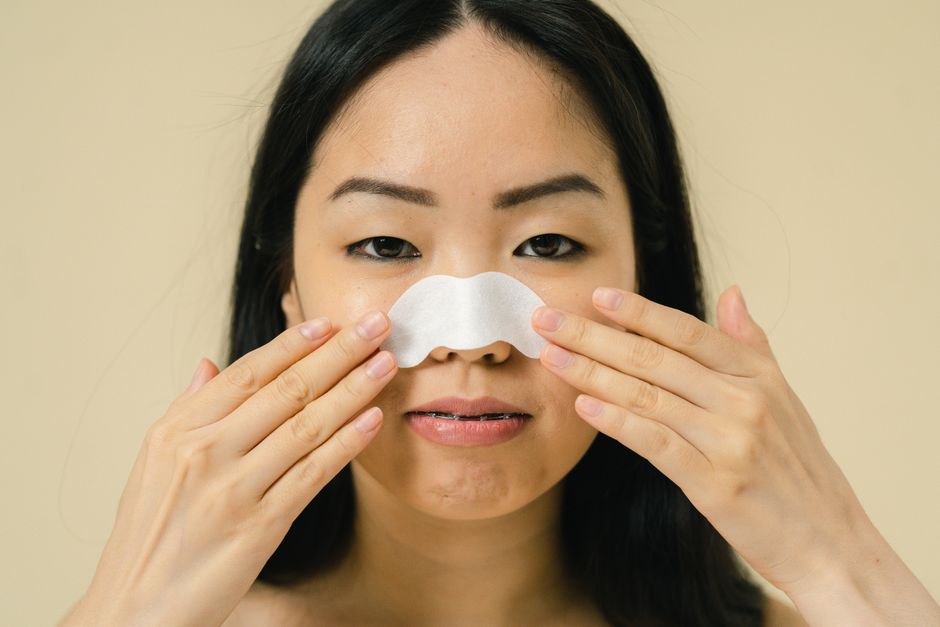
Vitamin C does not clear blackheads, and it does not cause them either. Blackheads are plugs of oil and dead skin cells trapped inside a pore, and vitamin C has no mechanism for dissolving or removing that plug. What vitamin C can do is change how the skin around a blackhead looks and behaves, which is where the real answer gets more useful.
Many people apply a vitamin C serum hoping for smoother, clearer skin and then wonder why the dark dots on their nose have not moved. That confusion is understandable. Vitamin C is one of the most studied ingredients in skin care, but most of that research is about sun damage, dark spots, and collagen, not about blackheads. Knowing what the ingredient actually does separates realistic expectations from marketing promises.
What Are Blackheads And Why Do They Form?
A blackhead is an open comedo — a pore that has filled with sebum and dead skin cells and stayed open to the air. The dark color is not dirt. It is the result of the plug being exposed to oxygen, which oxidizes the melanin and oil at the surface and turns it brown or black.
Sebum production is driven largely by hormones, which is why blackheads cluster on the nose, chin, and forehead — areas with the densest oil glands. The plug forms when excess oil and shed skin cells collect faster than they can work their way out of the pore.
This matters because it tells you what a treatment has to do to work. It has to either break down the plug, slow the oil, or speed up skin cell turnover so the pore does not clog in the first place. Hold that standard in mind as you read what vitamin C can and cannot do.
Does Vitamin C Help Blackheads Or Make Them Worse?
Vitamin C does not help blackheads directly, and it does not make them worse. There is no clinical evidence that topical vitamin C dissolves a comedo, unclogs a pore, or reduces the number of blackheads.
What vitamin C does have is a well-documented role in skin biology. It is a cofactor in collagen production and a potent antioxidant that neutralizes free radicals from ultraviolet light and pollution. Those effects are real and reasonably well established. They are also unrelated to the mechanical problem of a blocked pore.
There is one indirect connection worth knowing. Vitamin C can help fade the dark marks left behind after inflammation, a condition sometimes called post-inflammatory hyperpigmentation. If a blackhead has been squeezed or picked and left a brown spot, vitamin C may help that spot fade over time. That is a different problem from the blackhead itself, and it is easy to conflate the two.
A note on the pH question. Vitamin C serums are often formulated at low pH, and some people report stinging or irritation. Irritation can make skin look redder and more uneven, which some users mistake for “making blackheads worse.” The blackheads have not multiplied. The surrounding skin is inflamed.
Can Vitamin C Make Blackheads Worse If You Have Oily Skin?
Vitamin C is not comedogenic in itself — it does not reliably clog pores. The bigger risk with oily skin is the formula, not the ingredient. Many vitamin C products are suspended in thick creams, oils, or silicone-heavy bases that can feel heavy and may contribute to clogging in people who are already prone to it.
If you have oily or acne-prone skin and want to try vitamin C, the formulation matters more than the concentration. A lightweight water-based serum is generally a better fit than a rich cream. Look at the full ingredient list, not just the headline ingredient on the front of the box.
Irritation is the other variable. Some people react to vitamin C itself, especially at higher concentrations, and some react to preservatives or other ingredients in the formula. Irritated skin is more prone to inflammation, and inflammation can worsen acne in general. If a product stings, turns your skin red, or causes peeling, that is a sign to stop rather than push through.
What Actually Clears Blackheads?
The treatments with the strongest evidence for blackheads work on the plug itself. Salicylic acid is a lipid-soluble acid that penetrates the pore and helps break down the keratin and oil inside it. It is widely used and reasonably well supported for comedonal acne.
Retinoids are another well-established option. They speed up skin cell turnover, which helps prevent pores from clogging and encourages existing plugs to clear. Topical retinoids are a standard part of acne treatment and have decades of clinical use behind them.
For stubborn blackheads, some clinicians perform extraction or use comedone extractors in a clinical setting. This is common practice, though it is a physical removal rather than a treatment that prevents new blackheads from forming.
Here is a comparison of how the main options relate to the problem:
- Salicylic acid — breaks down the plug inside the pore; well established for comedonal acne.
- Retinoids — increase cell turnover and prevent new clogs; well established.
- Niacinamide — may help regulate oil; some evidence supports it for oil control.
- Vitamin C — antioxidant and collagen support; no established role in clearing blackheads.
None of these is a cure, and results take weeks to months, not days. That timeline is worth stating plainly because quick-fix marketing sets expectations that no topical product can meet.
Should You Use Vitamin C And Salicylic Acid Together?
Many people do use both, and there is no strong evidence that combining them is harmful. The old advice that vitamin C and acids “cancel each other out” is largely overstated. The more practical concern is irritation when you layer multiple active ingredients at once.
If you want to use both, a common approach is vitamin C in the morning and a salicylic acid product in the evening, which spreads out the actives and reduces the chance of a reaction. Some clinicians recommend this kind of separation; it is sensible practice rather than a rule proven in trials.
Watch for the signs of over-exfoliation or irritation: stinging that does not settle, redness, flaking, or increased sensitivity. Those are signals to pull back, not to add more products. Skin that is constantly irritated is not clearer skin.
Does Vitamin C Help With Acne Scars And Dark Spots?
This is where vitamin C has a more defensible role, though still a limited one. Vitamin C is used for hyperpigmentation because it can interfere with the enzyme tyrosinase, which is involved in melanin production. Some studies suggest topical vitamin C can help lighten dark spots over time.
The distinction matters for anyone dealing with blackheads. Vitamin C may help the brown marks left after acne, but it will not remove the blackheads that caused them. Treating the blackheads and treating the marks are two separate jobs, and they often call for different products.
For deeper acne scars — the pitted or raised kind — topical vitamin C has no meaningful effect. Those involve changes to the skin’s structure that a serum cannot rebuild. If scarring is a concern, that is a conversation for a dermatologist, not a product aisle.
The Bottom Line On Vitamin C And Blackheads
Vitamin C is a genuinely useful skincare ingredient with solid evidence behind its antioxidant and collagen-related effects. It is not a blackhead treatment, and expecting it to clear pores will lead to disappointment. It will not make blackheads worse on its own, but a heavy formula or an irritating concentration can cause problems that get blamed on the ingredient.
If blackheads are your main concern, the evidence points toward salicylic acid, retinoids, and consistent gentle cleansing rather than vitamin C. Vitamin C can stay in your routine for what it actually does well — supporting skin against sun damage and helping with dark marks — as long as you are clear about which job it is doing.
Frequently Asked Questions
Does vitamin C remove blackheads?
No. There is no clinical evidence that vitamin C dissolves or removes blackheads, because it does not act on the plug inside the pore.
Can vitamin C cause blackheads?
Vitamin C itself is not considered comedogenic, but heavy creams or irritating formulas can clog pores or inflame skin in some people.
What is the fastest way to get rid of blackheads?
Salicylic acid and retinoids have the strongest evidence for clearing blackheads, though results typically take weeks to months rather than days.
Can I use vitamin C with salicylic acid?
Yes, many people use both without problems, though separating them — vitamin C in the morning and salicylic acid at night — can reduce the risk of irritation.
