
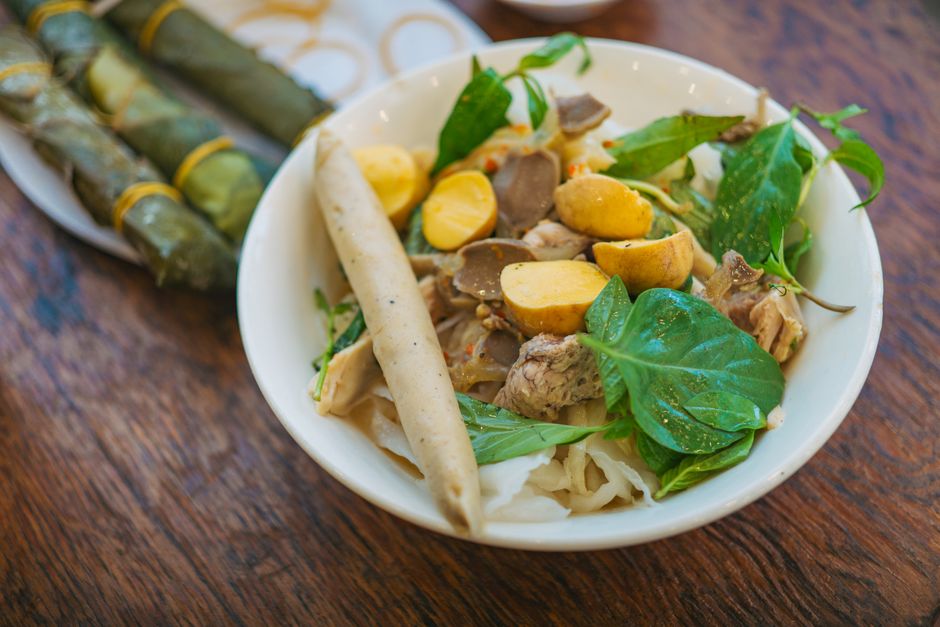
Yes, Vietnamese food can contain peanuts, and they show up in places many people do not expect. Peanuts appear in some of the most popular dishes, including pho toppings, fresh spring rolls, and several sauces and salads. If you have a peanut allergy, the safest approach is to ask directly about every dish before you eat it, because peanut ingredients are often added at the end of cooking or mixed into a sauce rather than listed on a menu.
Vietnamese cooking uses peanuts as both a main ingredient and a garnish. That means the same dish can be safe at one restaurant and unsafe at another. Knowing where peanuts hide, what to ask, and how to plan ahead makes eating Vietnamese food far more manageable.
Why Does Vietnamese Food Use So Many Peanuts?
Peanuts are cheap, widely available, and add crunch and richness to dishes. That combination made them a staple in Vietnamese cooking.
Vietnam grows peanuts domestically, and they fit naturally into the cuisine’s balance of textures and flavors. You will find them roasted and crushed as a topping, ground into sauces, and pressed into oil. Peanut oil is also used for frying in some kitchens.
This matters for allergy management because peanuts are not always a background ingredient. In many dishes they are a defining part of the recipe. A banh mi might be spread with a peanut-based sauce. A rice paper roll might be dipped in a peanut sauce. A noodle bowl might be finished with crushed peanuts on top.
The good news is that many core Vietnamese dishes do not require peanuts at all. The broth in pho, for example, is traditionally made from beef or chicken bones, spices, and aromatics. Peanuts are not a standard ingredient in the broth itself. But restaurants sometimes add them as a garnish, and cross-contact in the kitchen is a real concern.
Where Do Peanuts Hide in Vietnamese Dishes?
Peanuts turn up in a predictable set of dishes and condiments. Learning these helps you know what to ask about.
Common sources include:
- Peanut sauce (tuong dau phong) — served with fresh spring rolls, summer rolls, and some grilled meats
- Crushed roasted peanuts — scattered on noodle bowls, salads, and rice dishes as a finishing touch
- Banh mi spreads — some versions use a peanut-based sauce or pate that may contain peanuts
- Goi cuon (fresh spring rolls) — the roll itself is usually peanut-free, but the dipping sauce often is not
- Some salads (goi) — often topped with peanuts and tossed with a dressing that may include them
- Satay-style skewers — frequently served with peanut sauce
Peanut oil is another consideration. Highly refined peanut oil is generally considered safe for many people with peanut allergy because the refining process removes the proteins that trigger reactions. Cold-pressed or unrefined peanut oil still contains those proteins and is not considered safe. This distinction matters, but it is not something you can reliably determine just by looking at a dish. If you are unsure which type a kitchen uses, treat it as a risk.
Does Vietnamese Food Have Peanuts Allergy Tips for Eating Out?
The single most effective step is to communicate clearly before you order. Do not assume a dish is peanut-free because the menu description does not mention them.
Here are practical steps that help:
- Ask specifically about peanuts, not just “nuts.” In many kitchens, peanuts and tree nuts are treated as separate categories.
- Ask about peanut sauce, crushed peanut garnish, and peanut oil separately. A dish can be free of one and contain another.
- Explain that this is an allergy, not a preference. The word “allergy” often changes how seriously a kitchen responds.
- Ask whether the kitchen can prepare your dish without peanuts and whether they can avoid cross-contact. Some can, some cannot.
- Consider a chef card written in Vietnamese that explains your allergy. This can help when there is a language barrier.
- Call ahead during quiet hours to ask about ingredients and kitchen practices.
Cross-contact is the harder problem. Even if a dish does not list peanuts, the same wok, cutting board, or utensils may have touched them. For people with severe allergy, this is a genuine concern. No kitchen can guarantee a completely peanut-free environment unless it is dedicated to that purpose.

Is Peanut Sauce Always Made With Peanuts?
Yes. Peanut sauce is made from peanuts. There is no version of traditional peanut sauce that is peanut-free, because peanuts are the base ingredient.
Some people confuse peanut sauce with other Asian dipping sauces. Fish sauce (nuoc cham) is a common Vietnamese condiment made from fish sauce, lime, sugar, garlic, and chili. It does not contain peanuts. Hoisin sauce and sweet chili sauce typically do not contain peanuts either, though brands vary.
If you are avoiding peanuts, nuoc cham is often a safer dipping option than peanut sauce. But you should still confirm, because some kitchens add crushed peanuts to it or serve it alongside a peanut garnish.
There are peanut-free “peanut sauce” substitutes made with sunflower seed butter or other ingredients. These are not traditional Vietnamese foods, and they are not a standard restaurant option. If you want a peanut-free dipping sauce, ask what else is available.
What About Peanut Allergy Severity and Vietnamese Food?
Peanut allergy can range from mild to life-threatening, and the severity of a past reaction does not always predict the severity of the next one. This is why avoidance matters even for people who have only had mild reactions.
If you have a peanut allergy, your doctor may have prescribed epinephrine auto-injectors. Carrying them and knowing how to use them is standard advice for anyone at risk of a severe reaction. This is not specific to Vietnamese food, but it applies whenever you eat food you did not prepare yourself.
Symptoms of a reaction can include hives, swelling, difficulty breathing, throat tightness, vomiting, and a drop in blood pressure. A severe reaction, called anaphylaxis, is a medical emergency. If you experience these symptoms, use epinephrine if prescribed and seek emergency care immediately.
Some people with peanut allergy also react to other legumes, such as soy or lupin. If you have multiple legume allergies, Vietnamese food can present additional challenges because soy is also common in the cuisine. Talk to your allergist about your specific sensitivities.
Can You Eat Pho With a Peanut Allergy?
Pho broth is traditionally peanut-free. It is made from bones, charred onion and ginger, star anise, cinnamon, cloves, and fish sauce. Peanuts are not part of the standard recipe.
However, pho is often served with a plate of garnishes that may include herbs, bean sprouts, lime, and chili. Peanuts are not a typical pho garnish, but some restaurants offer them or add them to certain variations. The bigger risk is cross-contact in the kitchen.
If you want to eat pho, ask whether the broth contains peanuts and whether the kitchen can prepare your bowl without cross-contact. If the restaurant cannot answer confidently, you may want to choose a different option.
How Do You Read Vietnamese Menus for Peanut Ingredients?
Knowing a few Vietnamese words can help you spot peanut ingredients on a menu or communicate your needs.
The Vietnamese word for peanut is “dau phong.” Peanut sauce is “tuong dau phong.” If you see “dau phong” on a menu, that dish contains peanuts.
This is helpful, but it is not a complete solution. Menus do not always list every ingredient, and garnishes are often not mentioned. The word “dau” alone can mean oil or bean, depending on context, so it is not a reliable signal by itself.
A written card that states your allergy in Vietnamese and English can bridge the gap. It should say clearly that you cannot eat peanuts and ask whether a dish can be prepared safely. Showing this to your server or the kitchen can reduce misunderstandings.
What Is the Bottom Line for Peanut Allergy and Vietnamese Food?
Vietnamese food can be enjoyed with a peanut allergy, but it requires care. Peanuts are common in the cuisine, and they appear in sauces, garnishes, and some main dishes.
The key steps are to ask about peanuts specifically, to ask about cross-contact, to carry your epinephrine auto-injectors if prescribed, and to be prepared to choose a different dish or restaurant if you cannot get clear answers. No restaurant can guarantee a peanut-free meal unless it is dedicated to that purpose.
If you are managing a peanut allergy, talk to your allergist about your specific risks and how to stay safe when eating out. They can help you make decisions that fit your situation.
Frequently Asked Questions
Does pho contain peanuts?
Traditional pho broth does not contain peanuts, but some restaurants may add them as a garnish or use peanut oil. Always ask before ordering.
Is peanut sauce always made with peanuts?
Yes, peanut sauce is made from peanuts and is not safe for people with peanut allergy. Fish sauce and hoisin sauce are usually peanut-free alternatives.
Can I eat Vietnamese food if I have a peanut allergy?
Yes, but you need to ask about peanuts and cross-contact at every restaurant. Some dishes are naturally peanut-free, while others contain peanuts as a main ingredient or garnish.
What is the Vietnamese word for peanut?
The Vietnamese word for peanut is “dau phong.” Peanut sauce is “tuong dau phong.”
