
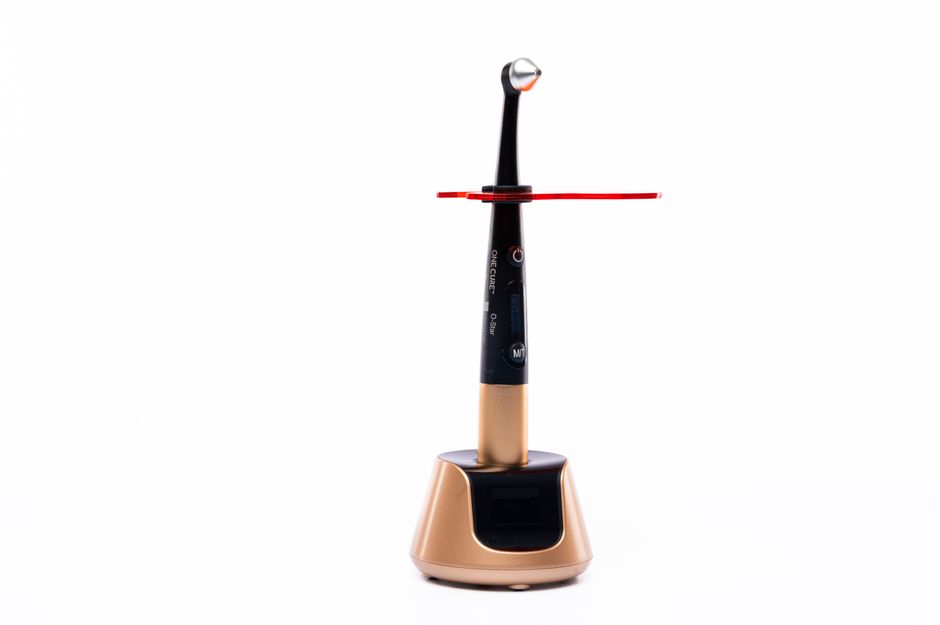
Does UV light cure acrylic? The short answer is no — and the word “cure” is where most of the confusion starts. What UV light does to acrylic nail products is trigger a chemical reaction that turns a liquid or gel into a solid. That process is called polymerization, not curing in the way you might cure a disease or dry paint. The light is not killing anything or disinfecting anything. It is acting as a switch that starts a chain reaction inside the product itself.
Understanding this matters because the language around nail products gets sloppy. Manufacturers, salons, and social media all use “cure” and “harden” as if they mean the same thing. They do not. And the difference explains why some products need UV light, why some harden on their own, and why the lamp you use actually matters for how the finished nail behaves.
What Does UV Light Actually Do to Acrylic Nails?
UV light provides energy. That energy is absorbed by molecules called photoinitiators that are mixed into gel and some acrylic systems. Once a photoinitiator absorbs enough light energy, it splits apart and becomes a reactive fragment called a free radical. That free radical then attacks nearby monomer molecules, linking them together into long chains. Those chains keep growing until the product is no longer liquid.
This is why the lamp is not optional for gel products. Without the right wavelength and enough intensity, the photoinitiators never activate, and the product stays tacky or gooey. The light is not drying the product by evaporating a solvent. It is chemically rebuilding the material from the inside out.
Traditional acrylic powder and liquid systems work differently. Most of them harden through a chemical reaction between the powder and the liquid monomer, and that reaction does not require UV light at all. It happens on its own once the two components are mixed. So when someone says “UV light cures acrylic,” they are usually describing gel products, or a hybrid system, not classic acrylic.
Does Uv Light Cure Acrylic How It Actually Hardens?
The hardening happens through polymerization, and UV light is only one way to start it. In gel systems, the lamp starts the reaction. In traditional acrylic systems, a chemical initiator in the powder starts the reaction when it meets the liquid monomer. Both end up as hard plastic, but the trigger is different.
Here is the part that surprises people. The reaction in traditional acrylic is exothermic, meaning it releases heat. That warmth you feel when acrylic is applied is the polymerization happening on your nail. Gel products generally produce less heat because the reaction is triggered more gradually by light rather than by mixing two reactive liquids.
Neither process is instant. Even after the lamp turns off, some cross-linking continues for a short time. This is one reason a freshly cured gel nail can still feel slightly soft right after removal from the lamp and firm up over the next few minutes.
Why Do Some Products Need UV Light and Others Do Not?
The deciding factor is the chemistry of the product, not the brand or the price. Products that contain photoinitiators need light. Products that contain a chemical catalyst do not.
- Gel polish and gel extensions: Need UV or LED light to activate photoinitiators.
- Traditional acrylic (powder and liquid): Harden through a chemical reaction, no lamp required.
- Hybrid or “polygel” products: Often need light, depending on the formulation.
- Dip powder systems: Typically harden through a cyanoacrylate-based resin, no UV lamp needed.
This is why a salon might use a lamp for one service and skip it entirely for another. The lamp is matched to the product, not to the service name.




Is UV Nail Light the Same as a Tanning Bed?
No, and the comparison gets overstated in both directions. UV nail lamps emit UVA light, the same general category used in tanning beds, but at much lower intensity and for a much shorter time. A single tanning bed session delivers far more UV exposure than a typical nail lamp session.
The evidence on skin cancer risk from nail lamps is limited and mixed. Some case reports have described skin changes on the hands of people with heavy, long-term exposure, but case reports cannot establish cause. Larger studies have generally not found a clear link. That does not mean the exposure is zero. It means the research has not produced a consistent, confirmed risk signal at typical use levels.
If you want to reduce exposure, applying sunscreen to your hands before a appointment or wearing fingerless UV-protective gloves are reasonable steps. Some clinicians suggest these as precautionary measures. They are not proven to reduce cancer risk specifically from nail lamps, because that risk has not been clearly established in the first place.
Does the Type of Lamp Change How Well It Hardens?
Yes, and this is one of the most practical things to understand. UV and LED lamps are not interchangeable for every product.
UV lamps typically emit a broader range of wavelengths, often centered around 365 nanometers. LED lamps emit a narrower band, often around 365 or 405 nanometers depending on the design. A product’s photoinitiators are formulated to respond to specific wavelengths. If the lamp does not emit the right wavelength, the product may not harden properly even if you leave your hand under it longer.
This is why some manufacturers specify which lamp to use with their product. Using the wrong lamp can leave the product undercured, which means it stays soft, peels early, or traps unreacted chemicals against the skin. Under-cured gel is also more likely to cause irritation for people who are sensitive to acrylates.
What Happens If Acrylic or Gel Is Not Fully Hardened?
An undercured product is not just a cosmetic problem. Unreacted monomers and photoinitiators remain in the material. Those are the same compounds that can trigger allergic contact dermatitis in some people. The reaction often shows up as itching, redness, swelling, or small blisters around the nail folds and fingertips.
Once an acrylate allergy develops, it tends to be lifelong. It can also make future exposure to certain medical and dental materials problematic, because acrylates are used in some dental work and bone cement. This is one reason proper curing matters beyond nail appearance.
Signs that a product may not have hardened fully include:
- A tacky or sticky surface after the lamp cycle
- Peeling or lifting within a day or two
- Softness that does not firm up
- Persistent irritation or itching under or around the nail
If irritation develops, removing the product and letting the skin recover is the usual first step. Persistent or worsening symptoms warrant a medical evaluation.
Does UV Light Kill Bacteria or Sanitize Your Nails?
No. This is a common misconception. UV nail lamps are not sterilizing devices. The intensity and duration of exposure are not sufficient to kill bacteria or fungi on the skin or nail surface in any reliable way.
Some research has looked at whether shared nail lamps could harbor or transmit microbes. The findings have been mixed, and the practical risk is not well established. Standard salon hygiene — clean tools, clean surfaces, and hand washing — matters far more than any antimicrobial effect of the lamp itself.
If a salon claims the lamp sanitizes your hands, that claim is not supported by evidence.
Frequently Asked Questions
Does UV light cure acrylic nails?
No, UV light does not cure traditional acrylic nails. Classic acrylic hardens through a chemical reaction between the powder and liquid monomer, and UV light is used mainly for gel-based products.
How long does it take for UV light to harden gel nails?
Most gel products are formulated to harden within the lamp cycle specified by the manufacturer, which is typically under a minute per layer. Using a lamp that does not match the product’s required wavelength can prevent proper hardening even with longer exposure.
Can UV nail lamps cause skin cancer?
The evidence is limited and mixed, and no consistent link has been confirmed at typical use levels. UV nail lamps emit far less UV than tanning beds, but some people choose to apply sunscreen or wear protective gloves as a precaution.
What happens if gel nails are not fully cured?
Uncured gel leaves reactive chemicals on the nail that can cause irritation or allergic contact dermatitis in some people. It also tends to peel, lift, or stay soft instead of forming a durable finish.
