
Curcumin, the main active compound in turmeric, does reduce inflammation in the body. But that fact comes with a catch most supplement marketing skips over. Plain turmeric powder contains very little curcumin, and your body absorbs almost none of what it contains. The gap between “curcumin has anti-inflammatory activity” and “taking turmeric will lower your inflammation” is where the honest answer lives.
What Is Turmeric and What Does Curcumin Do?
Turmeric is a root in the ginger family. It has been used in cooking and traditional medicine across South Asia for centuries. The yellow color comes from a group of compounds called curcuminoids. Curcumin is the most studied of them.
In laboratory research, curcumin interferes with several inflammatory pathways. It blocks NF-kB, a protein complex that switches on genes involved in inflammation. It also affects COX-2 and LOX, two enzymes that drive inflammatory signaling. These are the same general targets that some prescription anti-inflammatory drugs act on.
That sounds promising. And it is real biology. But test tube and animal studies are not the same as human outcomes. A compound can shut down an inflammatory pathway in a petri dish and still do very little in a living person who swallows it.
Why Absorption Is the Central Problem
Curcumin has poor bioavailability. That means very little of it reaches your bloodstream after you eat or swallow it. It is poorly absorbed in the gut, rapidly processed by the liver, and cleared from the body quickly.
This is not a minor detail. It is the reason so much research focuses on enhanced formulations rather than plain turmeric. Some products combine curcumin with black pepper extract (piperine), fats, or special delivery systems to raise blood levels. Those formulations can increase absorption substantially compared to plain powder.
Higher blood levels, though, do not automatically mean better health outcomes. That link still has to be tested in humans. So far, the results are mixed.
Does Turmeric Actually Decrease Inflammation in People?
The evidence for turmeric decreasing inflammation in humans is real but limited, and it depends heavily on the condition. This is where the topic gets more complicated than a headline can hold.
Some clinical trials have found that curcumin supplements reduce markers of inflammation in the blood, such as C-reactive protein (CRP). Other trials have found no meaningful change. Results vary by dose, formulation, the population studied, and how long people took it.
For joint pain from osteoarthritis, some studies suggest modest relief compared to placebo. The evidence is not strong enough to claim turmeric works as well as standard anti-inflammatory drugs. A few small trials have compared them, but the studies are limited in size and quality.
For inflammatory bowel conditions, some research shows promise but the evidence is not settled. For most other conditions, the data is thin.
The honest summary: curcumin is biologically active against inflammation. Whether a turmeric supplement meaningfully lowers inflammation in your body depends on the product, the dose, and your individual situation. No large, long-term trial has confirmed broad anti-inflammatory benefits in healthy adults.
How Much Turmeric Do You Need to See an Effect?
There is no established daily dose of turmeric or curcumin for reducing inflammation in the general population. That is a direct statement, not a dodge. No regulatory body has set a recommended intake for this purpose.
What exists instead is a range of doses used in clinical research. Many trials use curcumin extracts standardized to a high percentage of curcuminoids, often combined with an absorption enhancer. The doses in those trials are far higher than what you would get from sprinkling turmeric on food.
Cooking with turmeric adds flavor and color. It does not deliver a reliable anti-inflammatory dose. A teaspoon of turmeric powder contains only a small amount of curcumin, and your body absorbs a tiny fraction of that.
If you are considering a supplement, the formulation matters more than the total milligrams on the label. A product with poor absorption may pass through you with little effect regardless of how much it claims to contain.
Do not assume more is better. High doses of curcumin can cause digestive upset in some people. Curcumin can also interact with blood-thinning medications and may affect how the body processes certain drugs. Talk to your doctor before starting it, especially if you take prescription medicine.



Turmeric vs. Standard Anti-Inflammatory Treatments
Curcumin is not a replacement for proven medical treatment. This is one of the clearest points in the whole topic. For conditions like rheumatoid arthritis, prescription medications have strong evidence behind them. Turmeric does not.
Some people use turmeric alongside standard treatment, hoping to reduce how much medication they need. That is a decision to make with a doctor, not on your own. Stopping or lowering a prescribed anti-inflammatory drug without medical guidance can cause real harm.
Where turmeric might fit is as a complementary option for mild joint discomfort, in people whose doctors say it is reasonable to try. Even there, expect modest results at best. Management of chronic inflammation usually means addressing sleep, diet, activity, stress, and any underlying condition. No single supplement replaces that work.
What Forms of Turmeric Are Available?
Turmeric shows up in several forms, and they are not interchangeable.
- Whole or ground turmeric: Used in cooking. Low curcumin content and poor absorption. Good for flavor, not a reliable treatment dose.
- Standard curcumin extract: Concentrated curcuminoids. Absorption is still limited on its own.
- Enhanced-absorption curcumin: Combined with piperine, fats, or special delivery technology. Blood levels are higher, but clinical benefit is not guaranteed.
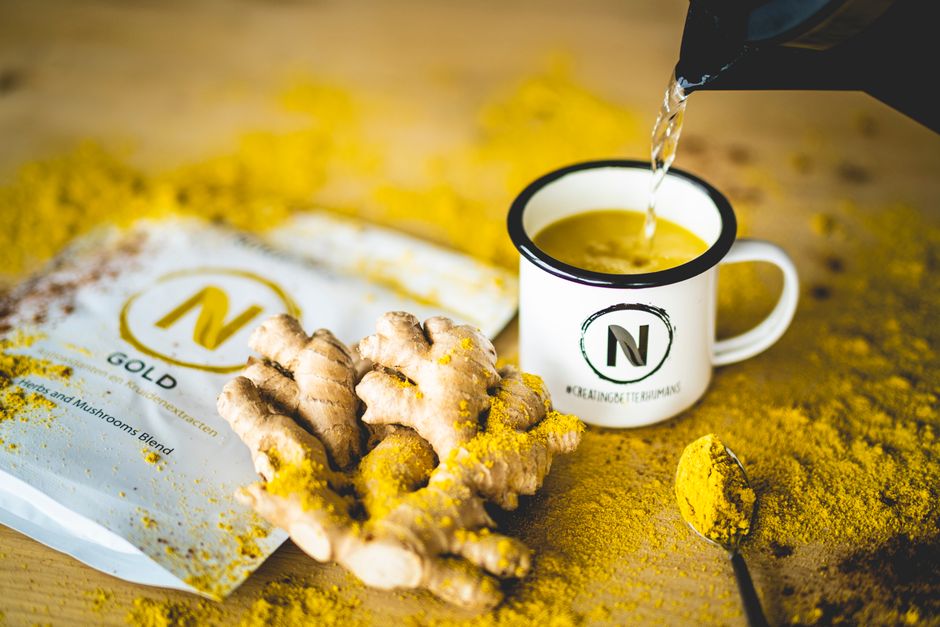
- Turmeric tea and golden milk: Popular and pleasant. The curcumin dose is low and absorption is poor.
The pattern is consistent. The more concentrated and better absorbed the product, the closer it gets to the doses used in research. That still leaves the question of whether those doses help your specific problem, which the evidence does not fully answer.
What Are the Risks and Side Effects?
Turmeric in food amounts is generally considered safe. That is well established. The picture changes with concentrated supplements.
Common side effects from curcumin supplements include stomach upset, nausea, and diarrhea. These are usually mild but can be enough to stop people from continuing.
The bigger concern is interactions. Curcumin can slow blood clotting, which raises bleeding risk when combined with blood thinners like warfarin or with antiplatelet drugs. It may also affect how the liver breaks down some medications, changing their levels in the body.
People with gallstones or bile duct problems should be cautious, since turmeric can stimulate bile flow. Anyone scheduled for surgery should tell their care team about any turmeric supplement use.
There is no reliable safety data for high-dose curcumin supplements in pregnancy or breastfeeding. No clinical guidelines currently exist for those groups. The safest approach is to avoid concentrated supplements and stick to food amounts unless a doctor says otherwise.
Does Turmeric Decrease Inflammation? The Bottom Line
Curcumin has genuine anti-inflammatory activity in the laboratory, and some human trials show modest effects on inflammatory markers and joint symptoms. The evidence is not strong enough to call turmeric a proven anti-inflammatory treatment, and it is not a substitute for medical care.
If you want to try it, choose a well-absorbed formulation, keep expectations realistic, and check with your doctor first, especially if you take any medication. Think of it as one small piece of a larger approach to managing inflammation, not a solution on its own.
Frequently Asked Questions
Does turmeric actually reduce inflammation?
Curcumin, the active compound in turmeric, has anti-inflammatory activity, and some human trials show modest reductions in inflammatory markers. However, plain turmeric is poorly absorbed, and the evidence is not strong enough to call it a proven treatment.
How much turmeric should I take for inflammation?
No official recommended dose exists for reducing inflammation in the general population. Clinical trials use concentrated curcumin extracts, often with absorption enhancers, at doses far higher than you would get from cooking with turmeric.
Is turmeric as effective as ibuprofen?
The evidence does not support that claim. A few small studies have compared them for joint pain, but the research is limited, and prescription anti-inflammatory drugs have much stronger evidence behind them.
Can turmeric be harmful?
Turmeric in food amounts is generally safe, but concentrated supplements can cause stomach upset and may interact with blood thinners and other medications. Talk to your doctor before using high-dose curcumin, especially if you take prescription drugs.
