
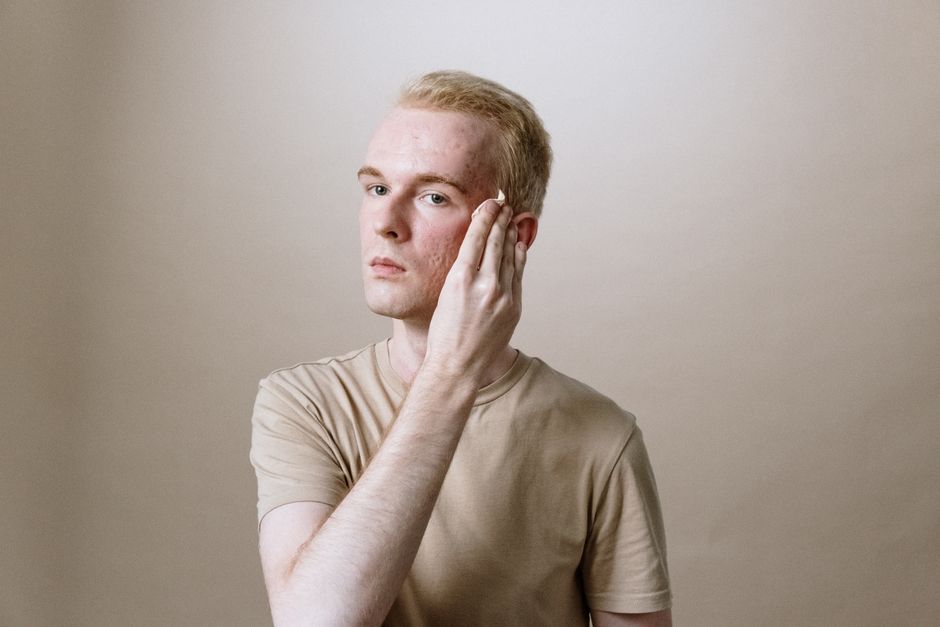
Yes, testosterone directly contributes to acne in females. It is not the only cause, but it is a major one. Testosterone and other androgens stimulate the skin’s oil glands, which can lead to clogged pores and breakouts. This is a well-established part of how acne forms, not a theory.
How Does Testosterone Cause Acne in Females?
Testosterone is present in females, just at lower levels than in males. It is produced by the ovaries and the adrenal glands. When testosterone travels through the bloodstream, it reaches the skin.
Inside the skin, an enzyme converts testosterone into a stronger form called dihydrotestosterone (DHT). DHT binds to receptors in the sebaceous glands. These are the glands that produce sebum, the natural oil that keeps skin moist.
When DHT activates these receptors, the glands grow larger and produce more oil. This excess oil mixes with dead skin cells. The combination can block hair follicles, which are the pores on your skin. When a pore is blocked, bacteria that normally live on the skin can multiply. The immune system responds, causing redness, swelling, and pus. That is the pimple you see.
This process is not random. It is a specific hormonal pathway. Acne that forms this way often appears on the lower face, jawline, chin, and neck. These areas have more androgen receptors, making them more sensitive to testosterone.
What Are the Signs of Hormonal Acne in Females?
Hormonal acne has some recognizable patterns. It is not the same as acne from a dirty face or a poor diet.
- Location: Breakouts concentrate on the lower face, jawline, chin, and neck. They can also appear on the chest and upper back.
- Timing: Flare-ups often happen about one week before the menstrual period starts. Many women see their skin clear up after their period begins.
- Appearance: The bumps are often deep, tender, and painful. They may be cystic, meaning they sit under the skin and never come to a head. They can also be red and inflamed.
- Persistence: This type of acne can be stubborn. It may not respond well to over-the-counter products designed for teenage acne.
If you have irregular periods, thinning hair on your scalp, or excess hair growth on your face or body alongside acne, that may point to a more significant hormone imbalance. These signs together are worth discussing with a doctor.
Does Testosterone Cause Acne In Females Signs Treatment: What Works
Because testosterone drives the oil production, treatments that block or reduce its effect on the skin are often the most effective for hormonal acne.
Topical treatments are usually the first step. Prescription retinoids like tretinoin help normalize skin cell turnover. This prevents dead cells from clogging pores. Benzoyl peroxide kills bacteria and helps clear existing blockages. These do not stop testosterone from being produced, but they reduce its effects on the skin surface.
When topical options are not enough, doctors may consider treatments that act on hormones directly. Some types of birth control pills contain estrogen and progestin. These work by reducing the amount of free testosterone in the bloodstream. Several of these have been specifically approved for treating acne in females.
Spironolactone is another option. It is a pill that blocks androgen receptors. It stops testosterone and DHT from binding to the sebaceous glands. It is widely used by dermatologists for hormonal acne, though it is not officially approved for this purpose by the FDA. Clinical experience shows it works well for many women, but it requires a prescription and monitoring.
Your doctor may also check for underlying conditions. Polycystic ovary syndrome (PCOS) is a common cause of elevated testosterone in women. If PCOS is present, managing it can improve acne along with other symptoms.
Treatment takes time. Hormonal acne usually does not clear in a few days. Expect to wait at least 8 to 12 weeks before judging whether a treatment is working. Stopping a treatment too early is a common reason for failure.




When Should You See a Doctor for Female Acne?
You do not need to live with painful acne. Several signs suggest it is time to seek medical help.
See a doctor if your acne is deep and painful, leaves scars, or does not improve after 6 to 8 weeks of consistent use of over-the-counter products. Also see a doctor if acne appears alongside other symptoms like irregular periods, rapid weight gain, or unwanted hair growth.
These additional symptoms may indicate a hormone imbalance that needs investigation. A simple blood test can measure testosterone and other hormone levels. Your doctor can also evaluate whether your acne is related to a condition like PCOS or a problem with your adrenal glands.
Do not try to treat a suspected hormone problem on your own. Supplements sold for “hormone balance” are not regulated like medications. No clinical evidence confirms that most of these products lower testosterone or clear acne. Some can interact with medications or cause side effects.
What Does Not Cause Hormonal Acne?
Many myths surround acne. Knowing what does not cause it can save you time and money.
Dirty skin does not cause acne. Washing your face more than twice a day can actually make acne worse by stripping the skin and irritating it. Acne forms under the skin, not on the surface.
Chocolate and greasy foods are not proven to cause acne. Some research suggests a link between high-glycemic diets and acne, but the evidence is not strong enough to blame specific foods. A healthy diet is good for you, but it is not a proven acne treatment.
Stress does not directly cause acne, but it can make existing acne worse. Stress hormones can increase oil production temporarily. Managing stress may help your skin, but it will not cure hormonal acne on its own.
Can You Prevent Testosterone-Related Acne?
Prevention is limited because you cannot stop your body from making testosterone. You can reduce the impact it has on your skin.
Consistency is the most important factor. Use your skincare products as directed, even on days when your skin looks clear. Stopping treatment when your skin improves often leads to a relapse within weeks.
Choose non-comedogenic products. This label means the product is formulated to not clog pores. It applies to moisturizers, sunscreens, and makeup. Using the right moisturizer matters, because dry skin can trigger more oil production.
Do not pick or squeeze pimples. This pushes bacteria deeper into the skin and increases the risk of scarring. It also makes inflammation last longer.
Frequently Asked Questions
Can high testosterone cause acne in women?
Yes, high testosterone levels can increase oil production and lead to acne. This is why acne is a common symptom of conditions like PCOS where testosterone levels are elevated.
What does hormonal acne look like on the face?
It usually appears as deep, tender bumps on the jawline, chin, and lower cheeks. These bumps are often cystic and may not come to a visible head.
How long does it take for hormonal acne treatment to work?
Most treatments need at least 8 to 12 weeks before you see noticeable improvement. Consistent daily use is required for results.
Is spironolactone safe for treating acne in females?
It is a prescription medication that many dermatologists use for hormonal acne, but it is not FDA-approved for this purpose. Your doctor should monitor your blood pressure and potassium levels while you take it.
