
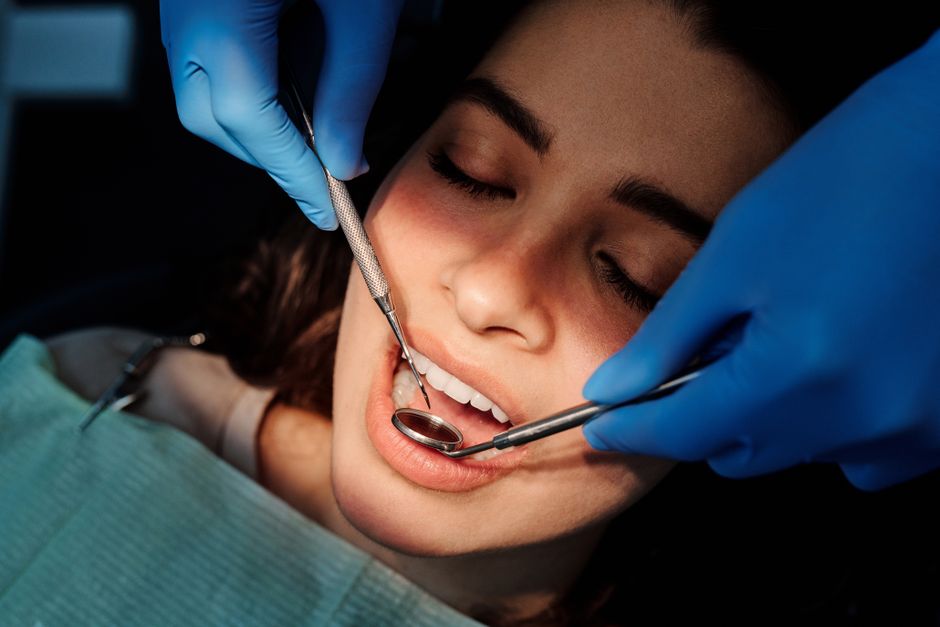
Most people feel pressure, vibration, and cold water during a crown appointment, but not sharp pain. The reason is local anesthesia. When it works properly, the tooth and surrounding gum are numbed before any drilling begins. The part that catches people off guard is not the procedure itself. It is the days afterward, when the numbing wears off and the gum around the reshaped tooth feels sore and tender.
Does Teeth Crowning Hurt During the Procedure?
No, the procedure itself should not hurt when anesthesia is working. That is the standard the dentist is aiming for, and it is a reasonable one to expect.
A crown usually requires two visits. At the first, the dentist numbs the area, reshapes the tooth to make room for the crown, takes an impression or a digital scan, and fits a temporary crown. At the second, the permanent crown is cemented into place.
During the reshaping step, you may feel pressure and hear drilling. Pressure is not pain. Many people find the sound and the sense of vibration more uncomfortable than anything physical. If you do feel a sharp sensation, that is a signal to raise your hand. It usually means the anesthesia has not fully taken effect in that spot, and more can be given.
Some people need more anesthetic than others. Anxiety, a history of heavy caffeine use, certain medications, and individual differences in how nerve fibers respond can all affect how well numbing works. This is common and manageable. It is not a reason to avoid treatment.
What Does Getting a Crown Actually Feel Like?
Most patients describe the appointment as long rather than painful. The reshaping itself is often the quickest part. The impression or scan can take longer, especially if the dentist is working near the back of the mouth.
Here is what people commonly report:
- Pressure on the tooth during reshaping
- A cold, wet sensation from the water spray used to cool the drill
- Vibration through the jaw
- A slightly bulky feeling from the temporary crown
- Mild jaw fatigue from holding the mouth open
One detail that surprises people: the drill used for crown preparation is not the same as the one used for a filling. It removes more tooth structure, and it runs longer. That is why the appointment can feel tiring even when nothing hurts.
If you have had a filling before, a crown is a longer version of a similar experience. If you have not, the sensation is closer to a firm, sustained pressure than to anything sharp.
Why Does the Tooth Hurt After the Numbing Wears Off?
Some soreness after a crown is normal, and it usually fades within a few days. The gum tissue around the tooth has been retracted and worked near, and that tissue responds the way any irritated tissue does.
The tooth itself can also feel sensitive. Crown preparation removes the outer layer of enamel. The layer underneath, called dentin, contains tiny tubules that connect to the nerve. When dentin is exposed, temperature changes and biting pressure can register more strongly than usual.
This sensitivity is generally temporary. As the tooth settles and the permanent crown seals the area, it tends to decrease.
There is a separate issue worth knowing about. If the permanent crown sits slightly too high, you will feel it every time you bite. That is not normal soreness. It is a fit problem, and it needs an adjustment. Call the dentist rather than waiting it out. A crown that is left too high can keep the tooth and the surrounding ligament inflamed, and in some cases it can lead to more significant problems.




How Long Does Soreness Last After a Crown?
Most post-crown soreness settles within a few days to about a week. Gum tenderness often resolves first. Tooth sensitivity can take longer, sometimes a few weeks, especially if the tooth was already irritated before the crown was placed.
A tooth that needed a crown because of a crack or a large old filling may already have been sensitive. The crown does not always resolve that immediately. Sometimes the tooth needs time to calm down.
What is not normal:
- Pain that gets worse instead of better after the first few days
- Sharp, shooting pain when you bite down
- Pain that wakes you at night
- Swelling in the gum or face
- A feeling that the crown is loose
Any of these warrants a call to the dentist. They can point to a bite that needs adjusting, a crown that does not fit well, or a problem with the nerve inside the tooth.
Can a Crown Cause Nerve Damage or Need a Root Canal?
This is one of the most common worries, and it deserves a straight answer. Crown preparation does not usually damage the nerve. But it can irritate a nerve that was already stressed.
Teeth that need crowns are often teeth that have been through a lot. Large fillings, cracks, repeated work, and deep decay all leave the nerve more vulnerable. Removing more tooth structure for a crown can push a borderline nerve over the edge.
When that happens, the tooth may become persistently painful or sensitive to heat. In those cases, a root canal may be needed. This is not a failure of the crown. It reflects the condition of the tooth going in.
Dentists cannot always predict which teeth will end up needing a root canal. Some research suggests that the risk is higher in teeth that already had deep restorations or cracks before the crown was placed. The evidence on exact rates varies across studies, and no single number applies to every case.
Does Getting a Crown Hurt More Than a Filling?
The pain experience is similar. The difference is duration and the amount of tooth structure involved.
A filling treats a smaller area and often takes less time. A crown involves reshaping the whole visible portion of the tooth, which means more drilling and a longer appointment. More tissue is involved, so there is more opportunity for post-procedure soreness.
Anesthesia works the same way for both. If you were comfortable during a filling, you will likely be comfortable during a crown.
The after-effects tend to differ more than the procedure itself. A small filling often causes little to no soreness. A crown is more likely to leave the gum tender for a few days, simply because more of the gum was worked around.
What Can Help With Discomfort After a Crown?
Most post-crown discomfort is managed simply. Over-the-counter pain relievers such as ibuprofen or acetaminophen are commonly used, following the label directions. If you have a medical condition or take other medications, check with your doctor or pharmacist first.
Other steps that help:
- Avoid very hot or very cold foods for a few days
- Chew on the other side until the permanent crown is placed
- Keep the area clean with gentle brushing
- Use a soft toothbrush near the temporary crown
- Skip sticky or hard foods that can pull off a temporary
If your dentist offers a desensitizing toothpaste or a fluoride product for the area, use it as directed. These are commonly recommended, though the evidence for how much they help after crown preparation specifically is limited.
One practical note: temporary crowns are not as strong as the final ones. If a temporary comes off, keep it and call the dentist. Do not try to glue it back on yourself with household products.
When Should You Call Your Dentist?
Call if the pain is getting worse after the first few days, if your bite feels uneven, if the crown feels loose, or if you notice swelling. These are not things to wait out.
Also call if the soreness is severe enough that over-the-counter pain relievers are not helping. That level of discomfort is not the expected course.
It also helps to speak up during the appointment itself. If you feel anything sharp, say so. If you are anxious, tell the dentist before treatment starts. Options like additional anesthetic, a break during the procedure, or nitrous oxide are available in many practices.
The honest summary: the procedure should not hurt when anesthesia is working, and the soreness afterward is usually mild and short-lived. The cases that go differently are usually about fit, an already-irritated nerve, or anesthesia that did not fully take. All three have solutions.
Frequently Asked Questions
Does getting a crown hurt without anesthesia?
Yes, it would, which is why anesthesia is standard for crown preparation. No dentist should begin reshaping a tooth without confirming the area is numb first.
How long does pain last after a crown?
Most soreness fades within a few days to about a week, though tooth sensitivity can last a few weeks. Pain that worsens after the first few days is not normal and should be checked.
Can I go back to work after getting a crown?
Yes, most people return to normal activities the same day. You may want to avoid very hot or cold foods and chew on the other side until the soreness settles.
Why does my crowned tooth hurt when I bite down?
A crown that sits too high is the most common cause, and it needs a simple adjustment by the dentist. Sharp pain on biting can also point to a problem with the nerve inside the tooth.
