
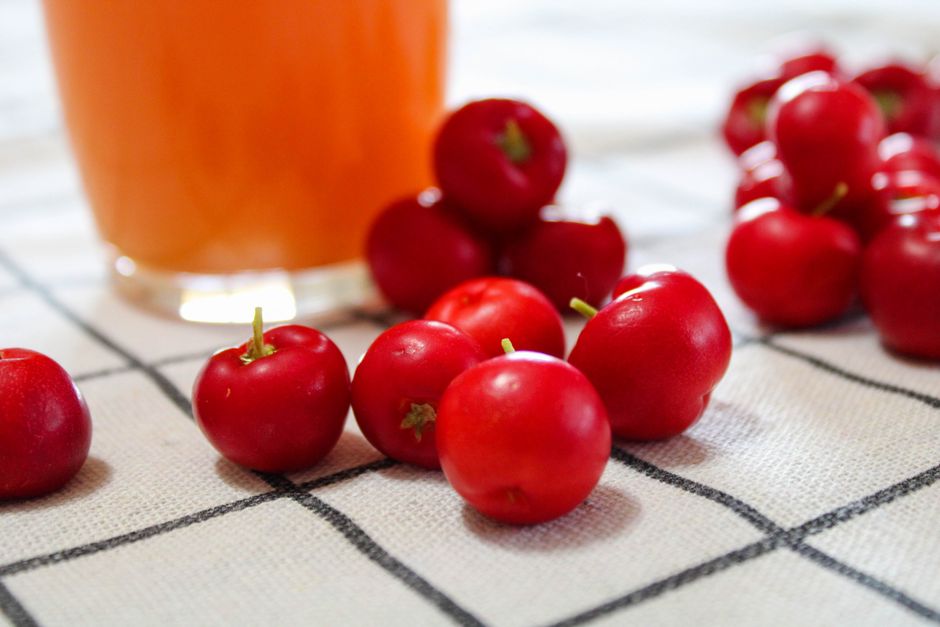
Tart cherry juice has real evidence behind it for some kinds of inflammation, but it is not a treatment for inflammatory disease. The strongest findings involve muscle soreness after hard exercise and markers of oxidative stress in the blood. For chronic conditions like arthritis or gout, the evidence is much thinner and mostly preliminary.
That gap matters. A lot of what you read online treats tart cherry juice as a broad anti-inflammatory remedy. The research does not support that reach. What it supports is narrower, and knowing where the line falls will help you decide whether it belongs in your routine.
What Is Actually in Tart Cherries That Might Reduce Inflammation?
Tart cherries contain anthocyanins, a group of plant pigments responsible for the deep red color. These compounds belong to a larger family called polyphenols, and they have measurable antioxidant activity in laboratory settings.
Anthocyanins appear to influence inflammation through several pathways. They can inhibit enzymes involved in the inflammatory cascade, including cyclooxygenase, which is the same enzyme family that ibuprofen and similar drugs target. They also appear to reduce oxidative stress, the process where unstable molecules called free radicals damage cells and trigger inflammatory signaling.
That mechanism is well described in laboratory and animal research. What is less certain is how much of it happens in a human body after drinking a glass of juice. Anthocyanins are poorly absorbed in the upper gut, and much of what enters the bloodstream is metabolized into other compounds. How much reaches your tissues, and at what concentration, is an active area of study.
Sweet cherries contain some of the same compounds but at lower concentrations. Most of the research uses tart cherries specifically, usually as concentrated juice or powder.
Does Tart Cherry Juice Help Inflammation After Exercise?
This is where the evidence is strongest. Multiple small trials have found that tart cherry juice or concentrate reduces markers of muscle damage and perceived soreness after strenuous exercise, particularly in runners and in people doing heavy resistance training.
The typical study design gives participants tart cherry juice for several days before and after a demanding workout, then measures things like creatine kinase (a marker of muscle breakdown), C-reactive protein, and self-reported soreness. Several of these trials have shown reductions in one or more of those measures compared with a placebo drink.
Some caveats are worth stating plainly. Most of these studies are small, often involving a few dozen participants. Results are not uniform. Some trials found no meaningful difference. And reduced soreness on a questionnaire is not the same as faster recovery or better performance, though a few studies have looked at those outcomes too.
The practical takeaway: if you are a regular exerciser dealing with post-workout soreness, tart cherry juice has more support than most sports recovery products. That is a modest endorsement, not a strong one.
What About Arthritis, Gout, and Chronic Inflammatory Conditions?
The evidence here is much weaker. Some preliminary research suggests tart cherry may reduce gout flare frequency, possibly by affecting uric acid levels, but the studies are small and the findings have not been consistently replicated.
For osteoarthritis and rheumatoid arthritis, human trial data is sparse. Some studies have looked at cherry consumption and inflammatory markers in people with these conditions, but the results are mixed and the sample sizes are small. No clinical guideline currently recommends tart cherry juice as a treatment for any form of arthritis.
This does not mean it is useless. It means the honest position is that we do not know yet. If you have an inflammatory condition and you are considering tart cherry juice, it should sit alongside your prescribed treatment, not replace it. Talk to your rheumatologist or primary care doctor before making changes.
How Does Tart Cherry Juice Compare to Anti-Inflammatory Medications?
It does not compare. This is the most important clarification in this article.
NSAIDs like ibuprofen and naproxen have decades of clinical trial data behind them for acute and chronic pain and inflammation. They work through well-characterized mechanisms at doses that reliably produce measurable effects. Tart cherry juice has a fraction of that evidence base and a far smaller measured effect, where effects have been found at all.
Some marketing implies tart cherry is a natural alternative to pain medication. No head-to-head trial has shown equivalence, and it would be surprising if one did. The concentrations of active compounds reaching your bloodstream from a serving of juice are simply not in the same range as a therapeutic drug dose.
If you take prescription anti-inflammatory medication, do not stop or reduce it because you started drinking tart cherry juice. That is a conversation to have with your doctor.
Can Tart Cherry Juice Help You Sleep, and Does That Matter for Inflammation?
Sleep is a separate claim from inflammation, but the two connect. Poor sleep raises inflammatory markers, and some research has found that tart cherry juice modestly improves sleep quality and duration in adults, possibly because tart cherries contain small amounts of melatonin and other sleep-related compounds.
The sleep evidence is also mixed. Some trials show benefit, others do not. The effects, where found, are modest. But if tart cherry juice does improve your sleep even slightly, and better sleep reduces inflammation, there could be an indirect benefit that has nothing to do with anthocyanins acting directly on inflammatory pathways.
That is a reasonable hypothesis. It is not a demonstrated mechanism. Worth keeping in mind when you see the two claims bundled together.
How Much Tart Cherry Juice Do People Take, and Is It Safe?
There is no official recommended dose. Most research studies have used concentrated tart cherry juice in amounts roughly equivalent to 8 to 12 ounces of juice per day, often split into two servings, taken for several days before and after exercise or for a few weeks in longer trials.
That is what the studies used. It is not a clinical recommendation, and no guideline body has established a standard dose for any purpose.
Safety considerations are worth noting:
- Tart cherry juice is high in natural sugars. An 8-ounce serving can contain around 30 grams of sugar, which matters if you have diabetes or are watching blood sugar.
- Cherries contain potassium. Large amounts could matter for people with kidney disease or those taking potassium-sparing diuretics.
- There is some evidence that cherry compounds may interact with blood-thinning medications, though human data is limited. If you take warfarin or a similar drug, ask your doctor before making it a daily habit.
- For most healthy adults, drinking a serving a day is unlikely to cause harm. That is a general statement, not a guarantee.
If you are pregnant, breastfeeding, or giving this to a child, no clinical guidelines exist for tart cherry juice in those groups. Ask a healthcare provider first.
Should You Try It?
If you are a healthy adult dealing with exercise-related soreness, tart cherry juice is a reasonable thing to try. The evidence is not overwhelming, but it is better than what backs most recovery products on the shelf. Give it a few weeks and see whether you notice a difference. If you do not, there is no reason to keep spending money on it.
If you have a chronic inflammatory condition, manage your expectations. Tart cherry juice is not a treatment. It may be a small piece of a broader approach that includes medication, movement, sleep, and diet. It is not a substitute for any of those.
The broader point about supplements and inflammation is worth sitting with. Most supplements marketed for inflammation have weak or absent evidence. Tart cherry is somewhat unusual in that it has real studies behind it, but even those studies are small and the effects are modest. That is the honest picture. It is more than most products can claim, and less than the marketing suggests.
Frequently Asked Questions
Does tart cherry juice actually reduce inflammation?
It can reduce some markers of inflammation and muscle soreness after intense exercise, based on small clinical trials. For chronic inflammatory conditions like arthritis, the evidence is much weaker and no guidelines recommend it as a treatment.
How much tart cherry juice should I drink for inflammation?
No official dose exists. Research studies have typically used amounts equal to about 8 to 12 ounces of juice daily, often for several days around exercise. That reflects study protocols, not a clinical recommendation.
Is tart cherry juice as effective as ibuprofen?
No. NSAIDs like ibuprofen have decades of trial data and produce effects far larger than anything shown for tart cherry juice. No study has found them equivalent.
Can tart cherry juice help with arthritis pain?
The evidence is limited and mixed, and no clinical guideline recommends it for arthritis. Some people report benefit, but this has not been confirmed in large human trials.
