
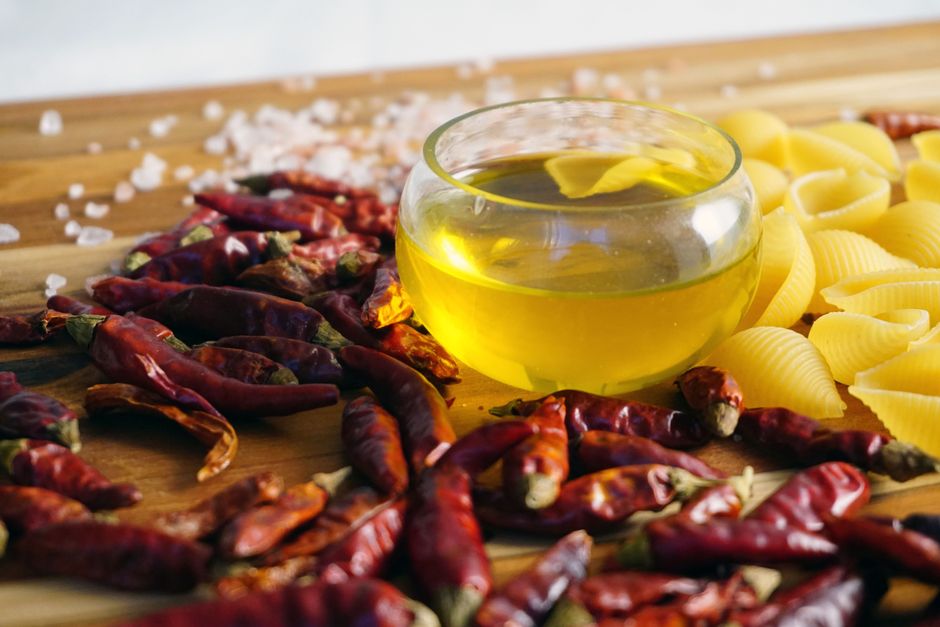
No, spicy food does not reliably induce labour. The belief is widespread, and plenty of people will tell you a hot curry sent them into labour the same night. But when researchers have looked at this question directly, they have not found that spicy food starts labour. What likely happens is simpler: late pregnancy is a time when labour can begin at any moment, so whatever a woman ate or did shortly before contractions started tends to get the credit.
This guide explains where the idea comes from, what the evidence actually shows, why some women still go into labour after a spicy meal, and what is genuinely known about inducing labour safely.
Why Do People Believe Spicy Food Induces Labour?
The theory rests on a chain of biological reasoning rather than on clinical evidence. The idea goes like this: spicy food irritates the stomach and gut, that irritation stimulates the digestive tract, and because the uterus and the bowel share some nerve supply and sit close together, the stimulation might spill over and trigger uterine contractions.
It sounds plausible. The problem is that plausibility is not proof. A mechanism that makes sense on paper does not automatically produce the outcome in a real human body. This is one of the most common mistakes in health folklore — a logical-sounding pathway gets repeated until it feels like a fact.
There is also a cultural layer. Spicy dishes are a traditional “get labour going” meal in many countries, from curry in the UK to certain stews elsewhere. When a tradition is passed down through generations, it carries the weight of authority even without evidence behind it.
One more factor keeps the myth alive: timing. Labour most often begins on its own between 37 and 42 weeks of pregnancy. During those final weeks, almost any meal, walk, or warm bath could be followed by labour simply because labour was going to happen soon anyway.
Does Spicy Food Induce Labour? What the Research Shows
When researchers have surveyed pregnant women about what they tried to start labour, spicy food comes up regularly as a home method. But surveys of what people try are not the same as evidence that it works.
Studies that have looked at whether particular foods actually trigger labour have not found a reliable link. Some research has examined whether certain foods or eating patterns relate to when labour starts, and the results have not supported spicy food as a trigger. The evidence here is limited and does not confirm the claim.
It is worth being precise about what “no evidence” means. It does not mean spicy food is proven to do nothing in every person. It means no well-designed human study has shown that eating spicy food causes labour to begin. That is an honest and important distinction.
What we can say with confidence is that no medical body recommends spicy food as a method to induce labour. It is not taught in midwifery or obstetric guidance. It survives as folklore, not as medicine.
Why Did I Go Into Labour After Eating Spicy Food?
Because labour was ready to start, and the meal happened to come first. This is the most likely explanation in almost every case.
Late pregnancy is a window, not a switch. The body moves through a series of changes — the cervix softens and begins to open, the baby settles lower, contractions become organised — and these changes build over days. When labour finally begins, it can feel sudden even though the groundwork was laid over time.
Think about how many things a woman does in her final weeks. She eats many meals. She walks, rests, has sex, takes baths, drinks teas, and tries countless old wives’ tales. Labour will follow one of these eventually. The one that happens to come right before contractions start gets remembered as the cause.
This is a well-known pattern in how humans think about cause and effect. We notice what came just before an event and assume it caused the event. We rarely notice all the times the same thing happened with no result. If you ate spicy food three times in your last week of pregnancy and went into labour after the third, the first two get forgotten.




Is It Safe to Eat Spicy Food in Late Pregnancy?
For most pregnant women, eating spicy food is fine if they normally eat it and tolerate it well. Spicy food is not dangerous to the baby, and it does not harm the pregnancy.
The real issue is comfort, not safety. In late pregnancy, the stomach and intestines are already under pressure from the growing baby. Heartburn and reflux are common. Spicy food can make heartburn worse for some women, and it can cause indigestion, gas, or loose stools.
A few honest cautions:
- If you already have significant heartburn or reflux, spicy food may add to your discomfort.
- If you have a digestive condition such as irritable bowel syndrome or acid reflux disease, spicy food may trigger symptoms.
- Very hot dishes can cause stomach upset or diarrhoea in anyone, pregnant or not.
None of these are dangers to the baby. They are reasons you might feel worse rather than better. There is no clinical guideline that tells pregnant women to avoid spicy food, and there is none that recommends it to start labour either.
What Actually Induces Labour?
Labour usually starts on its own. The exact trigger is not fully understood, but it involves a complex mix of hormonal signals, changes in the uterus, and signals from the baby. This natural process is the norm, and most pregnancies reach labour without any intervention.
When labour needs to be started for medical reasons, doctors use methods that have been studied and are known to work. These are not home remedies. They include:
- Membrane sweeping — a procedure where a clinician separates the membranes around the baby from the cervix. It can help labour start in some women.
- Prostaglandin medications — drugs placed in the vagina or cervix to help it ripen and open.
- Oxytocin — a hormone given through a drip to start contractions.
- Artificial rupture of membranes — deliberately breaking the waters.
These methods are used under medical supervision because they carry risks and need monitoring. They are not things to try at home, and they are not the same as eating a curry.
It is also important to say clearly: do not try to induce labour on your own without talking to your doctor or midwife first. Some home methods that circulate online — including certain herbs and oils — can be harmful. Castor oil, for example, causes severe diarrhoea and can lead to dehydration, and it is not a safe home method. No clinical guidelines support using it to start labour.
When Should You Call Your Doctor or Midwife?
If you think labour may be starting, contact your doctor or midwife. They can help you work out what is happening and whether it is time to come in.
Call right away, or go to the hospital, if you have any of these:
- Regular contractions that are getting stronger and closer together, especially before 37 weeks.
- Your waters breaking — a gush or a steady trickle of fluid.
- Vaginal bleeding.
- Reduced or changed movement from your baby.
- Severe or persistent pain, or a bad headache with vision changes or swelling.
- Fever or feeling very unwell.
These signs matter more than any home remedy. If you are past your due date and your pregnancy is being monitored, follow the plan your care team has given you rather than trying to speed things along yourself.
The Bottom Line on Spicy Food and Labour
Spicy food is not a labour inducer. The idea is built on biological guesswork and cultural tradition, not on evidence from human studies. If you went into labour after a spicy meal, the meal did not cause it — your body was already preparing for labour.
Eating spicy food in late pregnancy is generally safe if you tolerate it, but it may worsen heartburn and stomach upset. It will not start labour, and it is not a substitute for medical care.
If you want to know whether labour is starting, or if you are considering anything to bring on labour, talk to your doctor or midwife. That conversation is worth more than any old wives’ tale.
Frequently Asked Questions
Does spicy food induce labour?
No, spicy food does not reliably induce labour, and no well-designed human studies confirm that it starts labour. The belief comes from biological reasoning and tradition, not evidence.
Why do so many women go into labour after eating spicy food?
Because labour often begins on its own in late pregnancy, so whatever was eaten or done shortly before gets credited with causing it. This is a coincidence in timing, not a cause.
Is it safe to eat spicy food at the end of pregnancy?
For most women who normally eat spicy food and tolerate it, it is safe and does not harm the baby. It may worsen heartburn or stomach upset in late pregnancy, which is a comfort issue rather than a danger.
What can actually start labour?
Labour usually starts on its own through natural hormonal and physical changes. When labour must be started for medical reasons, doctors use supervised methods such as membrane sweeping, prostaglandin medications, oxytocin, or breaking the waters.
