
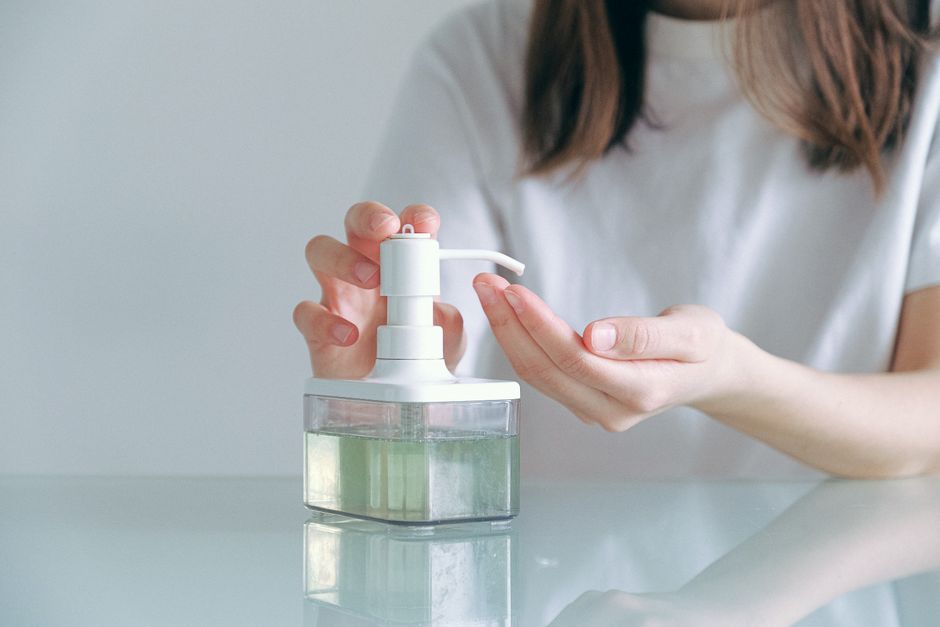
Soap does both. It physically lifts bacteria, viruses, and dirt off your skin so water can rinse them away, and the surfactants in soap also break apart the outer membranes of many germs, killing some of them outright. The washing away matters more than most people realize. Handwashing with soap is one of the most thoroughly studied public health measures in existence, and its main power comes from removal, not chemical warfare.
Does Soap Kill Bacteria Or Just Wash It Away?
The honest answer is that soap does both, but not equally. Removal is the dominant effect. Killing is real but secondary, and it depends on the germ.
Soap molecules are shaped a little like a pin. One end loves water. The other end loves oils and fats. When you lather, these molecules surround oil, dirt, and the germs clinging to them. The water-loving ends face outward, so water grabs the whole package and carries it down the drain. That is the wash-away part, and it is the main event.
The killing part comes from the same molecules. Many bacteria are wrapped in a lipid membrane, and soap surfactants can disrupt it. Enveloped viruses — the group that includes influenza and coronaviruses — have an outer lipid coat that soap can also break apart. Once that coat is damaged, the virus can no longer infect a cell.
Some germs resist this. Bacteria like C. difficile form tough spores that soap does not reliably destroy. Non-enveloped viruses, such as norovirus, are also more resistant to the chemical action. For these, removal is doing almost all the work. Soap still helps — it lifts them off — but it is not killing them in any meaningful way.
One clarification worth holding onto: plain soap is not a disinfectant in the way people imagine. It does not sterilize your hands. What it does is reduce the number of germs dramatically by physically removing them, and that reduction is what protects you.
Why Is Washing With Soap Better Than Water Alone?
Water alone does not remove grease well, and germs stick to the oils on your skin. This is why washing with water only leaves far more contamination behind than washing with soap.
Skin carries a thin layer of natural oils. Germs adhere to that layer. Plain water beads up on oil and slides past it rather than lifting it. Soap changes the chemistry so water and oil can mix, which is what allows the rinse to actually carry contamination away.
Studies that compare handwashing methods consistently find soap and water removes more microbes than water alone. The difference is not small. This is also why health agencies worldwide promote soap as the standard rather than water by itself.
There is a practical point buried here. The mechanical action of rubbing your hands together — the friction — helps loosen germs from skin. Soap makes that loosening more effective. Neither works as well without the other.
Does Handwashing Kill Germs Or Just Remove Them?
Handwashing does both, and the balance shifts depending on what is on your hands. For most everyday germs, removal is the larger effect. For enveloped viruses and many bacteria, the soap also damages them directly.
Think about what happens to the germs that survive the soap but get rinsed away. They end up in the drain, not on your hands, and that is a win. Public health researchers have long emphasized that the physical act of rinsing is central to why handwashing works.
Where people go wrong is assuming soap must kill germs to be effective. It does not need to. A germ that has been rinsed off your hands cannot infect you through your hands. That is the entire point.
This is also why the length of washing matters. Rinsing too quickly does not give the lather time to surround and lift contamination. Rubbing your hands together with soap for roughly 20 seconds is the widely taught standard, and it reflects the time needed for the mechanical and chemical action to work.
Does Antibacterial Soap Kill More Bacteria Than Regular Soap?
For everyday handwashing, the evidence does not show that antibacterial soap works better than plain soap. This is one of the clearer findings in the field.
Antibacterial soaps typically contain ingredients like triclosan or similar compounds. In laboratory settings these kill bacteria. In real-world handwashing, where contact time is short and the soap is rinsed off quickly, the added killing effect has not translated into measurably better health outcomes in the general population.
The evidence is mixed on whether these products offer any advantage outside specific clinical settings. Some studies suggest a small benefit in certain situations. Results vary, and the overall picture does not support a meaningful everyday advantage over plain soap.
There is also a regulatory angle. In the United States, the Food and Drug Administration reviewed the evidence for consumer antiseptic washes and concluded that manufacturers had not demonstrated that these ingredients were more effective than plain soap and water for preventing illness. That review led to restrictions on several ingredients in consumer wash products. The general direction of regulators and public health bodies has been to favor plain soap for general use.
One non-obvious point: antibacterial ingredients in soap can persist in the environment and have raised concerns about resistance. That is part of why the guidance has shifted toward plain soap for routine handwashing rather than away from it.
What About Hand Sanitizer Versus Soap?
Alcohol-based hand sanitizer kills many germs effectively, but it does not remove dirt, grease, or the physical contamination that soap and water rinse away. The two work differently and suit different situations.
Sanitizers with an alcohol concentration in the range of 60 to 95 percent are effective at killing many bacteria and enveloped viruses on hands. They work by denaturing proteins and disrupting membranes. They are convenient when soap and water are not available.
Sanitizer has limits. It does not work well on visibly dirty or greasy hands, because the alcohol cannot reach the germs buried in soil or oil. It is also less reliable against some germs, including C. difficile spores and norovirus, where soap and water remain the preferred method.
Soap and water is the standard when hands are visibly soiled, after using the bathroom, and before preparing food. Sanitizer is a practical backup, not a replacement.
How Should You Wash Your Hands To Actually Remove Germs?
Technique matters as much as the soap. A quick pass under the tap removes far less contamination than a proper lather and rinse.
- Wet your hands with clean running water.
- Apply soap and rub your hands together to build a lather.
- Scrub the backs of your hands, between your fingers, and under your nails.
- Keep rubbing for about 20 seconds — roughly the time it takes to hum “Happy Birthday” twice.
- Rinse well under running water.
- Dry your hands with a clean towel or let them air dry.
The 20-second figure comes from widely used public health guidance and reflects the time needed for lather and friction to work. Drying matters too. Germs transfer more easily from wet hands than dry ones, so a thorough dry is part of the job, not an afterthought.
Water temperature is a common point of confusion. Warm water feels better, but the evidence does not show that hot water kills more germs on hands during a normal wash. Comfortable water is fine. The soap and the rubbing are doing the work.
The Bottom Line On Soap And Germs
Soap kills some germs and washes most of them away, and the washing away is the bigger effect. Plain soap is enough for everyday handwashing. Antibacterial formulas have not been shown to work better for general use, and the evidence does not support reaching for them over regular soap.
The single most useful thing you can do is lather properly, scrub all surfaces of your hands, and rinse. That simple routine has been studied for decades and remains one of the most reliable ways to reduce the spread of infections.
Frequently Asked Questions
Does soap actually kill bacteria?
Soap can kill many bacteria by disrupting their outer membranes, but removal by rinsing is the larger effect. Some germs, like C. difficile spores, are not reliably killed by soap and are mainly washed away.
Is soap better than hand sanitizer?
Soap and water is preferred when hands are visibly dirty or greasy, and for germs like norovirus and C. difficile spores. Alcohol-based sanitizer is a good backup when soap and water are not available.
Does hot water kill more germs when washing hands?
No, the evidence does not show that hot water kills more germs on hands during a normal wash. Comfortable water works fine because the soap and the scrubbing do the work.
How long should you wash your hands to remove germs?
About 20 seconds of lathering and scrubbing is the widely taught standard. That is roughly the time it takes to hum “Happy Birthday” twice.
