
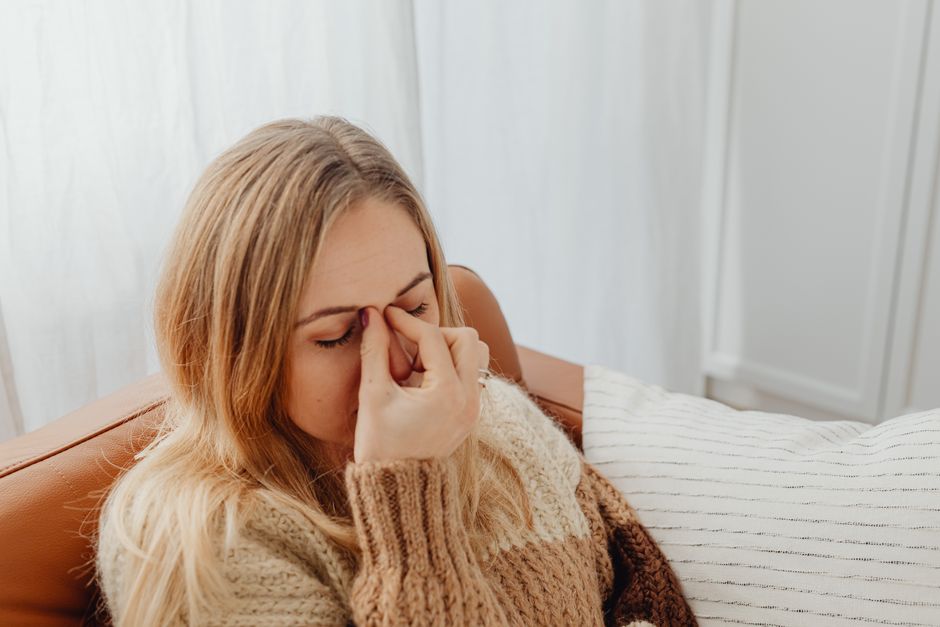
Yes — sighing relieves stress, and the relief is measurable. A sigh is a deep breath that fills the lungs more fully than a normal breath, followed by a long exhale. That long exhale is where the effect lives. It slows your heart rate and shifts your nervous system toward a calmer state. The sigh you do without thinking is a built-in reset button, and you can use it on purpose.
Researchers have studied this for decades. The spontaneous sigh happens roughly every few minutes in healthy adults at rest, and it appears to serve a real physiological purpose: it reinflates small air sacs in the lungs that tend to collapse during steady breathing. When stress rises, sighing becomes more frequent. That is not a sign of weakness. It is your body regulating itself.
What Happens In Your Body When You Sigh?
A sigh is a breath with two parts: a normal inhale, then a second short inhale on top of it, followed by a slow exhale. The extra air opens the tiny air sacs, called alveoli, that can deflate during quiet breathing.
The bigger effect comes on the way out. A long, slow exhale activates the parasympathetic nervous system — the branch that slows heart rate and promotes a calmer state. This is a well-established part of how breathing and heart rate interact. During the exhale, the vagus nerve carries signals that slow the heart, a process called respiratory sinus arrhythmia. You can feel this yourself: your heart rate naturally rises slightly as you breathe in and falls as you breathe out.
A sigh stretches that exhale. That means a longer window of slowed heart rate and a stronger shift toward the calming branch of the nervous system.
There is a second layer. A sigh that comes with a physical release — a shoulder drop, a loosening of the chest — is often tied to letting go of tension you were holding without noticing. That connection between breath and muscle tension is real, though the exact mechanisms are still being worked out.
Does Sighing Relieve Stress What The Science Says
The evidence for sighing as a stress-relief tool is strongest when the sigh is done deliberately and slowly. Several controlled studies have looked at what researchers call a “cyclic sighing” practice — a double inhale through the nose followed by a long exhale through the mouth. These studies have generally found modest but measurable improvements in mood and reductions in physiological arousal compared with normal breathing.
One widely referenced study compared different breathwork patterns and found that the cyclic sighing pattern produced the largest improvements in mood and a lower resting breathing rate over a short practice period. The effect sizes were meaningful but not dramatic. This is not a cure for anxiety. It is a real, accessible tool with measurable short-term effects.
What the research does not show is that sighing treats clinical anxiety, depression, or chronic stress disorders on its own. No large trial has confirmed that. Breathwork can be a useful part of managing stress, but it is not a substitute for treatment when stress is severe or persistent.
There is also a distinction worth making. The spontaneous sigh you do without thinking is a physiological housekeeping mechanism. The deliberate, slow-exhale sigh is a stress regulation technique. They overlap, but they are not identical. The research on stress relief focuses on the deliberate version.
Why Does A Long Exhale Calm You Down?
The exhale is the active ingredient. When you breathe out slowly, pressure receptors in your blood vessels and lungs send signals through the vagus nerve to the brain. This triggers a reflex that slows the heart and lowers blood pressure slightly.
This is why so many relaxation techniques share the same structure. Box breathing, 4-7-8 breathing, and slow-paced breathing all emphasize a long exhale. The specific counts matter less than the ratio: a longer out-breath than in-breath.
Your breathing pattern also affects how you feel emotionally. Rapid, shallow breathing in the chest is associated with anxiety — and it can feed it. Slow, deep breathing from the diaphragm works in the other direction. The relationship runs both ways. Changing your breath can change your emotional state, at least in the short term.
A sigh does this efficiently. You do not need a timer or a special posture. You take one breath, make the exhale long, and the reflex does the rest.





How Do You Sigh For Stress Relief?
The technique researchers have studied is simple. Breathe in through your nose until your lungs feel mostly full. Then take a second short sniff of air through the nose to top them off. Let the exhale out slowly through your mouth, longer than the inhale took.
Repeat this a few times. In the studies, participants practiced for about five minutes a day. You do not need equipment or an app.
A few practical notes:
- Keep the exhale gentle. Forcing air out can create tension and work against the goal.
- Stay comfortable. If you feel lightheaded, stop and breathe normally. Lightheadedness from over-breathing is common and not dangerous, but it is a signal to slow down.
- Use it in the moment. Before a difficult conversation, during a stressful commute, or when you notice your shoulders creeping up.
This is not a technique with official dosing guidelines. No clinical body has issued a standard prescription for sighing. The research supports a few minutes of practice, but there is no established optimal frequency or duration.
Is Sighing A Sign Of Anxiety Or Something Else?
Frequent sighing can be a sign that your body is working to regulate itself under stress. It is also linked to other conditions, and it is worth knowing the difference.
People with anxiety often sigh more, and so do people with panic disorder. In these cases, sighing is a response to a breathing pattern that has become irregular or shallow. It is the body’s attempt to correct the imbalance.
Frequent sighing is also associated with:
- Hyperventilation syndrome, where breathing is chronically too fast or too deep
- Some lung conditions that affect how well air sacs stay open
- Certain neurological conditions that affect breathing control
- Medication side effects in some cases
This is not a reason to worry about normal sighing. Everyone sighs. The pattern to pay attention to is sighing that is frequent, feels out of your control, or comes with shortness of breath, chest pain, or dizziness. Those symptoms deserve a medical evaluation. They can have several possible causes, and a doctor is the right person to sort them out.
One clarification worth knowing: sighing is not a sign of lung damage or weakness. The reflex exists to protect the lungs, not because they are failing.
How Does Sighing Compare To Other Stress Relief Methods?
Sighing is one of the fastest stress-relief tools available because it requires nothing but a breath. That speed is its main advantage. It is also its main limitation — the effect is short-lived.
Slow breathing practices in general have a reasonable evidence base for short-term stress reduction. Research consistently shows that slow-paced breathing reduces physiological markers of stress like heart rate and blood pressure in the moment. The evidence for long-term effects on chronic stress is weaker and more mixed.
What sighing does not replace:
- Regular physical activity, which has stronger evidence for long-term stress and mood benefits
- Sleep, which is foundational to how well you handle stress
- Professional support for anxiety or depression
- Social connection, which is one of the most consistent predictors of stress resilience
The honest position is that sighing is a useful tool in a larger toolkit. It works quickly and costs nothing. It is not a treatment for a stress disorder, and no study has shown it replaces established approaches for clinical anxiety.
If you are dealing with ongoing stress that affects your sleep, work, or relationships, a single breathing technique is not the answer. Talk to a doctor or mental health professional. Breathwork can sit alongside that care, but it does not stand in for it.
Frequently Asked Questions
Does sighing actually relieve stress?
Yes. The long exhale in a sigh activates the parasympathetic nervous system and slows your heart rate, which produces a measurable calming effect. The relief is real but short-lived.
How many times should you sigh to calm down?
There is no official recommended number. In studies, participants practiced a slow double-inhale sigh for about five minutes at a time, which is a reasonable starting point.
Is sighing a lot a sign of anxiety?
It can be. Frequent sighing is common in people with anxiety and panic disorder, though it also happens for other reasons, including lung and neurological conditions. Sighing that feels out of control or comes with shortness of breath or dizziness should be checked by a doctor.
Is sighing better than deep breathing for stress?
No single technique is clearly best. The key feature of any calming breath is a long exhale, and a sigh delivers that quickly. Some studies suggest cyclic sighing produces larger short-term mood benefits than other patterns, but the evidence is not strong enough to call it superior overall.
