
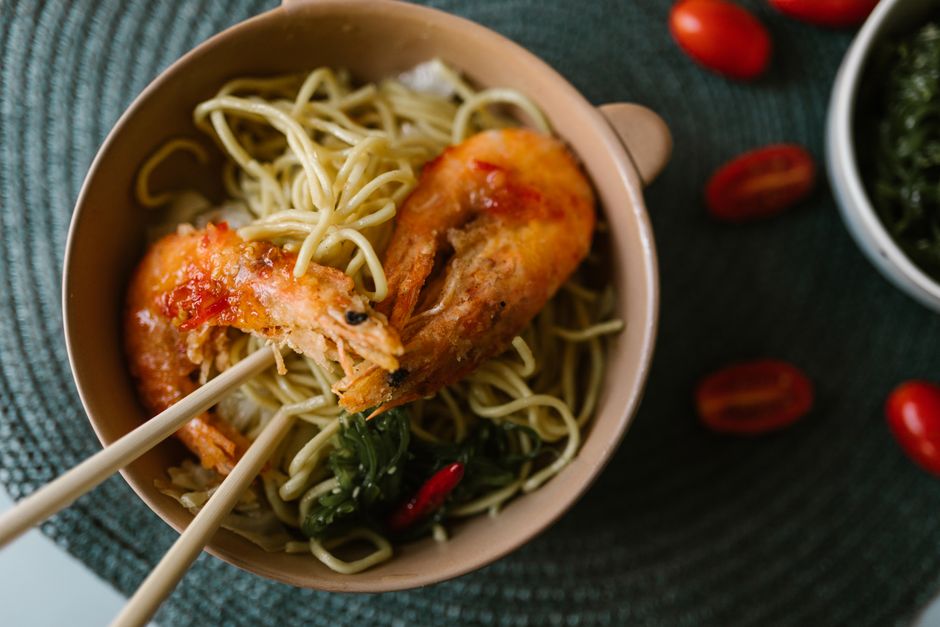
Shrimp is one of the lowest-mercury seafood choices you can make. Most shrimp contains only trace amounts of mercury — far less than tuna, swordfish, or shark. Federal dietary guidelines list shrimp among the “Best Choices” for seafood, meaning it can be eaten two to three times per week as part of a healthy diet.
Does Shrimp Have Mercury and How Much?
Yes, shrimp contains mercury. Almost all seafood does. The question is how much — and shrimp sits at the very bottom of the scale.
Mercury in seafood exists mostly as methylmercury, a form that builds up in the food chain. Large predatory fish like shark, swordfish, and king mackerel accumulate the most because they eat smaller fish over many years. Shrimp are small, short-lived, and sit low on the food chain. They simply do not have time to accumulate much mercury.
The FDA and EPA publish a joint chart that sorts commercial fish into three tiers: Best Choices, Good Choices, and Choices to Avoid. Shrimp appears in the Best Choices category. That tier is defined as seafood with the lowest measured mercury levels — generally under 0.15 parts per million. For context, some large predatory fish can exceed 1 part per million, several times higher.
Exact mercury values vary by species and fishing region. What matters for your plate is the tier, not the decimal. Shrimp consistently lands in the lowest group.
Is Shrimp Safe to Eat During Pregnancy?
Shrimp is considered a safe seafood choice during pregnancy when it is cooked thoroughly. In fact, the FDA specifically names shrimp as a recommended option for pregnant people who want the nutritional benefits of seafood without high mercury exposure.
Seafood is the main dietary source of omega-3 fatty acids, particularly DHA, which supports fetal brain and eye development. Federal guidance encourages pregnant people to eat 8 to 12 ounces of low-mercury seafood per week. That equals roughly two to three servings. Shrimp fits easily into that plan.
Two safety points matter more than mercury here:
- Cook it fully. Raw or undercooked shrimp can carry Vibrio bacteria and other pathogens. Pregnancy lowers immune defenses, so foodborne illness is more dangerous. Shrimp should be opaque and firm throughout.
- Avoid raw preparations. Ceviche, sushi-style raw shrimp, and lightly seared shrimp are not recommended during pregnancy.
If you take a fish oil supplement alongside eating shrimp, tell your doctor. Most prenatal guidance caps total intake based on mercury risk, not omega-3 content, so shrimp does not count against any limit.
How Does Shrimp Compare to Other Seafood?
Shrimp is one of the lowest-mercury options available. The table below shows how it stacks up against commonly eaten seafood. Values are approximate ranges from federal monitoring data and are meant to show relative position, not exact numbers.
| Seafood | Mercury Tier | Relative Mercury Level |
|---|---|---|
| Shrimp | Best Choice | Very low |
| Salmon | Best Choice | Very low |
| Canned light tuna | Best Choice | Low |
| Albacore tuna | Good Choice | Moderate |
| Halibut | Good Choice | Moderate |
| Swordfish | Avoid | High |
| Shark | Avoid | High |
Notice that shrimp and salmon share the same low-mercury tier. Both are recommended for regular consumption. The difference is nutrient profile: salmon is much higher in omega-3 fats, while shrimp is leaner and higher in protein per calorie.





What Are the Real Risks of Eating Shrimp?
Mercury is not the main concern with shrimp. Other issues deserve more attention.
Foodborne bacteria. Raw and undercooked shrimp are a common source of Vibrio infections, which can cause severe gastrointestinal illness. Cooking shrimp to an internal temperature of 145°F eliminates this risk. Imported shrimp has also been linked to bacterial contamination in some recalls.
Shellfish allergy. Shrimp is one of the most common food allergens in the United States. Reactions can range from hives to life-threatening anaphylaxis. If you have a shellfish allergy, shrimp is off the table regardless of mercury content.
Sulfites and additives. Some shrimp, especially imported varieties, are treated with sulfites to prevent discoloration. People with sulfite sensitivity may react. Labels usually indicate this.
Cholesterol. Shrimp is higher in dietary cholesterol than most meats. For decades this raised concern. Current dietary guidance from major health organizations no longer treats dietary cholesterol as the primary driver of blood cholesterol for most people. Saturated and trans fats matter more. Shrimp is low in saturated fat, so it is generally considered heart-healthy.
Mercury, in short, is the least of the worries with shrimp.
How Often Can You Eat Shrimp?
Federal guidelines recommend 8 to 12 ounces of seafood per week for adults, choosing from the Best Choices and Good Choices tiers. Shrimp can fill that entire weekly amount if you like. There is no separate shrimp limit.
For reference, 8 ounces of shrimp is roughly 16 to 20 large shrimp, depending on size. That is about two to three modest servings across a week.
People who are pregnant, breastfeeding, or feeding young children should follow the same 8 to 12 ounce guideline, choosing only from the Best Choices tier. Shrimp qualifies.
There is no established upper limit specifically for shrimp because its mercury content is so low. The practical limit is your overall weekly seafood total, not shrimp itself.
Does Cooking Remove Mercury From Shrimp?
No. Cooking does not remove mercury from seafood. Methylmercury binds tightly to protein in the muscle tissue, and heat does not break that bond or drive the mercury out.
This is a common misconception. Grilling, boiling, frying, or steaming shrimp will not lower its mercury content. What cooking does do is kill bacteria and parasites, which is a separate and important safety benefit.
The good news is that shrimp starts with so little mercury that removal is unnecessary. If you are concerned about mercury in a higher-mercury fish, cooking will not help — the only effective strategy is choosing a lower-mercury species.
Is Farmed or Wild Shrimp Different for Mercury?
Mercury levels in shrimp are low whether farmed or wild-caught. Both appear in the FDA Best Choices tier. The farming method does not meaningfully change mercury content because shrimp do not accumulate much mercury in the first place.
Other differences exist between farmed and wild shrimp — taste, price, environmental impact, and sometimes the use of antibiotics in overseas aquaculture. Those are real considerations for some shoppers. Mercury is not one of them.
If you see marketing that claims one type of shrimp is “mercury-free,” treat that with skepticism. No seafood is truly mercury-free. Shrimp is simply very low, which is the meaningful distinction.
Frequently Asked Questions
Does shrimp have mercury?
Yes, shrimp contains trace amounts of mercury, but it is among the lowest of any seafood. Federal guidelines classify shrimp as a Best Choice for low mercury content.
How much mercury is in shrimp compared to tuna?
Shrimp has significantly less mercury than most tuna, especially albacore and bigeye. Canned light tuna is also low, but shrimp generally ranks even lower.
Is it safe to eat shrimp every day?
There is no specific daily limit for shrimp because its mercury content is so low. Most guidance focuses on total weekly seafood intake of 8 to 12 ounces rather than a daily shrimp cap.
Can pregnant women eat shrimp?
Yes, shrimp is considered a safe and recommended seafood choice during pregnancy when it is fully cooked. It counts toward the recommended 8 to 12 ounces of low-mercury seafood per week.
