
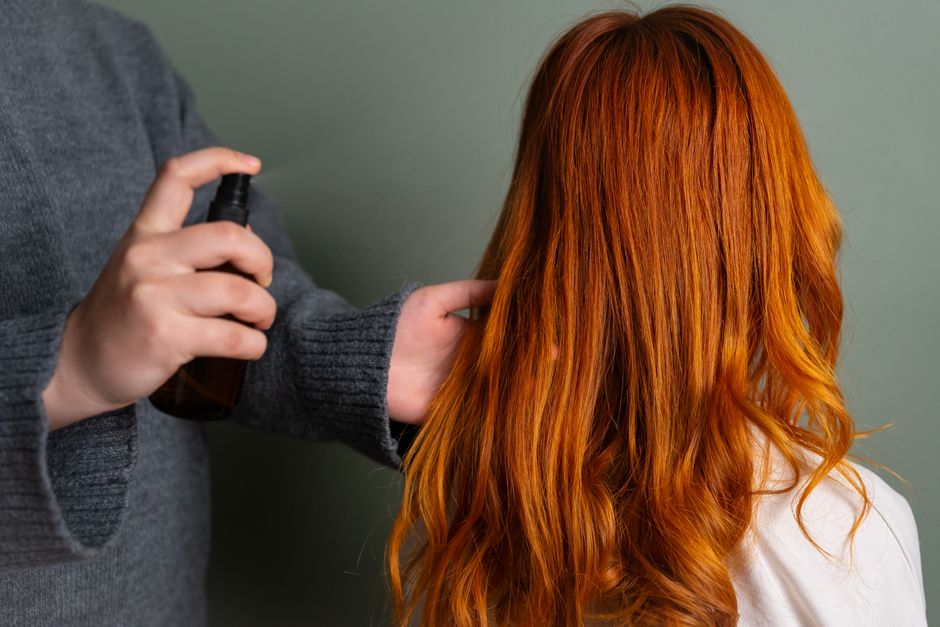
Shiny hair is often seen as the gold standard of healthy hair, but the truth is more complicated. Shine alone does not guarantee that your hair is healthy. In fact, hair can look glossy while being damaged, brittle, or prone to breakage. The reverse is also true: healthy hair can sometimes look dull. Understanding what actually creates shine, and what it does and does not tell you about hair health, requires looking at the structure of the hair itself.
What Actually Causes Hair to Look Shiny?
Shine is a physical property of light, not a direct measure of health. When light hits the hair shaft, it reflects off the surface. The smoother and more uniform that surface is, the more light bounces back in one direction. That reflection is what you perceive as shine.
Each strand of hair is covered in a layer of overlapping cells called the cuticle. When the cuticle lies flat and tight, the surface is smooth and reflective. When the cuticle is raised, rough, or missing in patches, light scatters in many directions. The hair then looks dull, even if the internal structure is perfectly healthy.
So shine is primarily a surface phenomenon. It tells you something about the condition of the cuticle, but very little about the condition of the cortex, which is the main structural part of the hair fiber.
Can Damaged Hair Still Look Shiny?
Yes. This is where the common assumption breaks down. Some types of damage actually increase shine temporarily.
Chemical treatments like relaxers and some permanent waves can flatten the cuticle, making the hair appear glossier. Certain silicone-based styling products coat the hair in a smooth film that reflects light evenly. This creates a shiny appearance regardless of what is happening underneath the surface.
Even heat damage can sometimes produce a temporary glass-like sheen. High heat can melt and fuse the outer layers of the hair, creating a smooth but fragile surface. The hair reflects light well, but the internal protein structure has been weakened. This hair is more likely to snap, split, or break during routine styling.
In these cases, shine is a cosmetic effect, not a health report. The hair looks good but is structurally compromised.
What Does Healthy Hair Actually Look Like?
Healthy hair is defined by its internal structure and its ability to withstand stress. The cortex, which makes up most of the hair fiber, is packed with keratin proteins held together by disulfide bonds. When these bonds are intact and the protein structure is sound, the hair has strength and elasticity.
Elasticity is the ability to stretch and return to its original shape without breaking. Wet healthy hair can stretch about 30 percent of its length without damage. Dry healthy hair is more fragile and should not be stretched. This property is a far better indicator of health than shine.
Healthy hair also has a consistent diameter along the strand. It should not have thin spots, weak points, or split ends that travel up the shaft. The surface may be slightly rough or matte, especially in naturally curly or coily hair, but the strand remains strong.
In short, healthy hair is strong, elastic, and resistant to breakage. Shine is optional.

Why Does Hair Texture Change How Shine Looks?
Hair texture plays a major role in how much light a strand reflects. Straight hair has a smooth, cylindrical shape. Light hits it evenly and reflects predictably, producing a natural gloss.
Curly and coily hair is often oval, flat, or ribbon-shaped. The bends and curves in the strand cause light to scatter in multiple directions. Even perfectly healthy curly hair can look dull compared to straight hair, simply because of its geometry.
This is a critical point. A person with naturally curly hair may have perfectly healthy strands that appear matte. A person with straight hair may have badly damaged strands that shine like glass. Comparing shine across different hair types is not a valid way to judge health.
Does Shiny Hair Mean Healthy Hair Not Always — What About Product Shine?
Styling products can create shine that has nothing to do with the hair itself. Serums, oils, sprays, and leave-in conditioners often contain silicones or other film-forming ingredients. These ingredients coat the strand, fill in gaps in the cuticle, and create a smooth reflective surface.
This is not necessarily bad. Many of these products also provide protection from humidity, heat, and friction. But the shine they produce is a coating, not a change in the hair’s actual condition. If you wash the product out, the hair returns to its natural appearance, whatever that may be.
Some products also contain oils that penetrate the hair shaft and improve flexibility. These can genuinely improve the condition of the hair over time. But the immediate gloss you see after applying them is still largely a surface effect.
The key distinction is temporary shine versus structural health. If the shine disappears when the product is removed and the hair is brittle underneath, the product was masking damage, not repairing it.
How Can You Tell If Hair Is Actually Healthy?
You cannot judge hair health by looking at it in a mirror under good lighting. You need to feel it and test its behavior.
Take a single strand of clean, dry hair between your fingers. Slide your fingers from the root to the tip. If it feels rough, bumpy, or catches on your skin, the cuticle is raised or damaged. If it slides smoothly, the surface is in good condition.
Next, test elasticity. Take a wet strand and gently stretch it. It should stretch noticeably and then spring back. If it stretches and stays stretched, or if it snaps immediately, the protein structure is weakened.
Look at the ends. Split ends, white dots, or a frayed appearance indicate damage that has progressed up the shaft. Trimming removes the damaged portion, but the underlying cause must be addressed to prevent recurrence.
Consider your hair’s behavior. Does it tangle easily? Does it break during brushing? Does it feel mushy when wet? These are signs of structural weakness that no amount of shine can hide.
What Damages Hair Even When It Looks Good?
Several common practices damage hair without immediately destroying its shine. Heat styling is the most obvious. Flat irons, curling wands, and blow dryers can reach temperatures that boil the water inside the hair fiber. This creates steam bubbles that weaken the cortex from within.
Chemical treatments are another major source. Hair color, bleach, perms, and relaxers all work by altering the chemical bonds in the hair. Bleach, in particular, breaks down melanin, the pigment that gives hair its color. This process also degrades the protein structure. Over-bleached hair can look bright and glossy but is often fragile enough to break off during routine combing.
Mechanical damage comes from friction. Rough towel drying, tight ponytails, and vigorous brushing can all lift the cuticle and cause breakage. Wet hair is especially vulnerable because the hydrogen bonds that give it strength are temporarily broken by water.
Sun exposure is often overlooked. Ultraviolet radiation degrades the proteins in the hair shaft, causing dryness, color fading, and loss of strength. This damage accumulates over time and is not visible until it is advanced.
Is There a Way to Get Both Shine and Health?
Yes, but the approach matters. The goal is to create shine through improving the hair’s actual condition, not just coating it.
Healthy hair produces its own shine when the cuticle lies flat and the cortex is strong. This is achieved by protecting the hair from damage, not by trying to reverse it after the fact. Using lower heat settings, limiting chemical treatments, and avoiding harsh mechanical handling are the foundation.
Conditioning treatments can help. Protein-based conditioners can temporarily fill gaps in the hair shaft and improve its strength. Moisturizing conditioners help the hair retain water, which improves flexibility. Neither repairs severe damage, but both can improve the hair’s appearance and feel.
Products that contain oils like argan, jojoba, or coconut can smooth the cuticle and add shine. Some of these oils penetrate the shaft and provide genuine conditioning benefits. The shine they produce is real, but it is still a surface effect that requires ongoing application.
The honest answer is that shine and health can coexist, but they are not the same thing. You can have one without the other. If you want both, focus on protecting the hair’s structure and accept that your natural shine level depends on your hair type.
Frequently Asked Questions
Can shiny hair be damaged?
Yes. Chemical treatments, heat styling, and some products can create a smooth reflective surface while the internal protein structure is weakened.
Why is my hair dull even though it is healthy?
Dullness is often a surface issue caused by a raised cuticle, but it can also be natural. Curly and coily hair scatters light more than straight hair, so it appears less shiny even when perfectly healthy.
Does shine return after damage is repaired?
Hair cannot repair itself because it is dead tissue. Trimming removes damaged portions, and conditioning can temporarily smooth the surface, but the damaged length of the hair cannot be restored to its original structure.
Is it possible to have healthy hair that never looks shiny?
Yes. Hair health is about strength, elasticity, and resistance to breakage. Shine is a surface property that depends on hair texture, cuticle condition, and light reflection, not on internal health.
