
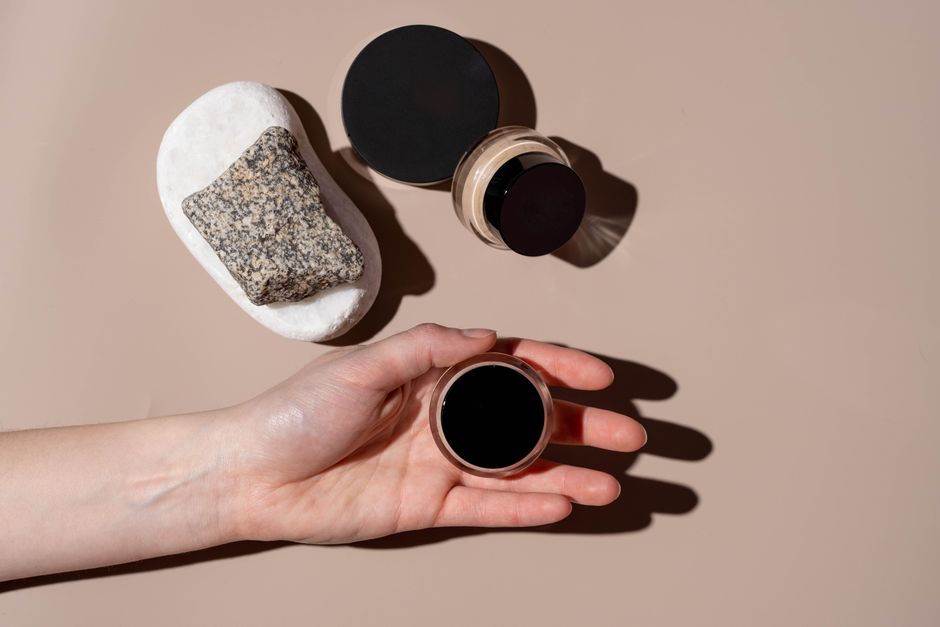
Shilajit is a sticky, tar-like substance that seeps from rock crevices in high mountain ranges, mainly the Himalayas. It has been used in Ayurvedic medicine for centuries, and today it is sold as a supplement for energy, testosterone, and healthy aging. Does it actually work? The honest answer is that the evidence is thin. A small number of human trials suggest possible benefits for fatigue and some markers of male fertility, but most of the claims made for shilajit rest on animal studies, laboratory experiments, or traditional use rather than strong clinical trials.
What Is Shilajit, Exactly?
Shilajit is not a plant or an herb. It is a complex mixture of organic and inorganic material formed over long periods from the decomposition of plants and microorganisms, compressed and transformed by pressure and heat in rock formations.
The substance is composed mainly of humic substances — fulvic acid and humic acid — along with a long list of minerals, trace elements, and other organic compounds. The exact composition varies widely depending on where it comes from, which matters a great deal for anyone trying to judge a product.
In traditional Ayurvedic practice, shilajit is described as a rasayana, a class of preparations used for longevity and vitality. That traditional framing is where many modern marketing claims originate. Traditional use is not the same as demonstrated clinical benefit, and it is worth keeping that distinction clear.
Why the Source and Purity Matter So Much
Because shilajit is collected from rock, contamination is a real concern. Heavy metals, including lead, arsenic, and mercury, have been detected in some shilajit products sold online. Independent testing has repeatedly found that purity varies enormously between brands and even between batches of the same brand.
This is not a minor detail. A product marketed as a natural mineral supplement can, in practice, deliver a dose of toxic metals. Anyone considering shilajit should look for products with third-party testing for heavy metals, and should be aware that not all products carry such testing.
Does Shilajit Actually Work for Energy and Fatigue?
The strongest human evidence for shilajit concerns fatigue, and even that evidence is limited. A small randomized, placebo-controlled trial in healthy adults found that a standardized shilajit preparation reduced symptoms of chronic fatigue compared with placebo over a period of weeks.
That is a genuine finding, but it needs context. The trial was small, and small trials are more likely to produce exaggerated or unreliable results. It has not been widely replicated by independent research groups. So the evidence is best described as preliminary — enough to justify further study, not enough to call shilajit a proven treatment for fatigue.
Many of the energy claims trace back to shilajit’s role in mitochondrial function in laboratory and animal studies. Fulvic acid and related compounds have been shown to influence cellular energy pathways in test tubes and in animals. Biological plausibility, however, is not the same as demonstrated clinical benefit in people. A mechanism that looks promising in a petri dish frequently fails to translate into a real effect when tested in humans.
What About Testosterone and Male Fertility?
Some small human studies have looked at shilajit and male reproductive health. A few of these reported improvements in measures such as sperm count and sperm motility in men with fertility problems, and one small study reported changes in testosterone levels.
These results are interesting but far from settled. The studies are small, and some were conducted by researchers with ties to manufacturers, which raises the risk of bias. Larger, independent trials are needed before any conclusion can be drawn. No major medical organization recommends shilajit for low testosterone or infertility.
It is also worth being clear about what testosterone changes in small studies mean. A modest shift in a blood marker does not automatically translate into noticeable changes in energy, muscle, mood, or sexual function. Those outcomes require their own careful measurement.
What Does the Evidence Actually Support?
If you line up the claims against the quality of the evidence, a clear pattern emerges. Some areas have a little human data. Many have none at all in people.
- Fatigue: One small randomized trial suggests possible benefit. Preliminary only.
- Male fertility markers: A few small studies suggest possible improvements. Weak and not independently replicated.
- Testosterone: Limited and inconsistent human data. Not established.
- Cognitive function and memory: Mostly animal and laboratory data. No reliable human trials confirm benefit.
- Healthy aging and longevity: Traditional claim with no clinical evidence in humans.
- Blood sugar and metabolic health: Early, limited research. Not established.
- Altitude sickness and immune function: Some preliminary reports exist. Not confirmed by strong trials.
The pattern is consistent: shilajit is a substance with plausible mechanisms and a handful of small human studies, sitting underneath a much larger pile of marketing claims that outrun the science.
Is Shilajit Safe?
The safety picture is genuinely uncertain, and that uncertainty should be taken seriously. Short-term use in the small published trials did not report serious adverse effects, but those trials were small and did not run long enough to detect uncommon problems.
The bigger concern is contamination. Because shilajit is a rock-derived substance, it can carry heavy metals and other impurities. Reports of elevated lead and other toxic metals in some products are a documented issue, not a hypothetical one. Chronic exposure to heavy metals can cause real harm, including kidney and neurological damage.
There is also a labeling problem. Some products sold as shilajit have been found to contain little or no actual shilajit, or to be diluted with fillers. Without independent testing, a buyer has no reliable way to know what is in the container.
Who Should Be Cautious
People who are pregnant or breastfeeding should avoid shilajit. No clinical guidelines exist for its use in pregnancy or breastfeeding, and the contamination risk alone makes it a poor choice when there is no established benefit.
Children should not take it. People with kidney disease, liver disease, or conditions that affect how the body handles minerals should be especially cautious, since shilajit can contain high levels of trace elements. Anyone taking prescription medications should talk to a pharmacist or doctor before adding it, because interactions have not been well studied.
How Can You Tell If a Shilajit Product Is Legitimate?
You largely cannot tell by looking at it. Shilajit is sold as a resin, powder, or capsule, and appearance is not a reliable indicator of purity or potency. The label is your main source of information, and labels are only as good as the testing behind them.
Look for products that state they have been third-party tested for heavy metals and that provide a certificate of analysis. Be skeptical of products that make sweeping health claims, since those claims are usually a sign that marketing is doing more work than the science. And be aware that price is not a reliable signal of quality either.
One non-obvious point: the research that exists has mostly used specific standardized preparations, not the general category of “shilajit.” A study on one purified extract does not automatically tell you anything about an unrelated product sold under the same name. This gap between studied preparations and commercial products is common in supplement research, and it makes generalizing from the trials risky.
What Should You Take Away From All This?
Shilajit is a traditional remedy with a small amount of early human research behind it. Some of that research is intriguing, particularly around fatigue and male fertility markers. None of it is strong enough to call shilajit an established treatment for anything.
The risks are real and mostly relate to what else is in the product. Heavy metal contamination has been documented in commercially available shilajit, and purity varies widely.
If you are considering it, the sensible approach is to treat it as an unproven supplement, not a remedy. Talk to a healthcare provider first, especially if you take medications or have any chronic condition. Look for independently tested products. And keep your expectations calibrated to what the evidence actually shows — which is a lot less than the marketing suggests.
Frequently Asked Questions
Does shilajit actually work?
It has some early evidence for fatigue and male fertility markers, but the human trials are small and not independently confirmed. Most health claims for shilajit are not supported by strong clinical evidence.
Is shilajit safe to take every day?
Short-term use in small studies did not report serious side effects, but long-term safety is unknown. The main concern is heavy metal contamination, which has been found in some commercial products.
Does shilajit increase testosterone?
Some small studies suggest it might affect testosterone, but the data are limited and inconsistent. No major medical organization recommends shilajit for low testosterone.
Can you take shilajit while pregnant or breastfeeding?
No. There are no clinical guidelines for shilajit use in pregnancy or breastfeeding, and the contamination risk makes it a poor choice when no established benefit exists.
