
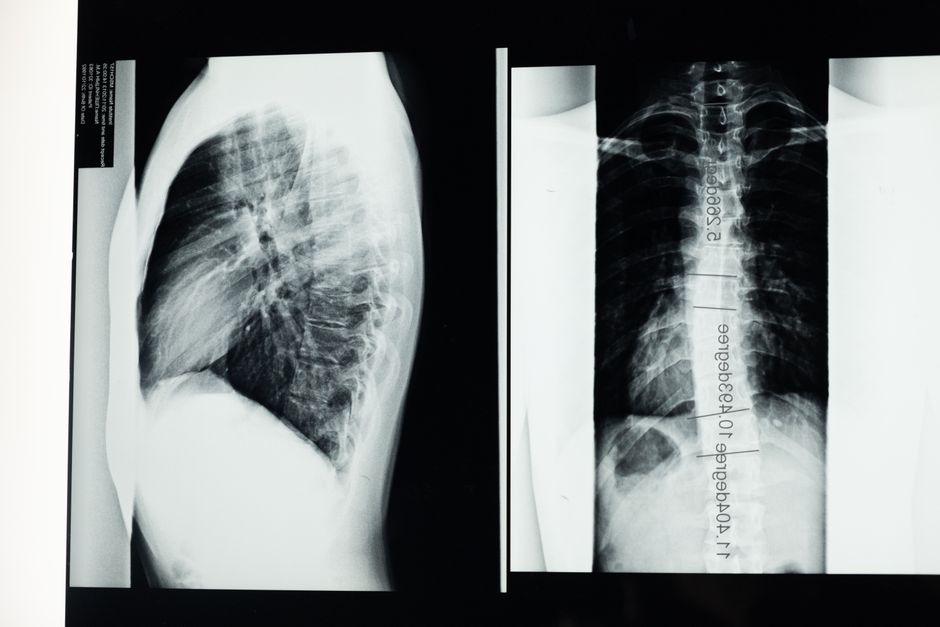
Scoliosis is a sideways curve of the spine that measures at least 10 degrees. Many people assume this curve is the direct reason their back hurts. The relationship is more complicated than that. Research shows that adults with scoliosis do report more back pain than those without it, but the curve itself is not always the source of the pain. For many, the pain comes from the muscles, joints, and discs working harder to keep the body upright.
Does Scoliosis Cause Back Pain in Adults?
Yes, adults with scoliosis are more likely to experience back pain than people with straight spines. Studies have consistently found a higher prevalence of back pain in adults with scoliosis compared to the general population. This is a well-established finding in medical literature.
However, the size of the curve does not reliably predict how much pain a person feels. Someone with a 20-degree curve can have severe pain, while someone with a 60-degree curve may have none. The curve is a structural change, but pain is a complex experience involving muscles, nerves, and joint wear.
For many adults, the pain is not from the bone curve itself. It is from the asymmetric strain placed on the spinal muscles. These muscles work unevenly to keep the head over the pelvis, leading to fatigue and aching on one side of the back.
Does Scoliosis Cause Back Pain in Children and Teens?
Adolescent idiopathic scoliosis—the most common type—is usually painless. Most teens with scoliosis are discovered during school screenings or routine checkups, not because they complained of pain. This is a key distinction from adult scoliosis.
When a child or teenager with scoliosis does report significant back pain, doctors take it seriously. Pain in a young person with scoliosis can indicate something other than the curve itself, such as a bone tumor, infection, or a spinal cord issue. The scoliosis may be present, but the pain deserves its own investigation rather than being automatically attributed to the curve.
This does not mean children with scoliosis never have back pain. They can, but the pain is less common and less predictable than in adults. If a child has both scoliosis and back pain, a thorough medical evaluation is the right step, not assuming the curve explains everything.
What Type of Pain Does Scoliosis Cause?
When scoliosis does cause pain, it typically falls into two categories: muscular and nerve-related. Muscular pain is the most common. It feels like a dull ache, usually on the side of the curve where the muscles are stretched and overworked. The lower back is the most frequent location, but the pain can also appear between the shoulder blades or in the neck.
Nerve-related pain happens less often. It occurs when the spinal curve or the degenerative changes around it compress a nerve root. This can cause sharp, shooting pain, numbness, or tingling that radiates down the leg. This type of pain is more common in adults with degenerative scoliosis, where arthritis and disc wear contribute to the curve.
There is also a third pattern worth knowing. Some people with scoliosis have pain that is completely unrelated to their spine. They have a muscle strain, a kidney issue, or another condition entirely. The scoliosis is visible on an X-ray, so it becomes the easy explanation, but it may not be the true cause.





When Does Scoliosis Pain Usually Start?
Pain from scoliosis typically becomes more noticeable in adulthood, often starting in a person’s 30s or 40s. This is when the natural aging of the spine begins to interact with the existing curve. Discs lose hydration, facet joints develop arthritis, and the spine becomes less flexible. These changes can make the scoliosis more symptomatic.
Degenerative scoliosis is a different condition that appears later in life, usually after age 50. Here, the curve develops because of arthritis and disc degeneration, not because the person had scoliosis as a teenager. The pain in this condition is often related to spinal stenosis—a narrowing of the spinal canal that puts pressure on nerves.
It is important to understand that having scoliosis as a teenager does not guarantee pain in adulthood. Many people with mild curves never develop significant symptoms. The curve is a risk factor, not a life sentence.
How Is Scoliosis Back Pain Treated?
Treatment for scoliosis-related back pain focuses on managing symptoms, not on straightening the spine. The goal is to reduce pain and improve function. For most people, surgery is not part of the plan.
Physical therapy is the first-line approach. A therapist can design exercises to strengthen the core and back muscles, with special attention to the muscle imbalances caused by the curve. Studies show that exercise programs can reduce pain in adults with scoliosis, although the quality of evidence varies.
Pain management options include over-the-counter anti-inflammatory medications like ibuprofen or naproxen. Some people benefit from heat or ice therapy. For more persistent pain, a doctor may recommend epidural steroid injections to reduce nerve inflammation. These injections do not fix the curve, but they can provide temporary relief that allows a person to participate in physical therapy.
Surgery is reserved for specific situations. These include curves that are progressing rapidly, curves greater than 50 degrees in adults, or pain that does not respond to conservative treatment. Spinal fusion surgery straightens the curve and fuses the vertebrae together. It is a major operation with a long recovery period, and the decision to proceed is made on an individual basis with a spine surgeon.
Does the Curve Size Matter for Pain?
Curve size is a poor predictor of pain. This is one of the most frustrating aspects of scoliosis for patients. A small curve can be painful, and a large curve can be silent.
What matters more is the location of the curve and the degree of degeneration around it. A curve in the lower back (lumbar region) is more likely to cause pain than a curve in the upper back (thoracic region). The lumbar spine bears more weight and has more motion, making it more vulnerable to wear and tear.
Curve progression also matters. A curve that is stable in size is less concerning than one that is increasing. In adults, curves can progress by about 0.5 to 1 degree per year, especially if they are already larger than 50 degrees. Progression is not automatically painful, but it can be over time.
Can Scoliosis Pain Be Prevented?
There is no proven way to prevent scoliosis from developing. The cause of adolescent idiopathic scoliosis is not fully understood, and no exercise, posture, or lifestyle choice has been shown to stop it from forming.
For adults who already have scoliosis, staying active is the best strategy to minimize pain. Strong core muscles support the spine and reduce the load on the curve. Low-impact activities like walking, swimming, and cycling are generally well tolerated. Prolonged sitting and heavy lifting tend to aggravate symptoms.
Some people try chiropractic adjustments or massage for scoliosis pain. These approaches may provide temporary relief for some individuals, but there is no strong evidence that they change the curve or provide long-term benefit. The evidence is limited, and results vary from person to person.
When Should You See a Doctor for Scoliosis Pain?
New back pain in a child or teenager with scoliosis warrants a medical evaluation. This is not a situation to wait out, because the pain may signal a condition unrelated to the curve.
In adults, sudden severe pain, pain after an injury, or pain accompanied by numbness, weakness, or loss of bladder or bowel control requires immediate medical attention. These symptoms can indicate nerve compression or a more serious spinal condition.
For gradual, aching pain that has been present for weeks or months, scheduling an appointment with a primary care physician is a reasonable step. The doctor can assess the curve, order imaging if needed, and refer to a physical therapist or spine specialist.
Does Scoliosis Cause Back Pain in Every Case?
No. Many people with scoliosis live their entire lives without significant back pain. The curve is a structural variation, not a guarantee of discomfort. The evidence clearly shows a higher rate of pain in the scoliosis population, but it also shows that a substantial number of people remain asymptomatic.
The honest answer is that scoliosis can cause back pain, and it often does in adults. But the pain is not always from the curve itself. It is frequently from the muscles and joints adapting to the curve. Understanding this distinction is the first step toward effective management. The right treatment targets the actual source of the pain, not just the curve on the X-ray.
Frequently Asked Questions
Can scoliosis cause back pain in teenagers?
Back pain is not common in teens with scoliosis, and significant pain should be evaluated by a doctor. When pain is present, it may point to a condition other than the curve itself.
Is scoliosis back pain worse with age?
Pain often becomes more noticeable in adulthood as discs and joints naturally degenerate. The curve itself does not necessarily worsen, but the aging spine around it can become more symptomatic.
Does the size of the curve determine how much pain you feel?
No, curve size is a poor predictor of pain severity. A small curve can be painful while a large curve may cause no symptoms at all.
Can exercise fix scoliosis back pain?
Exercise cannot straighten the curve, but it can strengthen the muscles around the spine and reduce pain. Physical therapy is a standard first-line treatment for scoliosis-related discomfort.
