
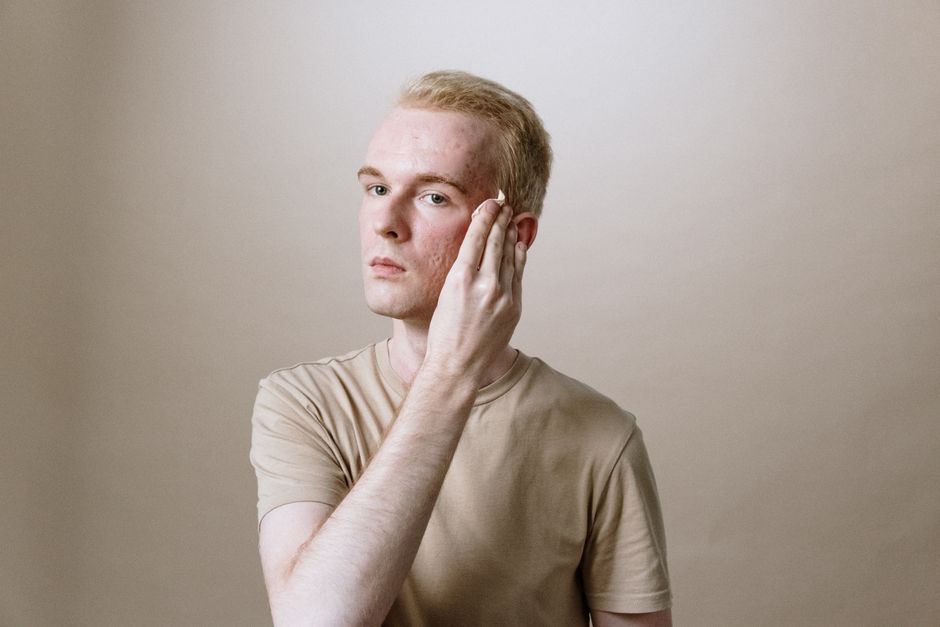
Retinol can improve hormonal acne by speeding up skin cell turnover and helping keep pores from clogging. It does not change the hormones driving the acne in the first place. So it helps with the symptom — the blocked pore and the inflamed pimple — while leaving the underlying hormonal trigger untouched. For many people that is still a meaningful benefit. It just is not a cure for the cause.
That distinction matters. Hormonal acne is driven largely by androgen hormones influencing oil production and skin cell behavior. A topical retinoid works downstream of that process. Understanding where retinol acts — and where it cannot — tells you whether it belongs in your routine and what it can realistically do.
What Actually Causes Hormonal Acne?
Hormonal acne is driven by androgens, the group of hormones that includes testosterone. These hormones influence the sebaceous glands, which are the oil-producing glands attached to hair follicles in the skin. When androgen activity rises, sebum production tends to increase.
More oil alone does not automatically mean acne. The process involves several steps together. Skin cells lining the follicle shed and can stick together. Sebum and dead cells plug the pore. A bacterium called Cutibacterium acnes that normally lives on the skin multiplies in the blocked follicle. The immune system responds with inflammation — the redness, swelling, and tenderness of a pimple.
This is why hormonal acne tends to appear in predictable patterns. It clusters along the jawline, chin, and lower face, often flaring around the menstrual cycle, during puberty, in the weeks after stopping certain hormonal birth control, or during perimenopause. The location reflects where sebaceous glands are dense and sensitive to hormonal signals.
One clarification worth making: the word “hormonal” gets used loosely. True hormonal acne involves the androgen-driven process above. Some adult acne is not strongly hormonal at all and comes from other factors like cosmetic products, stress, or genetics. A dermatologist can help sort out which pattern you have, and that changes what treatment makes sense.
How Does Retinol Work On Acne?
Retinol is a form of vitamin A. Applied to the skin, it is converted into retinoic acid, the active form that skin cells respond to. Retinoic acid influences how skin cells grow, mature, and shed.
In acne, the main job of a topical retinoid is to normalize the shedding of cells inside the follicle. When those cells shed properly instead of clumping, the pore is less likely to plug. Less plugging means fewer blocked follicles, which means less fuel for the bacteria and less inflammation. Retinoids also have some anti-inflammatory effect.
This is a well-established mechanism. Topical retinoids are a standard component of acne treatment and are supported by decades of clinical use and research. They are effective for comedonal acne — the blackheads and whiteheads — and for inflammatory acne when combined with other treatments.
Retinol itself is the over-the-counter precursor. It is weaker and slower than prescription retinoids like tretinoin, which is already the active acid. The skin has to convert retinol first, and only a portion converts. That makes OTC retinol gentler but also less potent. It is a reasonable starting point for some people, not a match for prescription strength.
Does Retinol Help Hormonal Acne Or Miss The Root Cause?
Retinol helps the acne but misses the root cause. It works on the follicle — the blocked pore, the cell behavior, the inflammation — but it does not touch the androgen activity that set the process in motion.
Think of it as addressing a downstream step. If hormones are turning up oil production and changing how follicles behave, a retinoid can reduce how often those changes turn into actual pimples. It cannot lower the hormone signal. So the underlying tendency remains, and acne can flare again when hormonal shifts occur — around a cycle, during perimenopause, or after stopping birth control.
For some people, that downstream control is enough to keep skin substantially clearer. For others, especially with moderate to severe hormonal acne, topical treatment alone does not fully control breakouts. That is where treatments that act on the hormonal pathway come in, and those require a clinician.
This is the honest position: retinol is a useful tool for the visible acne, not a fix for the hormonal driver. Whether that is “enough” depends on how severe the acne is and how it responds.
What Are The Limits Of Retinol For Hormonal Acne?
Retinol has real limits worth knowing before you build a routine around it.
- It is slow. Topical retinoids typically take weeks to months to show clear benefit. Skin can look worse before it looks better as clogged pores surface. This adjustment period is common and expected, not a sign the product is failing.
- It can irritate. Dryness, peeling, redness, and stinging are common, especially early on or at higher concentrations. Irritation can make people quit before the benefit arrives.
- It is weaker than prescription options. OTC retinol is less potent than prescription tretinoin. If acne is moderate to severe, OTC retinol alone may not be enough.
- It does not address hormones. It will not reduce androgen activity, change the menstrual cycle, or treat conditions like polycystic ovary syndrome if that is driving the acne.
- It is not for everyone. Retinoids are not recommended during pregnancy, and guidance on use while breastfeeding should come from a clinician.
None of this makes retinol useless. It means matching expectations to what the ingredient can actually do.
How Does Retinol Compare To Prescription Retinoids?
Prescription retinoids and OTC retinol sit on the same pathway but differ in strength and speed. The table below compares them on the factors that matter most.
| Factor | OTC Retinol | Prescription Retinoid (e.g., tretinoin) |
|---|---|---|
| Active form | Precursor; skin must convert it | Already the active acid |
| Potency | Lower | Higher |
| Typical role | Mild acne, maintenance, gradual improvement | Mild to moderate acne, often first-line topical |
| Irritation risk | Lower but still present | Higher, especially at the start |
| Access | Over the counter | Requires a prescription |
Neither option changes hormones. Both work on the follicle. The choice usually comes down to severity, how much irritation you can tolerate, and whether a clinician recommends stepping up.
What Treats The Hormonal Root Cause?
Treatments that act on the hormonal pathway exist, but they are prescription and require a clinician. They are not something to self-select.
Some hormonal treatments work by reducing androgen effects or by shifting the hormonal environment. Certain combined hormonal contraceptives are used for acne in people who are appropriate candidates. Spironolactone, a medication with anti-androgen effects, is prescribed by clinicians for some cases of hormonal acne, particularly in women. Isotretinoin, a powerful oral retinoid, is reserved for severe or treatment-resistant acne and requires close medical supervision because of significant risks.
These are clinical decisions. They depend on your history, other health factors, pregnancy plans, and side-effect profiles. The point here is not to recommend any of them but to make clear where the “root cause” treatment actually lives — with a clinician, not a skincare shelf.
For many people, the practical approach combines both levels: a topical retinoid to manage the visible acne, and, when appropriate and clinician-guided, a treatment aimed at the hormonal driver. Some clinicians recommend this layered approach; it reflects how acne is often managed in practice rather than a single proven formula for everyone.
How Should You Use Retinol If You Try It?
If you decide to try retinol, how you use it affects both results and irritation.
Start with a lower concentration and apply it a few nights a week rather than every night. Use a pea-sized amount for the whole face. Apply it to dry skin, and moisturize to reduce dryness. Daily sunscreen is essential — retinoids can make skin more sensitive to the sun, and sun protection supports the skin’s ability to tolerate treatment.
Do not layer retinol with other strong actives at the same time, such as high-strength acids, when you are starting out. That tends to increase irritation without adding benefit. Give it weeks to months before judging results. If irritation is significant or acne is worsening, stop and talk to a clinician or dermatologist rather than pushing through.
One non-obvious point: more frequent use is not automatically better. Consistency at a tolerable frequency usually beats aggressive use that leaves skin irritated and inflamed. Irritated skin can look like — and sometimes trigger — more breakouts.
Frequently Asked Questions
Does retinol help hormonal acne?
Retinol can help the visible acne by reducing blocked pores and inflammation. It does not change the hormones driving it, so it treats the symptom rather than the cause.
Can retinol cure hormonal acne?
No. Retinol does not address the hormonal trigger, so it cannot cure hormonal acne. It can reduce breakouts while the underlying hormonal tendency remains.
Is retinol or tretinoin better for hormonal acne?
Prescription tretinoin is stronger and faster than OTC retinol, but both work on the follicle and neither changes hormones. A clinician can advise which fits your acne severity.
Should I use retinol if my acne is hormonal?
It can be a reasonable part of a routine for mild acne, used with realistic expectations about its limits. For moderate to severe hormonal acne, talk to a clinician about treatments that also target the hormonal pathway.
