
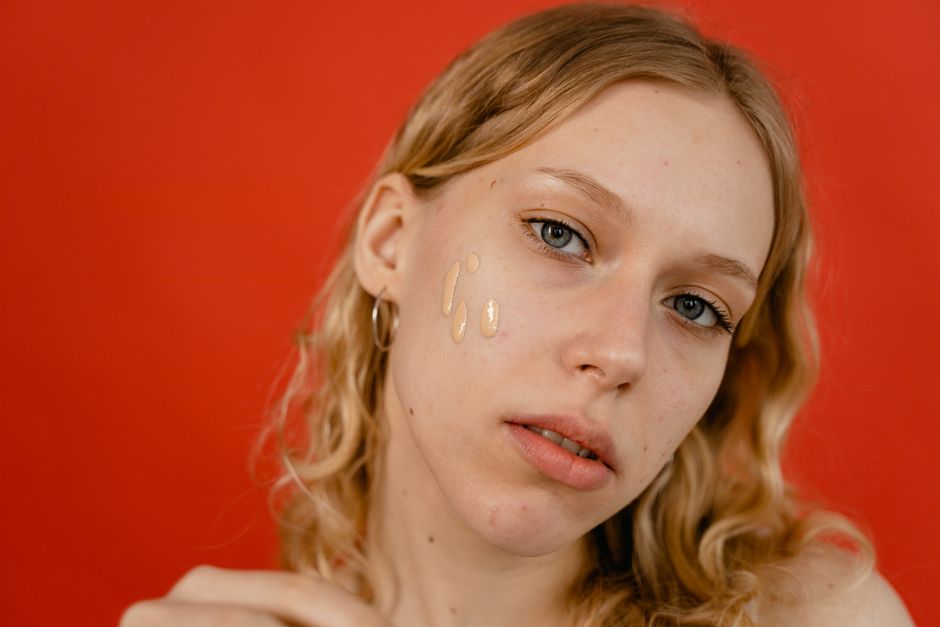
Retinol can cause deep, tender bumps that look exactly like cystic acne. In most cases, this is a temporary reaction called purging, not true cystic acne. Purging happens because retinol speeds up skin cell turnover, pushing existing clogged pores to the surface faster. It usually settles within a few weeks to a few months. True cystic acne from retinol is uncommon, but it can happen, and some people mistake irritation or a damaged skin barrier for either one.
Does Retinol Cause Cystic Acne Or Is It Just Purging?
Purging is the far more likely explanation, especially in the first weeks of use. Retinol works by accelerating how quickly skin cells renew. Pores that were already partially blocked get pushed through the process faster, and that shows up as breakouts.
The key detail is where the bumps appear. Purging tends to happen in the same places you normally break out, because those are the pores that were already congested. New breakouts in areas that were always clear are less typical of purging and worth paying attention to.
True cystic acne triggered by retinol is possible but uncommon. Cystic acne means deep, inflamed lesions that form under the skin, often without a visible head. Some people do develop deeper nodules during the adjustment period. When that happens, it is often driven by irritation rather than the retinol itself working as intended.
There is a useful distinction here that gets lost in most skincare advice. A product can cause a breakout in two completely different ways. One is through its intended mechanism, which is purging. The other is through irritation, barrier damage, or a reaction to the formula. These look similar but have different causes and different fixes.
How Do You Tell Purging Apart From Cystic Acne?
Timing and location are the two most reliable clues. Purging usually starts within the first few weeks and improves steadily. Cystic acne or irritation tends to get worse over time rather than better.
Look at the type of lesion. Purging typically produces small whiteheads, blackheads, and surface-level bumps. These are the same kinds of breakouts you normally get. Cystic lesions are deeper, larger, painful, and often leave marks. If you are getting hard, tender lumps under the skin, that leans away from simple purging.
Watch the trend, not just a single week. Purging has a downward curve. It may look bad early, but it should be visibly improving as the weeks pass. A pattern that is flat or getting worse after several weeks is a signal to stop and reassess.
- Where: purging shows up where you usually break out; new areas suggest irritation or a reaction.
- What: surface bumps and whiteheads point to purging; deep painful lumps point elsewhere.
- When: purging starts early and improves; irritation often builds over time.
- How it feels: mild dryness and flaking are expected; burning, stinging, and raw skin are not.
Dryness, flaking, and mild stinging are common early side effects of retinol and do not mean something is wrong. But persistent burning, redness, or raw-feeling skin suggests the barrier is being damaged. That is a different problem from purging and needs a different response.
Why Does Retinol Cause Purging In The First Place?
Retinol increases the rate at which skin cells turn over. The outer layer of skin constantly sheds and replaces itself, and retinol speeds that cycle up. When the process accelerates, blockages that were already forming get pushed to the surface in a shorter window.
Think of it as clearing a backlog. Pores that would have surfaced gradually over months now surface in weeks. That is why purging can look dramatic even when the retinol is doing exactly what it is supposed to do.
This is a well-established part of how retinoids work. It is not a sign of an allergy or a bad product. It is the mechanism itself. The same acceleration that clears skin over time is what produces the temporary uptick in breakouts early on.
One clarification that surprises people: purging is not the same as a “detox.” Skin does not release toxins through breakouts. The process is about cell turnover and existing clogged pores, not detoxification. Any product marketing that frames breakouts as detox is using the wrong explanation.


How Long Does Retinol Purging Last?
Most purging settles within a few weeks to a few months, though the exact timeline varies a lot between people. Some see it ease in two to four weeks. Others take closer to eight to twelve weeks to fully adjust.
The timeline depends on your skin, how congested it was to begin with, and how you introduced the product. Starting slowly and using retinol a few nights a week tends to produce a gentler adjustment than jumping straight to nightly use.
If breakouts are still getting worse after several months, purging is unlikely to be the explanation. At that point it is worth stopping the product and looking at other causes. Persistent worsening is not a normal part of adjustment.
Strength matters too. Higher concentrations do not necessarily work faster or better, and they tend to cause more irritation. Many dermatologists favor starting with a lower concentration and building up, because the goal is consistent use over time rather than a fast result.
What If It Is Not Purging But Irritation?
Irritation is the most common reason people mistake a retinol reaction for cystic acne. Retinol can weaken the skin barrier if used too often or at too high a strength, and a damaged barrier leads to inflammation, redness, and breakouts.
Barrier damage has a distinct feel. Skin may sting when you apply products, feel tight or raw, or look flushed and irritated between breakouts. That is different from the mild flaking that comes with normal adjustment.
When the barrier is compromised, the fix is to pull back, not push through. Some clinicians recommend reducing frequency, buffering with moisturizer, and pausing other active ingredients like strong acids until the skin calms. This is common clinical practice rather than something proven in large trials, but it reflects how barrier recovery generally works.
There is also a simpler possibility: the formula, not the retinol. Some products contain fragrances, certain preservatives, or other ingredients that can trigger breakouts in sensitive skin. If a specific product causes problems but a different retinol formula does not, the formula may be the issue.
When Should You Stop Using Retinol?
Stop if the reaction is getting worse rather than better, or if you are developing deep, painful lumps that were not there before. Those are signs that something beyond normal purging is happening.
Also stop if you notice signs of a true allergic reaction. These include swelling, hives, or difficulty breathing, which need medical attention right away. Severe burning or blistering is another reason to stop and seek advice.
For less urgent concerns, a reasonable approach is to pause the product and let the skin settle. If breakouts clear once you stop, that tells you the retinol was involved. If they persist, the cause may be something else entirely, like hormones, diet, or another product.
Anyone with a history of severe cystic acne, or who is using prescription retinoids, should talk to a dermatologist before making changes. Prescription retinoids like tretinoin behave differently from over-the-counter retinol, and the adjustment process and risks are not identical.
Can You Prevent Retinol Purging?
You cannot fully prevent purging, because it is tied to how the ingredient works. But you can reduce how severe it feels and lower the risk of irritation on top of it.
Start low and go slow. Begin with a low concentration a few nights a week and increase only when your skin tolerates it. Apply a small amount, and consider the “sandwich” method some clinicians suggest, where you apply moisturizer before and after retinol to buffer it.
Keep the rest of your routine simple. Gentle cleansing and a good moisturizer support the barrier. Sunscreen matters because retinoids make skin more sensitive to the sun. Avoid layering multiple strong actives at once while your skin is adjusting.
Consistency beats intensity. The benefits of retinol build over months of regular use, not from pushing through irritation. If your skin is raw and inflamed, backing off is not giving up. It is protecting the barrier so you can keep using the product long term.
It is also fair to say that not everyone purges. Some people adjust with little to no breakout at all. If you are one of them, that does not mean the product is not working.
Frequently Asked Questions
How can I tell if it’s purging or a breakout from retinol?
Purging appears in the areas where you normally break out and improves over weeks, while a true breakout from irritation tends to spread to new areas and worsen. Deep, painful lumps are a sign to stop and reassess.
Does retinol purge all types of acne?
Retinol mainly speeds up the surfacing of existing clogged pores, so it tends to affect comedonal and mild inflammatory acne most. It is not a treatment for severe cystic acne, which usually needs medical care.
Should I stop retinol if I’m purging?
Not necessarily, if the breakouts are mild and improving over time. Stop and check with a clinician if the reaction is getting worse, is very painful, or involves deep lumps.
Can retinol make cystic acne worse?
It can worsen irritation and barrier damage, which may look like cystic acne in some people. True cystic acne caused directly by retinol is uncommon, but worsening deep lesions are a reason to stop and seek advice.
