
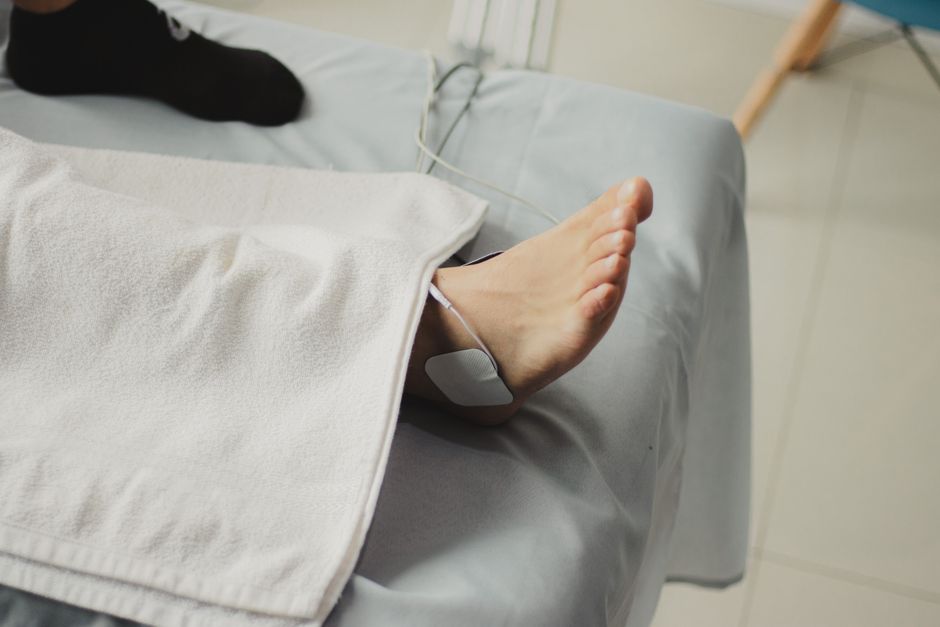
Red light therapy is sold for everything from wrinkles to wound healing. Lately, it has been promoted as a way to kill fungus on skin and nails. That claim needs a careful look.
Red light therapy does not kill fungus directly. The wavelengths used in most consumer devices do not have enough energy to destroy fungal cells on their own. Some research suggests certain light-based treatments may interfere with fungal growth or help the body fight an infection, but the evidence is limited and the effect is not the same as killing the organism outright. Anyone treating a fungal infection should know what the science actually shows.
What Is Red Light Therapy and How Does It Work?
Red light therapy uses visible red light, usually in the range of about 600 to 700 nanometers, delivered through LEDs or low-power lasers. It is sometimes called photobiomodulation. The light penetrates a few millimeters into the skin and is absorbed by structures inside cells, particularly the mitochondria.
The main proposed effect is on the body’s own cells, not on microbes. Absorbed light may influence how cells produce energy and manage inflammation. This is why red light therapy has been studied for wound healing, joint pain, and skin conditions. The target is human tissue. That distinction matters when the goal is to kill an organism living on or in that tissue.
Infrared light, which has longer wavelengths, penetrates deeper than red light. It is sometimes used for deeper tissue. Neither red nor infrared light in these devices is the same as ultraviolet light, which is a different part of the spectrum with its own germ-killing properties and its own risks.
Does Red Light Therapy Kill Fungus Directly?
No. The wavelengths and energy levels used in standard red light therapy are not designed to destroy fungal cells. Killing a fungus requires either a chemical that disrupts its cell membrane or enough energy to damage its DNA and proteins beyond repair. Red light at these doses does not deliver that kind of damage.
This is a key point that gets lost in marketing. A device that helps your skin cells behave differently is not automatically a device that kills a microbe. Those are separate mechanisms, and the evidence for one does not transfer to the other.
Some laboratory research has looked at whether light can affect fungi. Certain studies suggest that specific wavelengths, sometimes including blue or violet light, may slow fungal growth in a dish. Results vary widely by species, wavelength, dose, and exposure time. Findings from a petri dish do not reliably translate to an infection on a human nail or scalp, where light has to reach the organism through tissue and where the fungus may sit beneath the surface.
Is There Any Evidence Light Therapy Helps Fungal Infections?
The evidence is thin. Some small studies and case reports have explored light-based approaches for conditions like toenail fungus, but the quality and size of this research are limited. No large, well-controlled human trials have established red light therapy as an effective treatment for fungal infections.
This does not mean the area is closed. It means the honest position is that the evidence is not there yet. When a treatment is promoted as proven, that is a claim the research does not currently support.
It is worth separating two ideas. One is whether light kills fungus directly, which the evidence does not support for standard red light devices. The other is whether light might support the body’s immune response or work alongside a real antifungal treatment. That second idea is more plausible biologically but remains largely unproven in humans.


Why Fungal Infections Are Hard to Treat With Light
Fungal infections of the skin and nails are difficult for a simple reason: the fungus is often where the light cannot easily reach.
- Nail fungus lives in and under the nail plate, which light does not penetrate well.
- Scalp fungus sits around hair follicles, a protected space.
- Skin fungus can spread beyond the visible patch, so treating only what you see may miss part of it.
Even if a wavelength could damage fungus in a lab dish, delivering enough of it to the right depth in living tissue is a separate problem. This gap between lab results and real infections is common in medicine and is a frequent source of overstated claims.
What Actually Treats Fungal Infections?
Established antifungal treatments are the standard of care. For many skin fungal infections, topical antifungals are effective. For nail infections, oral antifungals are often used because topical products struggle to reach the fungus under the nail. These treatments are supported by clinical evidence that light therapy currently lacks.
If you have a suspected fungal infection, a clinician can confirm the diagnosis and recommend a treatment. This matters because several skin conditions look like fungal infections but are not. Eczema, psoriasis, and other rashes can resemble ringworm or athlete’s foot. Treating the wrong condition wastes time and can make things worse.
Some clinicians may mention light-based options in certain situations, but this is not the same as an evidence-based recommendation. Widely offering a treatment is not proof that it works. The two should not be confused.
Can Red Light Therapy Cause Harm?
Red light therapy is generally described as low-risk when used as directed, though that does not mean risk-free or appropriate for everyone. Reported side effects tend to be mild, such as temporary redness or irritation. The larger concern with fungal infections is indirect: relying on an unproven treatment can delay effective care, allowing an infection to worsen or spread.
Anyone considering red light therapy for a fungal infection should be cautious about devices marketed with strong claims and no supporting evidence. If a product promises to cure nail fungus or scalp fungus, that promise is not backed by the research.
The Bottom Line on Light and Fungus
Red light therapy does not kill fungus directly. Its proposed benefits come from effects on your own cells, not from destroying microbes. Some research hints that certain light wavelengths might influence fungal growth, but this work is early, inconsistent, and mostly done outside living human tissue. No large human trials confirm red light therapy as a treatment for fungal infections.
That leaves a clear position. Red light therapy may have legitimate uses in other areas, but killing fungus is not one of them based on current evidence. For a suspected fungal infection, proven antifungal treatment remains the reliable path. Light therapy is not a substitute for it.
Frequently Asked Questions
Does red light therapy kill fungus on nails?
No. Standard red light therapy does not kill nail fungus, and light does not penetrate the nail plate well enough to reach fungus living beneath it. Proven antifungal treatment is the reliable option.
Can red light therapy cure toenail fungus?
There is no solid evidence that it can. Some small studies have explored light-based approaches, but no large controlled human trials confirm it works for toenail fungus.
What light actually kills fungus?
Ultraviolet light can damage fungi and other microbes, but it also harms human skin and is not a safe treatment for internal or nail infections. Some lab studies suggest certain visible wavelengths may slow fungal growth, but this has not been confirmed in human infections.
Is red light therapy safe to try on a fungal infection?
It is generally described as low-risk when used as directed, but the main concern is that relying on it could delay effective treatment. A clinician can confirm the diagnosis and recommend proven care.
