
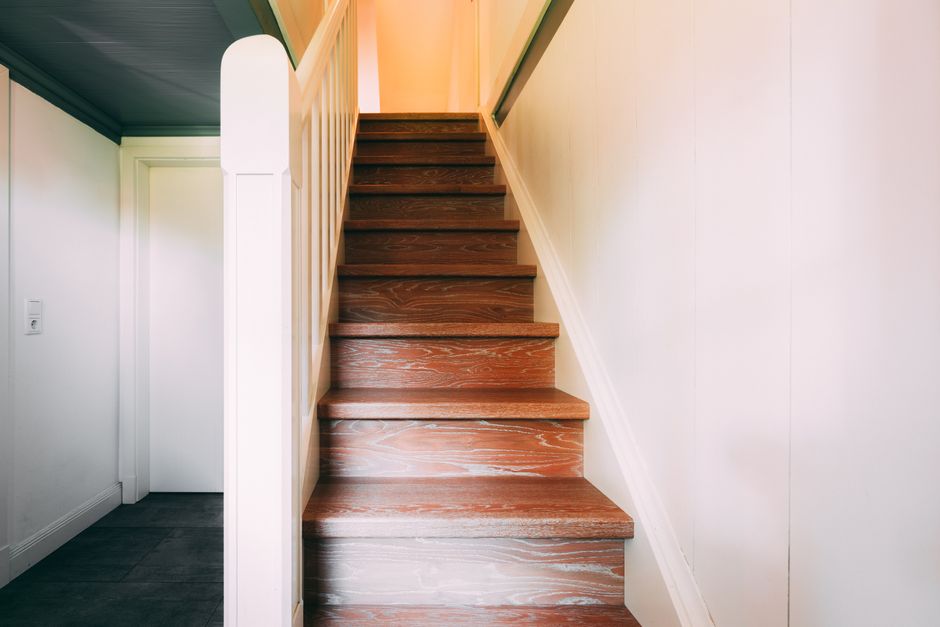
Radon does travel upstairs, but it usually arrives there diluted. Radon is a gas that forms from decaying uranium in soil and rock, and it moves into homes mainly through the soil beneath the foundation. Once inside, it spreads through the air like any other gas. It rises with warm air, drifts through open stairwells, and seeps through gaps around pipes and floors. Upper floors typically measure lower radon levels than basements or ground floors, but “typically” is not “always.” Some upstairs rooms test higher than the basement below them.
Does Radon Travel Upstairs How It Spreads In Homes?
Radon enters a home as a gas and then moves with air. It does not need a chimney or a direct path upward. Any opening between floors, any gap in a wall, any stairwell becomes a route.
The gas comes from the ground. Uranium breaks down in soil and rock, and one step in that decay chain produces radon. Because radon is a gas, it escapes the soil and moves toward areas of lower pressure. A house acts like a vacuum in some ways. Warm indoor air rises and escapes through the upper parts of the home. That loss of air creates slight negative pressure at the lowest level, which pulls soil gas in through cracks, sump pumps, and construction joints.
Once radon is inside, the same forces that move any air move radon. It follows drafts. It moves toward open windows and stairwells. Stack effect, the tendency of warm air to rise and escape near the roof, can pull air from lower floors to upper floors. That means radon that enters a basement can end up in a second-floor bedroom.
What matters most is how much radon is present and how the air moves. A tightly sealed upper floor can hold onto radon longer than a drafty one. An open stairwell can carry it up quickly. A closed door at the top of the basement stairs can slow it down.
Do Upper Floors Have Lower Radon Levels Than Basements?
Yes, in most homes upper floors test lower than basements or ground floors. This is the general pattern that testing data shows.
The reason is dilution. Radon enters at the lowest level and mixes with more air as it moves up. By the time it reaches a second floor, the concentration is often a fraction of what it was at the source. That is why the U.S. Environmental Protection Agency and other health agencies recommend testing the lowest lived-in level of a home first.
But the pattern is not a guarantee. Several things can flip it:
- A second-floor room above a garage or crawl space may sit closer to a soil gas source than expected.
- An upper floor with poor ventilation can accumulate radon that drifts up from below.
- A home with a basement that is rarely opened may push more radon toward living areas upstairs.
- Certain building designs, like split levels, can create unusual air paths.
Some studies have found upstairs radon levels that exceed basement levels. The evidence is mixed on how often this happens, but it is documented. The practical takeaway is simple: you cannot assume your upstairs is safe because your basement tested low. You also cannot assume your upstairs is dangerous because your basement tested high. Test the spaces where people actually spend time.
How Does Radon Move Through a House?
Radon moves through a house the way air moves. Three forces do most of the work.
Pressure differences pull soil gas into the home. The lower level of a house often has slightly lower air pressure than the soil around it. That difference is enough to draw radon in through small openings.
Stack effect moves air upward. Warm air is less dense than cold air, so it rises. In winter, the temperature difference between indoors and outdoors is larger, which strengthens this upward pull. Radon that enters at the bottom can be carried to upper floors.
Diffusion spreads radon from areas of higher concentration to lower concentration. This is a slower process than air movement, but it still contributes.
Radon also moves through building materials and water in some cases. Radon dissolved in well water can be released into the air when water is used for showering or washing. This is usually a smaller source than soil gas, but in homes with private wells, it can matter. The EPA notes that waterborne radon is mainly a concern when the water source is groundwater, not surface water.
Why Does Radon Sometimes Concentrate Upstairs?
Radon can concentrate upstairs when air movement is restricted or when a room has its own source of negative pressure.
A bedroom with a window air conditioner, for example, can pull air from the rest of the house. If that air carries radon from below, the bedroom can accumulate it. Bathroom exhaust fans and kitchen vents do the same thing. They remove air and create a slight vacuum that draws replacement air from wherever it can find it, including from lower levels.
Heating and cooling systems also move air. A forced-air system can distribute radon throughout a home. If the return air duct is near a basement source, the system can spread radon to every room it serves.
Closed-up homes in winter tend to have higher radon levels than open homes in summer. That is because ventilation is lower and the stack effect is stronger. An upstairs room that is closed off most of the time can build up radon even if the rest of the house tests low.
How Do You Know If Radon Is Upstairs?
You test. There is no reliable way to predict radon levels from the age of a home, its construction style, or whether it has a basement. Two houses next door to each other can have very different radon levels.
Testing is simple and low-cost. Short-term test kits are available at hardware stores and through state radon programs. They stay in place for a few days and then get mailed to a lab. Long-term tests run for more than 90 days and give a better picture of average exposure because radon levels change with weather and season.
The EPA recommends testing all homes below the third floor. If you want to know about an upstairs bedroom, test that room specifically. Place the test kit at breathing height, away from drafts, exterior walls, and direct sunlight. Follow the kit instructions exactly.
If your first test is high, test again to confirm. Radon levels fluctuate. A single short-term test is a snapshot, not a verdict.
What Radon Level Is Considered Safe?
There is no known safe level of radon exposure. The EPA action level is 4 picocuries per liter (pCi/L). At or above that level, the agency recommends taking steps to reduce radon.
The EPA also notes that radon levels below 4 pCi/L still pose some risk. The average outdoor radon level is about 0.4 pCi/L. The average indoor level is about 1.3 pCi/L. Many homes fall in between. The goal of mitigation is to get levels as low as reasonably achievable, not just below a single number.
Radon is the second leading cause of lung cancer in the United States after smoking. For people who smoke, the combined risk is much higher. This is one of the strongest established findings in environmental health. The link between radon and lung cancer has been documented in studies of underground miners and in residential studies across multiple countries.
How Do You Reduce Radon on Upper Floors?
The most effective fix targets the source, not the upstairs room. A soil depressurization system, often called a radon mitigation system, uses a pipe and fan to pull soil gas from beneath the foundation and vent it above the roofline. This keeps radon from entering the home in the first place.
If radon is already upstairs, sealing cracks and openings between floors can help, but sealing alone is rarely enough. The EPA cautions that sealing by itself has not been shown to significantly reduce radon levels. It is best used as a supplement to a venting system.
Increasing ventilation can lower radon levels, but it is not a reliable long-term solution. Opening windows helps while they are open, then levels rise again when they close. A heat recovery ventilator can bring in fresh air while recovering heat, and some studies suggest it can reduce indoor radon, but it is not a substitute for source control.
For upper floors specifically, the fix is usually the same as for the whole house. Reduce what is coming in at the bottom. Then retest, including the upstairs rooms, to confirm the system is working.
What Most People Get Wrong About Radon
The biggest mistake is assuming radon stays in the basement. It does not. Radon is a gas. It goes where the air goes.
The second mistake is assuming a new home is safe. New construction can have radon problems. Some areas require radon-resistant features in new builds, but not all do, and even those features can fail or be installed incorrectly.
The third mistake is relying on a neighbor’s test result. Radon levels vary from house to house and even from room to room within the same house. Your neighbor’s result tells you nothing about yours.
Testing is the only way to know. It takes a few days and costs little. For a gas that causes thousands of lung cancer deaths each year in the U.S., according to EPA estimates, that is a small effort for a real answer.
Frequently Asked Questions
Does radon rise to the second floor?
Yes, radon can reach a second floor because it moves with air currents and the stack effect. Levels are usually lower upstairs due to dilution, but some homes have tested higher on upper floors than in the basement.
Is radon worse upstairs or downstairs?
Basements and ground floors usually have higher radon levels because that is where soil gas enters. However, upper-floor rooms with poor ventilation or their own negative pressure can sometimes test higher.
Can radon travel through walls?
Radon moves through any gap or pore in a wall, floor, or foundation. It travels mainly through air pathways like cracks, pipe openings, and construction joints rather than through solid concrete.
Do I need to test upstairs if my basement tested low?
Testing the lowest lived-in level is the standard first step, but testing upstairs rooms is wise if people sleep or spend significant time there. Radon levels can vary between floors, so one test does not cover the whole house.
