
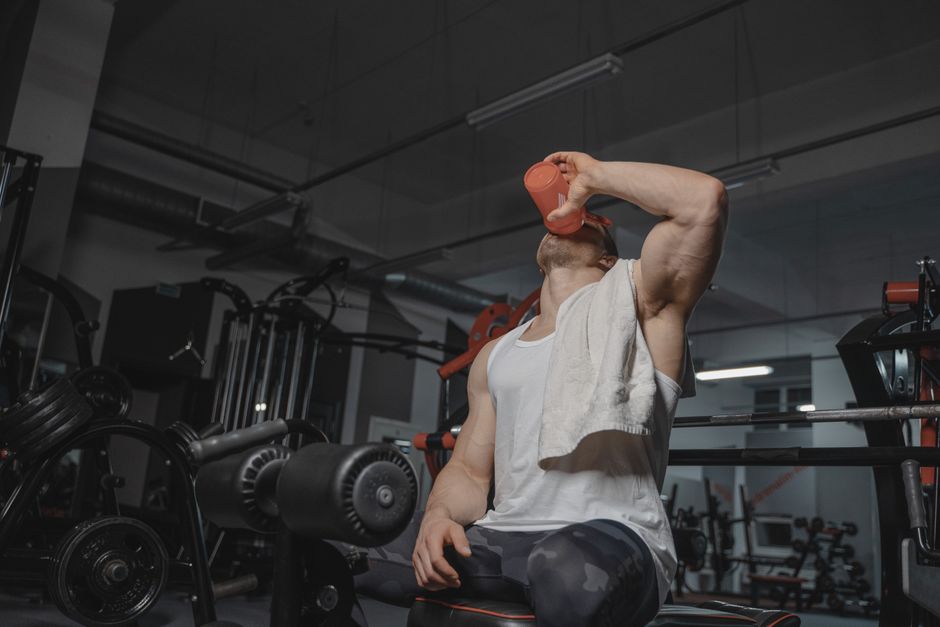
Yes, protein builds muscle — but not in the simple way most supplement ads suggest. Muscle grows when resistance training creates a signal for repair, and protein supplies the amino acids that repair and thicken muscle fibers. Without training, extra protein does not turn into extra muscle.
The real question is how much protein you need, whether timing matters, and where the claims outrun the evidence. This guide walks through the physiology, the practical targets, and the places where the science is genuinely unsettled.
Does Protein Build Muscle on Its Own?
No. Protein is a raw material, not a trigger.
Muscle growth — the technical term is hypertrophy — is driven by mechanical tension and the metabolic stress of resistance exercise. Lifting something heavy enough to challenge a muscle causes microscopic damage and activates signaling pathways inside the muscle cell. That signal tells the body to build new contractile proteins. Dietary protein provides the amino acids to do it.
Take away the training and the signal disappears. Studies in which people increase protein intake without changing their activity show little to no muscle gain. The amino acids get used for energy, stored as fat, or excreted. This is why protein supplements alone do not produce visible muscle in sedentary people, no matter how much they take.
Take away the protein and the training still produces some growth, but less. The body will break down existing muscle to supply amino acids if intake is very low. Over time, that limits how much you can build.
The two inputs work together. Training is the instruction. Protein is the building material. You need both.
How Does Muscle Actually Grow After Training?
Muscle growth is a repair-and-rebuild cycle that runs for days after a hard session.
When you train with sufficient load, you create small disruptions in the muscle fibers. Specialized cells called satellite cells respond by donating their nuclei to the damaged fibers. Each nucleus can support only a limited volume of muscle, so adding nuclei is part of how a fiber gets bigger. This process takes time — measurable increases in muscle protein synthesis peak in the hours after training and stay elevated for a day or more in untrained people.
Two variables determine whether that elevated synthesis turns into actual growth:
- Progressive overload — gradually increasing weight, reps, or sets over weeks and months
- Amino acid availability — enough protein, spread across the day, to keep the rebuilding process supplied
Growth is slow. Visible changes typically take several weeks to a few months of consistent training and eating, and the rate varies widely between people. Genetics, training age, sleep, and total calories all influence how fast it happens.
How Much Protein Do You Need to Build Muscle?
For most healthy adults doing regular resistance training, the evidence supports roughly 1.6 grams of protein per kilogram of body weight per day as a reasonable target, with benefits appearing to plateau somewhere above that range.
That works out to about 0.7 grams per pound of body weight. A 160-pound person would be aiming for around 115 grams per day.
Where this comes from matters. A widely cited meta-analysis published in the British Journal of Sports Medicine examined protein supplementation and resistance training and found that additional protein increased gains in muscle size and strength, with the effect leveling off at higher intakes. The exact ceiling is debated, and some researchers argue the plateau sits somewhat higher, but the practical point is consistent: more is not endlessly better.
People who are new to training, eating in a calorie surplus, or recovering from illness may respond to the lower end of that range. Older adults often need more protein than younger adults to achieve the same muscle-building response — a phenomenon sometimes called anabolic resistance. Some research suggests intakes closer to 1.2 to 1.5 grams per kilogram per day help preserve muscle in older adults, and higher intakes may be needed when combined with training.
Very high intakes — well beyond 2 grams per kilogram per day — have not been shown to produce additional muscle in healthy trained people. They are not necessarily harmful in people with normal kidney function, but they are not doing extra work either.

Does Protein Timing Matter for Muscle Growth?
Total daily protein matters more than when you eat it. Timing is a real but secondary factor.
The idea of a narrow “anabolic window” right after training — often described as 30 minutes — is overstated. Research on post-exercise nutrition has generally found that the window is much wider than once believed, and that people who ate adequate protein throughout the day did not lose muscle by waiting a few hours to eat after training.
That said, distribution is not irrelevant. Muscle protein synthesis responds to each protein feeding, and spreading intake across three to four meals appears to support growth better than eating the same total in one large dose. A common practical approach is to include a meaningful protein source at each meal rather than concentrating it all at dinner.
The pre-sleep meal has drawn research interest because overnight is a long fasting period. Some studies suggest a slow-digesting protein before bed may support overnight muscle protein synthesis. The findings are not uniform, and the practical benefit over simply eating enough protein during the day appears modest.
Do You Need Protein Supplements to Build Muscle?
No. Supplements are convenient, not necessary.
Whole foods — meat, poultry, fish, eggs, dairy, soy, legumes, and grains — supply the same amino acids. The muscle-building response depends on total protein and the amino acid profile, not on the source being a powder. Someone who hits their protein target through food will build the same muscle as someone who hits it with shakes.
Whey and other protein powders are popular for practical reasons. They are portable, inexpensive per gram of protein, and easy to consume when appetite or time is limited. For people who struggle to eat enough protein from food, a supplement can close the gap. For people who already eat enough, it adds nothing.
One honest caveat: the supplement industry is lightly regulated in the United States. Some products have been found to contain less protein than the label claims, or to contain contaminants. Third-party testing programs exist, but they are voluntary. This is a reason to prefer reputable brands, not a reason to avoid protein powder entirely.
Does Protein Build Muscle Without Lifting Weights?
Not meaningfully. This is the single most common misunderstanding about protein and muscle.
In people who are not resistance training, extra protein does not add muscle. It may help preserve muscle during weight loss or illness, which is a different outcome. Preservation is not the same as growth.
The exception worth knowing: people who are very sedentary or malnourished, including some older adults and people recovering from surgery or illness, can gain some muscle from improved protein intake combined with even light activity. That is because they were starting from a deficit. For a healthy person who is already eating enough, adding protein without training does not build new muscle.
What Else Affects Whether Protein Turns Into Muscle?
Protein is necessary but not sufficient. Several other factors determine how much of it actually becomes muscle.
- Total calories — building muscle requires energy. Eating far below maintenance makes growth difficult regardless of protein intake.
- Training stimulus — the load, volume, and progression of your workouts drive the signal. No amount of protein substitutes for a program that challenges the muscle.
- Sleep — growth hormone release and tissue repair are tied to sleep. Chronic short sleep is associated with worse muscle outcomes.
- Training age — beginners gain faster than experienced lifters. The same protein intake produces less visible change over time.
- Age and hormones — testosterone, estrogen, and other factors influence the response, which is part of why older adults need more protein for the same result.
People often focus on protein because it is the easiest variable to change. It is also the one with the clearest ceiling. Once intake is adequate, the limiting factor is almost always training quality, recovery, or total calories.
Is More Protein Always Better for Muscle?
No. The relationship between protein intake and muscle gain is not linear.
At low intakes, adding protein clearly increases muscle growth. As intake rises, the benefit grows smaller. At some point — commonly cited as somewhere in the range of 1.6 to 2.2 grams per kilogram per day for trained individuals, depending on the study — additional protein stops producing measurable extra muscle in most people.
Extremely high protein intakes are not known to damage healthy kidneys, but they can crowd out other nutrients and are unnecessary for muscle. People with existing kidney disease should follow medical guidance rather than general fitness advice, since protein intake may need to be restricted in that population.
The practical takeaway is unglamorous. Hit a reasonable protein target, train hard enough to create a growth signal, eat enough total calories, and sleep. The rest is marketing.
Frequently Asked Questions
Does protein build muscle if I don’t work out?
No. Without resistance training, extra protein does not add muscle — it may help preserve existing muscle during weight loss or illness, but growth requires a training stimulus.
How much protein do I need to build muscle?
Roughly 1.6 grams per kilogram of body weight per day is a reasonable target for most healthy adults doing resistance training, which is about 0.7 grams per pound. Benefits appear to plateau above that range.
Do I need protein powder to build muscle?
No. Whole foods supply the same amino acids, and total daily protein matters more than the source. Powders are convenient, not required.
Does protein timing matter for muscle growth?
Total daily intake matters more than timing. The old 30-minute post-workout window is overstated, though spreading protein across three to four meals appears to support growth better than eating it all at once.
