
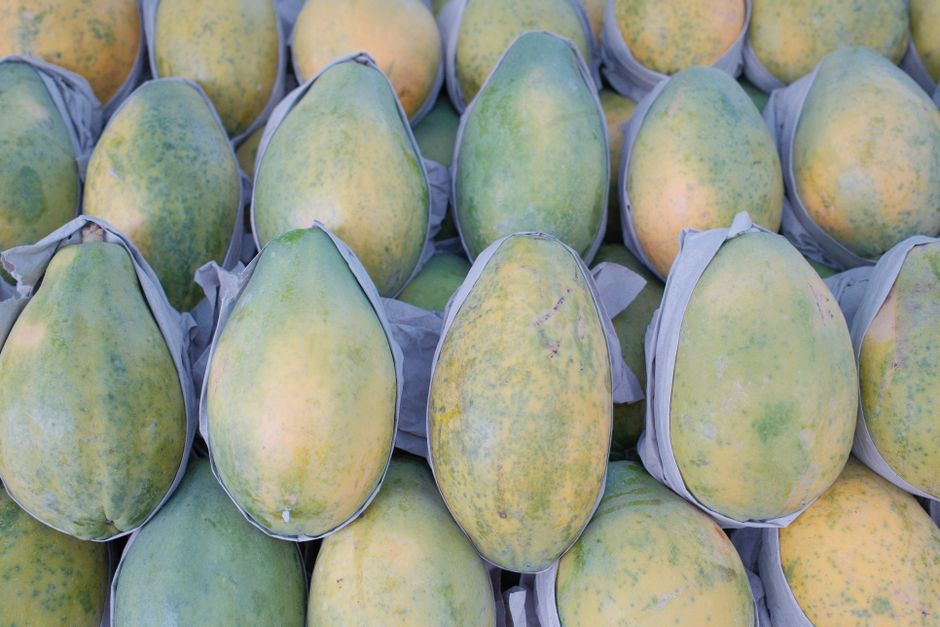
Papaya enzyme supplements are sold as a natural fix for bloating, but the evidence behind that claim is thinner than the marketing suggests. Papaya does contain protein-digesting enzymes, and those enzymes can break down protein in a laboratory dish. Whether a tablet or chewable taken with a meal reduces bloating in a real person is a different question, and one that large human trials have not answered. Here is what is actually known about papaya enzymes, digestion, and bloating.
What Are Papaya Enzymes?
Papaya contains two main protein-digesting enzymes: papain and chymopapain. They belong to a class of enzymes called proteases, which split proteins into smaller fragments called peptides and amino acids. Papain is concentrated in the unripe fruit and in the leaves and stem, which is why most supplements use papaya extract rather than ripe fruit.
Your body already makes proteases. The stomach releases pepsin, and the pancreas supplies trypsin and chymotrypsin. These enzymes do the heavy lifting of protein digestion. Papaya enzymes are plant-based proteases that work in a similar way, at least in a test tube.
Papaya also contains a compound called lycopene, a carotenoid also found in tomatoes. That is a nutritional detail, not a digestive one, but it is worth separating from the enzyme story. The bloating claims rest on the enzymes, not the lycopene.
Does Papaya Enzyme Help With Bloating What Science Says
The honest answer is that no well-designed human trial has shown papaya enzyme supplements reliably reduce bloating. The evidence is mostly laboratory work and small studies, not the kind of large controlled trials that establish a treatment works.
Papain does break down protein in controlled lab conditions. That fact is not in dispute. The problem is that a lab dish is not a human gut. For a supplement to reduce bloating, the enzyme would need to survive stomach acid, reach the small intestine in an active form, and act on food in a way that changes gas production or gut distension. Each of those steps is uncertain.
Some small studies have looked at digestive enzyme blends that include papain alongside other enzymes. Results have been mixed, and many of these studies are short, small, or funded by the companies that make the products. That does not make them worthless, but it means they cannot support a firm claim.
The research that does exist often groups several enzymes together, which makes it impossible to say whether papaya enzyme itself did anything. If a blend helps, the credit might belong to another ingredient or to the placebo effect, which is strong for digestive complaints.
What Actually Causes Bloating?
Bloating is a symptom, not a disease, and it has many causes. Understanding them explains why a single enzyme is unlikely to fix it.
Common causes include:
- Swallowed air from eating quickly, drinking through straws, or chewing gum
- Gas produced when gut bacteria ferment undigested carbohydrates
- Constipation, which slows transit and allows more fermentation
- Irritable bowel syndrome, where bloating is a core symptom
- Lactose intolerance or other carbohydrate malabsorption
- Small intestinal bacterial overgrowth, or SIBO
- In women, hormonal shifts across the menstrual cycle
Notice that most of these involve carbohydrates and gut bacteria, not protein. Papaya enzymes target protein. That mismatch is the central problem with the bloating claim. If your bloating comes from fermented fiber or lactose, a protein-digesting enzyme is aimed at the wrong target.
This is the non-obvious point worth holding onto: the enzyme’s job and the most common causes of bloating do not line up well. That does not rule out any benefit, but it explains why results in real people have been unimpressive.




Can Papaya Help Digestion In Other Ways?
Papaya fruit is a nutritious food. It provides vitamin C, vitamin A, folate, and fiber. As a food, it belongs in a balanced diet. That is separate from the question of whether a papaya enzyme supplement changes digestion.
There is a long folk tradition of using papaya for digestive complaints, and papain has legitimate industrial and medical uses. It is used as a meat tenderizer because it breaks down protein. In medicine, a related enzyme has been used in specific procedures, though that is a clinical context far removed from a supplement aisle.
What traditional use and industrial use do not prove is that a swallowed papaya enzyme tablet relieves bloating after a meal. Those are different claims, and only the last one matters to a person buying a supplement.
Do Digestive Enzyme Supplements Work At All?
Some digestive enzymes have clearer evidence than others, and it helps to separate them.
Lactase, the enzyme that breaks down lactose, has solid evidence for reducing symptoms in people with lactose intolerance. That is a specific enzyme for a specific, well-defined problem. It works because the cause is known and the enzyme addresses it directly.
For bloating in general, the picture is far less clear. Enzyme blends marketed for “digestive support” often contain several proteases, lipases, and carbohydrases. Evidence for these blends as a group is limited and inconsistent. Some people report benefit. Whether that reflects the enzymes, the placebo effect, or natural fluctuation in symptoms is not established.
This is where marketing language does a lot of work. Phrases like “supports digestion” or “helps break down food” are not the same as “reduces bloating.” A product can contain real enzymes and still not deliver a measurable benefit for the symptom you care about.
Is There Any Harm In Trying Papaya Enzyme?
For most healthy adults, papaya enzyme supplements are generally tolerated, and serious side effects are not commonly reported at typical doses. That is not the same as proving they are safe for everyone.
Some people are allergic to papaya or to latex, and papain can trigger reactions in those individuals because the proteins are related. If you have a known papaya or latex allergy, these products are not for you.
Papain may interact with blood-thinning medications, and it has been discussed in relation to bleeding risk. Anyone taking anticoagulants or antiplatelet drugs should talk with a clinician before using papaya enzyme supplements rather than assuming they are harmless.
Pregnant women, breastfeeding women, and children are groups where dosing and safety data are limited. No clinical guidelines currently establish a safe or effective dose of papaya enzyme for these populations. That absence of guidance is itself the answer: do not treat a supplement as automatically fine just because it is sold without a prescription.
What Helps Bloating More Reliably?
Because bloating has many causes, the most effective steps depend on the cause. A few approaches have better support than a papaya enzyme pill.
If constipation is the driver, addressing it often reduces bloating, since slower transit means more fermentation. If lactose is the issue, reducing lactose or using lactase can help. For irritable bowel syndrome, some people respond to dietary changes guided by a clinician or dietitian, and specific diets have been studied for this purpose.
Eating more slowly, avoiding carbonated drinks, and limiting gum and straws can reduce swallowed air. These are simple but genuinely relevant for some people.
Persistent or severe bloating, bloating with weight loss, blood in the stool, or a sudden change in bowel habits warrants a medical evaluation. Those signs can point to conditions that need diagnosis, not a supplement. Do not self-treat ongoing symptoms without ruling out something more serious.
If you want to try papaya enzyme, it is reasonable to view it as a low-cost experiment rather than a proven remedy. Track your symptoms honestly, and stop if it does nothing. The evidence does not promise a result.
Frequently Asked Questions
Does papaya enzyme actually reduce bloating?
No well-designed human trial has shown that papaya enzyme supplements reliably reduce bloating. The evidence is mostly laboratory work and small, mixed studies.
Why would a protein enzyme help with bloating?
It would only help if the bloating came from poorly digested protein, but most bloating involves carbohydrates and gut bacteria. That mismatch is why the benefit is doubtful.
Is papaya enzyme safe to take every day?
It is generally tolerated by most healthy adults, but safety data are limited for pregnant women, breastfeeding women, and children. People with papaya or latex allergies and those on blood thinners should check with a clinician first.
What should I try instead for bloating?
It depends on the cause, and constipation, lactose intolerance, and irritable bowel syndrome are common ones. Persistent bloating, or bloating with weight loss or blood in the stool, needs a medical evaluation.
