
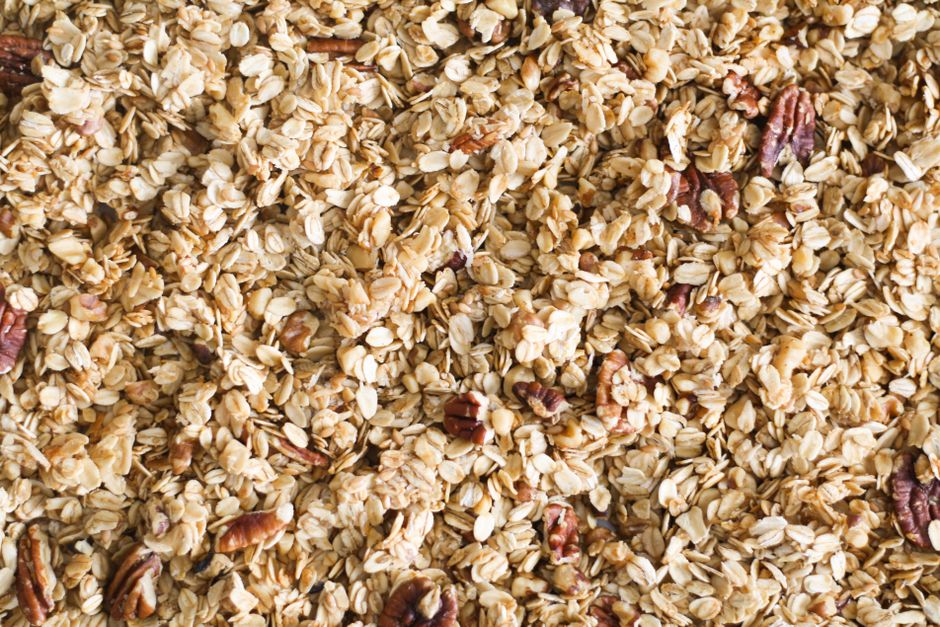
Oats do raise blood sugar. That is true of every food that contains carbohydrate. The more useful question is how much, how fast, and whether that rise matters for your health. The answer depends on the type of oats, how they are processed, what you eat with them, and your own metabolism.
Steel-cut oats and rolled oats produce a slower, gentler rise than instant oats. For most people, plain oats eaten as part of a balanced meal do not cause dangerous spikes. For people with diabetes, portion size and oat type matter more than the grain itself.
Does Oats Increase Sugar Level?
Yes, oats increase blood sugar. Oats are a carbohydrate-rich grain, and all digestible carbohydrates break down into glucose that enters the bloodstream.
What separates oats from many other carb sources is their fiber content, specifically a soluble fiber called beta-glucan. Beta-glucan forms a gel-like substance in the gut that slows digestion and the release of glucose into the blood. This is why oats generally produce a more gradual rise than white bread, white rice, or sugary cereals.
The key word is “generally.” Processing changes everything. The more broken down the oat, the faster your body can access its starch, and the sharper the blood sugar response.
Which Type of Oats Spikes Blood Sugar Most?
Instant oats raise blood sugar faster than any other oat type. They are steamed, rolled thin, and often chopped into small pieces so they cook in seconds. That convenience comes at a cost: your digestive enzymes get to the starch quickly, and glucose enters the blood faster.
Here is how the main types compare:
| Oat Type | Processing Level | Blood Sugar Impact |
|---|---|---|
| Steel-cut oats | Minimal (chopped groats) | Slowest rise |
| Rolled oats (old-fashioned) | Steamed and flattened | Moderate rise |
| Quick oats | Rolled thinner, cut smaller | Faster rise |
| Instant oats | Pre-cooked, finely cut | Fastest rise |
Steel-cut oats are the least processed. The groat is simply chopped into pieces, leaving the starch packed tightly inside. Your body has to work harder to break it down, so glucose appears in the blood more slowly.
Rolled oats sit in the middle. They are steamed and pressed flat, which partially opens up the starch. Quick oats are rolled thinner and cut smaller, so they cook faster and digest faster.
A practical rule: the longer oats take to cook, the slower they tend to raise blood sugar.
What Is the Glycemic Index of Oats?
The glycemic index (GI) measures how fast a food raises blood sugar compared with pure glucose. Lower numbers mean a slower rise.
Oats span a wide GI range depending on type and preparation. Steel-cut oats tend to sit at the lower end. Instant oats sit considerably higher. The exact numbers vary between studies because cooking time, liquid volume, and even the specific oat variety all shift the result.
What matters more than a single GI number is the glycemic load, which accounts for both the GI and the actual amount of carbohydrate you eat. A small bowl of instant oats may have less total impact than a large bowl of steel-cut oats, simply because of quantity.
GI values also change based on what you add. Milk, yogurt, nuts, and seeds all lower the overall glycemic response of a bowl of oats. Eating oats alone on an empty stomach produces a different response than eating them with protein and fat.





How Does Oat Processing Affect Blood Sugar?
Processing determines how quickly your digestive enzymes can reach the starch inside the oat. This is the single biggest factor in how oats affect blood sugar.
Think of starch as money locked in a vault. Steel-cut oats keep the vault mostly closed. Your enzymes need time to break in. Instant oats leave the vault door wide open. Enzymes walk right in and start converting starch to glucose almost immediately.
Cooking adds another layer. The longer you cook oats, the more the starch gelatinizes, meaning it absorbs water and expands. Gelatinized starch digests faster. Overnight oats, which are soaked but not cooked, tend to produce a lower blood sugar response than the same oats cooked on a stovetop.
This is a non-obvious point: two bowls of oats with identical nutrition labels can produce meaningfully different blood sugar responses depending on how they were prepared. The label tells you the carbohydrate content. It does not tell you how fast that carbohydrate will hit your bloodstream.
Do Oats Raise Blood Sugar in People With Diabetes?
Oats raise blood sugar in people with diabetes, just as they do in anyone else. The difference is that in diabetes, the body’s ability to manage that rise is impaired.
In type 1 diabetes, the pancreas produces little or no insulin. In type 2 diabetes, the body’s cells respond poorly to insulin and the pancreas may not produce enough to compensate. In both cases, carbohydrate from oats will raise blood glucose, and the rise may be larger or last longer than in someone without diabetes.
That does not mean oats are off the table. Many clinicians include oats in diabetes meal plans because of their fiber content and relatively slow digestion compared with refined grains. But portion size matters, and so does the type of oat.
Steel-cut or old-fashioned rolled oats, eaten with protein and fat, tend to produce a more manageable response than instant oats eaten alone. Checking blood glucose before and after eating is the most reliable way to know how your body responds to a specific meal. No general guideline can predict your individual response with certainty.
If you take insulin, the carbohydrate in oats must be accounted for in your dosing. Work with your healthcare provider rather than adjusting insulin based on general advice.
Does Adding Protein or Fat to Oats Change the Blood Sugar Response?
Adding protein or fat to oats slows the rise in blood sugar. This is well established. Protein and fat slow the rate at which the stomach empties into the small intestine, which means carbohydrate enters the bloodstream more gradually.
Practical additions that make a difference:
- Greek yogurt or cottage cheese
- Nut butter or a handful of nuts
- Chia seeds or flaxseed
- Eggs on the side
- Milk instead of water
The effect is real but modest. Adding protein and fat to a large bowl of instant oats will not turn it into a low-glycemic meal. It softens the spike. It does not eliminate it.
Adding sugar works in the opposite direction. Honey, maple syrup, brown sugar, and sweetened dried fruit all add rapidly absorbed carbohydrate. A bowl of instant oats with honey and raisins can produce a blood sugar response similar to a candy bar.
Are Oats Good or Bad for Blood Sugar Overall?
Oats are generally considered a favorable grain for blood sugar management when eaten in appropriate portions and forms. This is not because they lower blood sugar. It is because they raise it more slowly than many alternatives.
Research on beta-glucan, the soluble fiber in oats, has found that it slows glucose absorption and improves glycemic control in some studies. The effect is modest and depends on the amount of beta-glucan consumed. Oat bran is higher in beta-glucan than whole oat groats.
Some studies suggest that regular oat consumption may improve insulin sensitivity, but the evidence is mixed and the effect sizes are generally small. Oats are not a treatment for diabetes or insulin resistance. They are a food choice that, in the right form and portion, fits well into a blood-sugar-conscious diet.
The comparison that matters is not oats versus nothing. It is oats versus other breakfast options. Compared with white toast, sugary cereal, or a pastry, a bowl of steel-cut oats with protein is a better choice for blood sugar control. Compared with eggs and vegetables, the picture is less clear.
How Should You Eat Oats to Minimize Blood Sugar Spikes?
Choose the least processed oat you will actually eat consistently. Steel-cut oats take longer to cook, but they produce the slowest blood sugar rise. If you will not cook steel-cut oats, old-fashioned rolled oats are a reasonable middle ground.
Keep portions moderate. A standard serving of dry oats is about 1/2 cup for rolled oats. That provides roughly 27 grams of carbohydrate, though the exact amount varies by brand and type. For people with diabetes, this is a meaningful amount that needs to be counted.
Pair oats with protein and fat. Add nuts, seeds, yogurt, or eggs. This slows digestion and blunts the peak.
Avoid added sugars. Sweeten with cinnamon, vanilla, or a small amount of fresh fruit rather than honey or syrup. Cinnamon has been studied for blood sugar effects, but the evidence is mixed and it is not a substitute for medication.
Consider overnight oats. Soaking oats without cooking them produces a lower blood sugar response than cooking, likely because the starch is less gelatinized.
Test your own response. If you have diabetes, check your blood glucose before and one to two hours after eating oats. Your individual response is the most useful data you have.
Frequently Asked Questions
Does eating oats raise blood sugar?
Yes, oats raise blood sugar because they contain carbohydrate that digests into glucose. The rise is generally slower than from refined grains due to oat fiber, but it still occurs.
Which oats are best for blood sugar?
Steel-cut oats produce the slowest blood sugar rise because they are the least processed. Instant oats produce the fastest rise because their starch is more exposed to digestion.
Can diabetics eat oats?
Many people with diabetes can eat oats in moderate portions, especially steel-cut or rolled oats paired with protein. Portion size and oat type matter, and blood glucose should be monitored to see your individual response.
Do oats spike insulin?
Oats raise blood glucose, which triggers insulin release in people without diabetes. The insulin response is generally slower and smaller than after eating refined carbohydrates, but it still occurs.
