
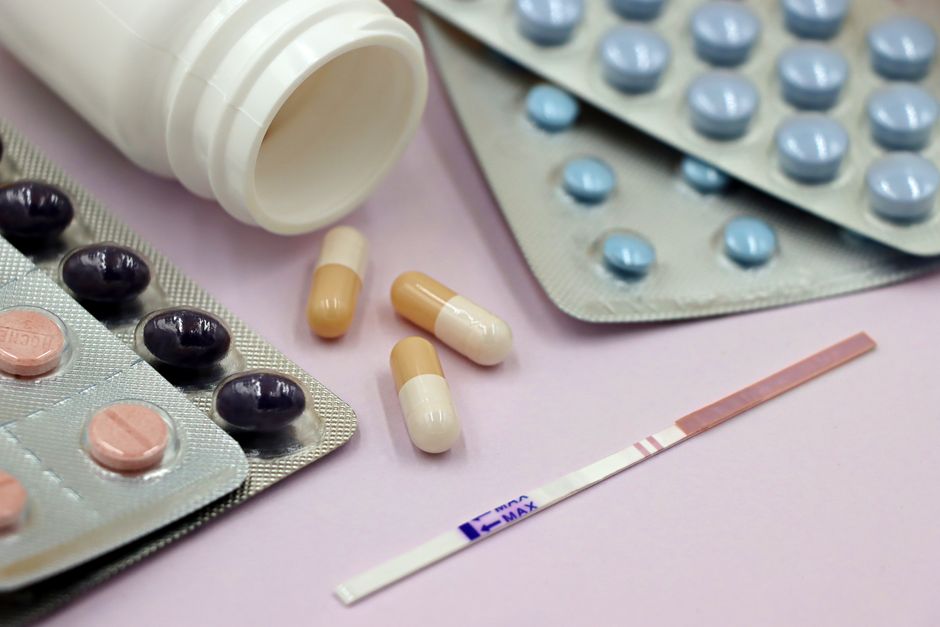
Norethindrone is a progestin used in many birth control pills, and its main job is to prevent pregnancy. It does this in two main ways: by thickening cervical mucus to block sperm, and by thinning the uterine lining. Whether it consistently stops ovulation depends entirely on the dose and the specific product. This is not a minor detail. It is the difference between a method that works mostly by blocking sperm and one that works by shutting down egg release.
Does Norethindrone Stop Ovulation Not Always?
No. Norethindrone does not always stop ovulation. Its ability to suppress ovulation depends on the dose and the type of product.
At higher doses, norethindrone reliably prevents the release of an egg. At lower doses, it often does not. Instead, it works primarily by thickening cervical mucus, which makes it much harder for sperm to reach an egg. This distinction matters because it explains why some norethindrone products are more forgiving of timing errors than others.
The confusion comes from a simple assumption: that all hormonal birth control works the same way. It does not. A pill containing a higher dose of norethindrone may stop ovulation most of the time. A pill or mini-pill with a lower dose may allow ovulation to occur in many cycles while still preventing pregnancy through other mechanisms.
How Does Norethindrone Actually Prevent Pregnancy?
Norethindrone prevents pregnancy through several overlapping mechanisms, and ovulation suppression is only one of them.
The primary mechanism at lower doses is the thickening of cervical mucus. Under the influence of progestin, the mucus at the cervix becomes thick and sticky. This creates a physical barrier that sperm struggle to swim through. Without easy passage, the odds of sperm reaching an egg drop sharply.
A second mechanism is the thinning of the uterine lining, called the endometrium. Progestins cause the lining to stay thin and less receptive to a fertilized egg. If an egg is released and fertilized, a thin lining makes implantation less likely.
A third mechanism, at higher doses, is suppression of ovulation itself. Norethindrone can prevent the surge of luteinizing hormone that triggers the release of an egg from the ovary. When this surge is blocked, no egg is released.
These mechanisms work together. Even when ovulation is not fully suppressed, the mucus and lining changes provide backup protection. This layered approach is why low-dose norethindrone can still be effective despite not reliably stopping ovulation.
Why Does the Dose Change Whether Ovulation Stops?
The dose determines how strongly norethindrone suppresses the hormonal signals that control ovulation.
Ovulation is triggered by a complex feedback loop involving the brain and the ovaries. The hypothalamus and pituitary gland release hormones that signal the ovaries to mature and release an egg. Progestins like norethindrone can interrupt this loop, but only if enough of the hormone is present to suppress the signal.
At low doses, the level of norethindrone in the bloodstream is often not high enough to fully block the signal. The body may still mount an ovulation-triggering surge. At higher doses, the signal is suppressed more consistently, and ovulation is blocked more often.
This is why dose is not a minor detail. It changes the fundamental way the method works. A low-dose product leans heavily on cervical mucus. A higher-dose product adds reliable ovulation suppression to the mix.





Which Norethindrone Products Stop Ovulation More Reliably?
Norethindrone appears in several types of birth control, and they do not all work the same way.
- Combined oral contraceptives: These contain both an estrogen and a progestin like norethindrone. The estrogen component is the main driver of ovulation suppression. Combined pills reliably stop ovulation in most cycles.
- Progestin-only pills (mini-pills): These contain only a progestin. Traditional mini-pills with low-dose norethindrone do not consistently stop ovulation. They rely mainly on cervical mucus changes.
- Higher-dose progestin-only pills: A progestin-only pill containing a higher dose of norethindrone suppresses ovulation more often than a low-dose mini-pill.
- Long-acting methods: Implants and injections that release progestins work differently again, often suppressing ovulation very reliably because of steady hormone levels.
The key distinction is between combined pills and progestin-only pills. Combined pills suppress ovulation mainly because of the estrogen. Progestin-only pills depend on the specific progestin and dose.
What Does This Mean for How You Take the Pill?
If a product does not reliably stop ovulation, timing becomes more important.
A method that stops ovulation has a built-in buffer. Even if you take a pill a few hours late, the lack of an egg means pregnancy is unlikely in that window. A method that relies on cervical mucus does not have that buffer. The mucus changes can reverse quickly if hormone levels drop.
This is why traditional progestin-only pills have a narrow window for taking them each day. The instructions often call for taking the pill at the same time every day, with a short window for error. Missing that window can reduce effectiveness because the mucus barrier may weaken before the next dose.
Combined pills have a wider window because ovulation suppression provides more margin. This does not mean combined pills are foolproof, but the mechanism explains the difference in how forgiving each method is.
If you are unsure which category your pill falls into, the packaging or a pharmacist can tell you whether it is a combined pill or a progestin-only pill, and what the dose of norethindrone is.
Does Ovulation Return Quickly After Stopping Norethindrone?
Ovulation usually returns quickly after stopping norethindrone, but the timing varies.
For combined pills, ovulation typically resumes within the first cycle or two after stopping. The hormonal suppression clears as the drug leaves the body, and the normal feedback loop restarts.
For progestin-only pills, the return of ovulation can be faster because ovulation may not have been fully suppressed to begin with. In some cases, ovulation can occur within days of stopping the pill.
For injectable progestins, the return of ovulation can take much longer, sometimes several months. This is because the injection releases hormone slowly and the suppression lasts longer after the last dose.
This variability is another reason the dose and delivery method matter. A pill that did not fully stop ovulation will not need much time for ovulation to return. A method that suppressed ovulation strongly may take longer to wear off.
What Should You Know About Effectiveness?
Effectiveness depends on how well the method is used and which mechanism is doing the work.
When used perfectly, progestin-only pills are effective, but they have a lower margin for error than combined pills. Typical use, which includes late or missed pills, reduces effectiveness more for progestin-only pills than for combined pills.
This is not a reason to avoid progestin-only pills. They are a good option for people who cannot take estrogen, such as those with certain health conditions or who are breastfeeding. But understanding how they work helps you use them correctly.
The most important practical point is this: if your pill relies mainly on cervical mucus rather than ovulation suppression, taking it at the same time every day is not optional. It is central to how the method works.
If you are considering a norethindrone product or are already using one, the dose and type are worth understanding. They tell you which mechanism is protecting you and how much room for error you have.
Frequently Asked Questions
Does norethindrone always stop ovulation?
No, norethindrone does not always stop ovulation. Whether it does depends on the dose and whether it is combined with an estrogen.
Which norethindrone pills stop ovulation?
Combined pills containing norethindrone plus an estrogen reliably stop ovulation in most cycles. Low-dose progestin-only pills often do not stop ovulation and work mainly by thickening cervical mucus.
How does low-dose norethindrone prevent pregnancy if it does not stop ovulation?
It thickens cervical mucus to block sperm and thins the uterine lining to make implantation less likely. These mechanisms provide protection even when an egg is released.
How long after stopping norethindrone does ovulation return?
Ovulation often returns within the first cycle or two after stopping combined pills. With progestin-only pills it can return within days, and with injectable progestins it can take several months.
