
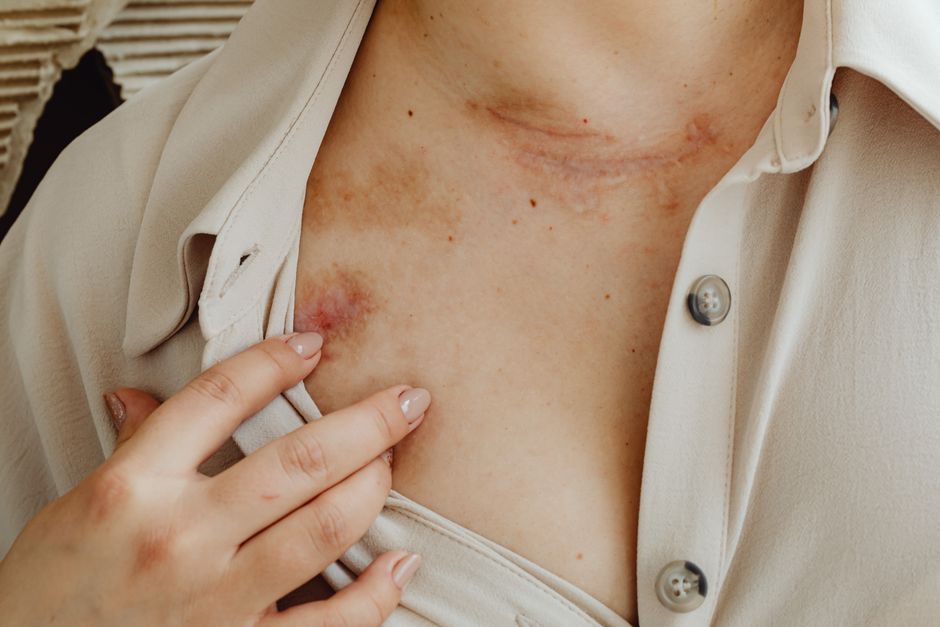
Neosporin does not help scars. It is an antibiotic ointment meant to prevent infection in minor cuts and scrapes, and it has no effect on how a wound heals or how much scarring forms. Once a scar has developed, no topical antibiotic can fade or remove it. The belief that Neosporin reduces scarring is one of the most common wound-care myths, and it is worth understanding where it comes from and what actually does influence scar formation.
Does Neosporin Help Scars?
No. Neosporin is a combination antibiotic ointment containing neomycin, bacitracin, and polymyxin B. Its purpose is to kill or slow the growth of bacteria on the skin. Scarring is a separate process driven by collagen deposition during healing, and antibiotics do not act on that process.
The confusion likely comes from a reasonable-sounding chain of logic: infection can worsen a wound, worse wounds scar more, so preventing infection should reduce scarring. That reasoning is not wrong in principle. A wound that becomes infected is more likely to heal poorly and leave a more visible scar. But this does not mean antibiotic ointment applied to a clean, minor wound reduces scarring. For small cuts and scrapes in healthy people, the risk of infection is already low, and the marginal benefit of a topical antibiotic is small.
There is also a practical detail that gets lost. Neosporin keeps a wound surface moist, and a moist wound environment does support healing compared with a dry, scabbed wound. People sometimes credit the antibiotic for a better-looking result when the real contributor was simply keeping the area from drying out. Plain petroleum jelly does the same job without the antibiotic.
What Actually Causes a Scar to Form?
A scar is the body’s replacement tissue after skin is damaged deeply enough to break through the outer layer, the epidermis, into the dermis below. The dermis contains collagen, and when it is injured, specialized cells called fibroblasts lay down new collagen to close the gap. The result is functional but different from original skin — it lacks hair follicles, sweat glands, and the same organized collagen structure.
How a scar looks depends on several factors that have nothing to do with whether you applied an antibiotic:
- Depth and size of the wound. Damage confined to the epidermis usually heals without a scar. Damage into the dermis almost always leaves some mark.
- Wound direction. Cuts that run parallel to natural skin tension lines tend to scar less than cuts that cross them.
- Location on the body. Areas with high skin tension, like the chest and shoulders, scar more than others.
- Genetics and skin type. Some people are prone to raised or thickened scars, a tendency that runs in families.
- Age. Younger skin tends to heal faster but can also produce more pronounced scars.
- Infection and wound care. An infected or poorly cleaned wound is more likely to scar badly.
Notice that antibiotic ointment appears only indirectly, through the infection pathway. For a clean minor wound, that pathway is rarely triggered.
Why Do People Think Neosporin Reduces Scarring?
Several things reinforce the idea. Neosporin is often applied to a fresh wound, and fresh wounds heal. The ointment gets credit for a natural process. Its greasy texture also keeps the wound from drying and scabbing, which can make the healing area look smoother in the first days — a cosmetic effect that fades as healing progresses.
Marketing plays a part too. Antibiotic ointments are advertised for wound care, and people reasonably assume “wound care” includes “scar prevention.” It does not. No major clinical guideline lists topical antibiotics as a scar treatment, because the evidence does not support that use.
There is a genuine risk buried in this misunderstanding. Neomycin, one of the ingredients in Neosporin, is a common cause of allergic contact dermatitis. Some studies suggest a meaningful share of people develop a red, itchy, swollen reaction to it. Applying it repeatedly to a healing wound can produce a rash that looks like a worsening wound, prompting more ointment — a cycle that helps no one.
What Does Help Reduce Scarring?
The most effective steps happen early, during wound healing, not after a scar has formed. Proper wound care is the foundation.
- Clean the wound thoroughly. Rinse with mild soap and water to remove dirt and bacteria. This matters more than any ointment applied afterward.
- Keep it moist. A thin layer of plain petroleum jelly over a clean wound supports healing. This is the step people mistakenly attribute to Neosporin.
- Cover it. A bandage protects the wound and keeps the environment moist.
- Protect from the sun. New scars are sensitive to ultraviolet light and can darken. Sun protection on a healing scar is one of the few measures with consistent support.
- Do not pick or scratch. Interfering with a healing wound can worsen the final appearance.
Once a scar is established, options exist but none are guaranteed. Silicone gel sheets and silicone creams have the most consistent evidence for improving the appearance of raised scars, and some clinicians recommend them for new scars as well. Corticosteroid injections, laser therapy, and other procedures are used for specific scar types, usually under dermatology care. Over-the-counter creams marketed for scar removal have much weaker evidence, and many make claims that no study has confirmed.
One clarification worth making: the timing of intervention matters. Silicone products appear to work best on scars that are still maturing, which can take months. On an old, fully mature scar, results are typically modest at best.
When Should You See a Doctor About a Wound or Scar?
Most minor wounds heal without incident. Some situations warrant medical attention.
Seek care if a wound shows signs of infection — increasing redness, warmth, swelling, pus, or fever. Deep wounds, wounds that will not stop bleeding, puncture wounds, and wounds from animal bites generally need professional evaluation. A wound that gaps open may need closure to heal well and minimize scarring.
For scars, see a doctor if a scar is raised, painful, itchy, or growing beyond the original wound boundaries. A scar that keeps enlarging may be a keloid or hypertrophic scar, which responds to specific treatments. Any change in an old scar — new growth, bleeding, or color change — should be checked.
The Bottom Line on Neosporin and Scars
Neosporin prevents infection in minor wounds. It does not prevent, reduce, or fade scars. The moist environment it creates may support healing, but plain petroleum jelly achieves the same effect without the antibiotic or the allergy risk.
If your goal is a less visible scar, focus on cleaning the wound, keeping it moist and covered, protecting it from the sun, and not picking at it. For scars that are raised, growing, or bothersome, a dermatologist can discuss options with real evidence behind them. Skip the antibiotic ointment for scar purposes — it is not doing what you think it is.
Frequently Asked Questions
Does Neosporin help scars fade?
No. Neosporin is an antibiotic ointment and has no effect on established scar tissue. No topical antibiotic has been shown to fade or remove a scar.
Should I put Neosporin on a new wound to prevent scarring?
Neosporin is intended to help prevent infection in minor wounds, not to prevent scars. Plain petroleum jelly keeps the wound moist with the same healing benefit and avoids the allergy risk linked to neomycin.
Can Neosporin make a scar worse?
It does not worsen scarring directly, but neomycin in Neosporin is a common cause of allergic skin reactions. A rash from the ointment can irritate a healing wound and complicate care.
What is the best thing to put on a wound to reduce scarring?
Clean the wound, keep it moist with petroleum jelly, cover it, and protect it from the sun as it heals. Silicone gel products have the most consistent evidence for improving scar appearance once a scar has formed.
