
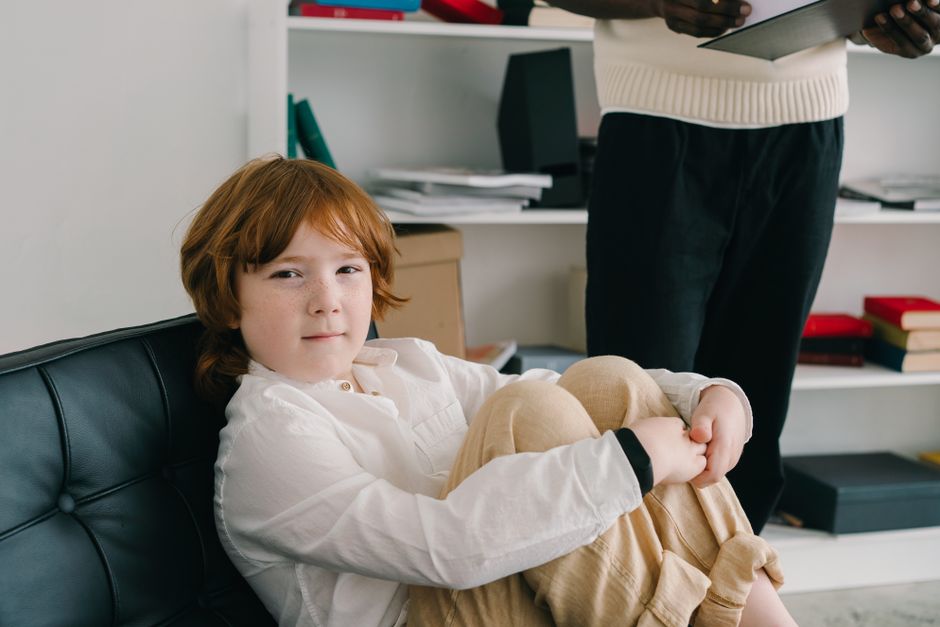
Watching your child go quiet at a birthday party or cling to your side at school drop-off can be hard to read. Sometimes it is shyness. Sometimes it is social anxiety. A quiz or checklist can help you notice patterns, but it cannot tell you for certain what is going on. Only a qualified professional can do that.
Social anxiety disorder is a real, recognized condition. It shows up as a strong, lasting fear of being watched, judged, or embarrassed in social situations. In children, it often looks like crying, freezing, clinging, or refusing to go somewhere — not just quietness. A checklist is a useful first step. It gives you language for what you are seeing. It does not replace a proper evaluation.
Does My Child Have Social Anxiety Quiz Checklist?
A checklist is a starting point, not a diagnosis. It helps you organize what you have noticed so you can describe it clearly to a doctor or mental health provider.
Most screening tools used in clinical settings ask about the same core areas. Here are the kinds of things a checklist will typically ask you to look for:
- Does your child avoid social situations, or endure them with visible distress?
- Do they worry for days before a social event?
- Do they fear being watched, judged, or embarrassed?
- Do they have physical symptoms — racing heart, sweating, stomachaches, blushing, trembling — around people?
- Is the fear out of proportion to the actual situation?
- Has this been going on for months, not just a few days?
- Does it get in the way of school, friendships, or daily life?
If several of these sound familiar, that is worth paying attention to. It is not a diagnosis. It is a reason to talk to someone who can evaluate your child properly.
What Is the Difference Between Shyness and Social Anxiety?
Shyness is a temperament. Social anxiety is a disorder. The line between them is not always obvious, especially in younger children.
A shy child may warm up slowly. They might hang back at first, then join in once they feel comfortable. They are not consumed by fear of judgment. They are not avoiding things they want to do. Shyness does not usually stop a child from living their life.
Social anxiety is different in a few key ways. The fear is intense and persistent. It does not fade once the child settles in. It causes real distress. And it leads to avoidance — the child starts skipping the things that scare them, which often makes the fear worse over time.
One thing that trips parents up: social anxiety in children does not always look like fear. It can look like anger, irritability, tears, or a stomachache before school. A child who melts down every morning before a certain class may be anxious, not defiant.
What Are the Signs of Social Anxiety in Children?
Signs vary with age. A preschooler cannot tell you they are afraid of judgment. A teenager can, but may hide it.
In younger children, watch for:
- Crying or freezing around unfamiliar people, even after warming-up time
- Clinging to a parent in social settings
- Refusing to speak in certain situations, sometimes called selective mutism
- Physical complaints — stomachaches, headaches — before social events
In older children and teens, watch for:
- Avoiding group work, presentations, or eating in front of others
- Intense worry about saying or doing the wrong thing
- Few or no friends, or withdrawing from activities they used to enjoy
- Physical symptoms like blushing, sweating, or a racing heart around people
- Spending a lot of time worrying after a social event
There is a detail many parents miss. Selective mutism — where a child speaks freely at home but goes silent at school — is closely linked to social anxiety in many children. It is not stubbornness. It is often anxiety in a different form.





When Should I Get My Child Evaluated?
Get an evaluation when the fear or avoidance is causing real problems — at school, with friends, or at home — and has been going on for a while.
Some signs it is time to seek help:
- The anxiety is getting in the way of school or daily activities
- Your child is missing out on things they want to do
- The distress is significant, not just occasional nerves
- It has lasted for months rather than a short phase
- Your child has started avoiding more and more situations
Start with your pediatrician. They can rule out other causes — like thyroid issues or other medical conditions — that can sometimes look like anxiety. From there, they may refer you to a child psychologist or psychiatrist.
A proper evaluation is not a checklist. It involves a clinical interview, information from parents and sometimes teachers, and a look at how the symptoms affect your child’s daily life. That is what separates a screening tool from a diagnosis.
What Does Treatment for Childhood Social Anxiety Look Like?
The most well-supported treatment for childhood anxiety is a type of talk therapy called cognitive behavioral therapy, or CBT. It helps children understand how their thoughts, feelings, and behaviors connect, and it teaches skills to face feared situations rather than avoid them.
Exposure — gradually and safely facing the situations that scare your child — is a core part of CBT. It is done carefully, at a pace the child can handle, usually with a trained therapist guiding the process.
Medication is sometimes used, especially for older children or when therapy alone is not enough. Decisions about medication should be made with a child psychiatrist or a pediatrician experienced in treating childhood anxiety. This is not a decision to make on your own.
For younger children, parent-focused approaches can help too. Parents learn how to respond to anxiety in ways that support brave behavior rather than accidentally reinforcing avoidance. The evidence for these approaches varies, and a clinician can help you figure out what fits your child.
What Parents Can Do at Home
You cannot treat your child’s anxiety at home, but you can support the work being done in therapy.
- Validate the feeling without confirming the fear. “That sounds really hard” is different from “You’re right, that would be terrible.”
- Avoid letting your child skip things entirely. Avoidance feeds anxiety over time.
- Praise brave behavior, not just outcomes.
- Keep routines predictable. Structure helps anxious children feel safer.
- Talk to your child’s school. Teachers can often make small changes that reduce distress.
How Common Is Social Anxiety in Children?
Social anxiety disorder is one of the more common anxiety disorders in young people. It typically begins in the teenage years, though it can start earlier.
It is not rare, and it is not a character flaw. It is a treatable condition. Many children who get support go on to manage their anxiety well into adulthood.
One thing worth saying plainly: a checklist can point you in the right direction, but it cannot tell you whether your child has social anxiety disorder. Only a qualified professional can. If you are worried, that worry is enough reason to ask for help.
Frequently Asked Questions
Can a quiz diagnose social anxiety in my child?
No. A quiz or checklist can help you notice patterns and start a conversation with a doctor, but only a qualified professional can diagnose social anxiety disorder.
What age does social anxiety usually start?
Social anxiety disorder most often begins in the teenage years, though it can appear earlier in childhood. If you notice signs in a younger child, it is still worth discussing with a pediatrician.
Is social anxiety the same as being shy?
No. Shyness is a temperament and usually fades as a child warms up, while social anxiety involves intense, persistent fear and avoidance that gets in the way of daily life.
What should I do if my child’s checklist suggests social anxiety?
Talk to your pediatrician or a child mental health professional. They can evaluate your child properly and recommend next steps, which may include therapy such as CBT.
