
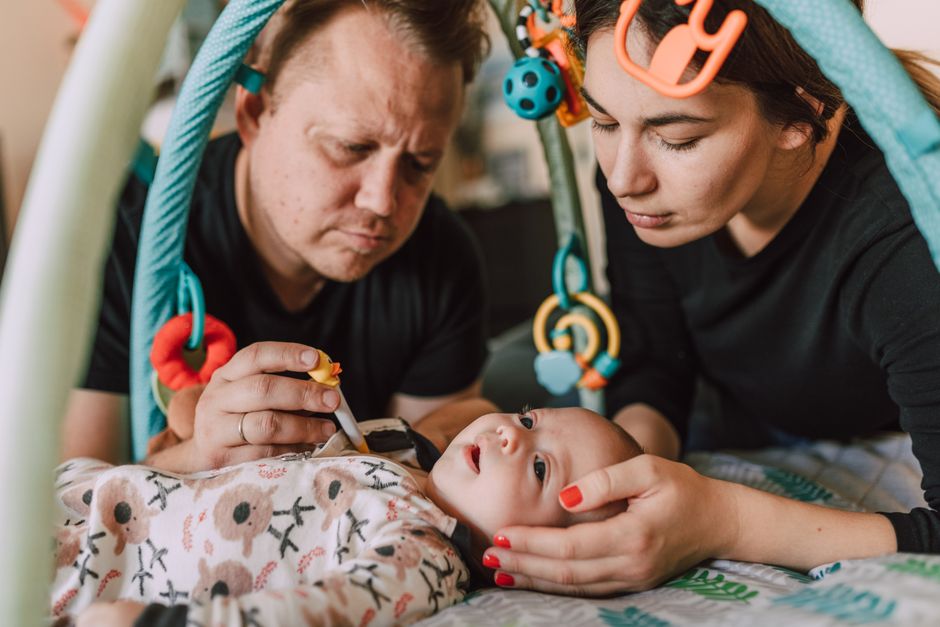
Watching your baby grow is full of questions. If you are wondering whether certain movements or delays could be cerebral palsy, the most important thing to know is that cerebral palsy is a diagnosis made by a doctor, not something you can determine at home. Early signs can appear in the first months, but many babies who show them do not have cerebral palsy. What matters most is tracking your baby’s development and talking to your pediatrician promptly if something feels off.
What Is Cerebral Palsy?
Cerebral palsy is a group of disorders that affect movement, muscle tone, and posture. It happens because of damage to the developing brain, usually before birth, during birth, or in the first few years of life. The damage does not get worse over time, but the symptoms can change as a child grows.
The word “cerebral” refers to the brain, and “palsy” refers to muscle weakness or movement problems. It is the most common motor disability in childhood. The condition affects everyone differently — some children have mild challenges with coordination, while others may need a wheelchair and daily support.
Because the brain damage happens early, cerebral palsy is considered a developmental condition rather than a progressive disease. The brain injury itself is static, meaning it does not worsen, but the way it affects the child can evolve as they grow and develop.
Does My Baby Have Cerebral Palsy: Early Signs to Watch For
Early signs of cerebral palsy usually appear before a child turns one. Parents often notice delays in reaching motor milestones, like rolling over, sitting up, or crawling. But not every delay points to cerebral palsy — some babies simply develop at their own pace.
Signs that may warrant attention include:
- Stiff or rigid muscles in the arms or legs
- Floppy or low muscle tone, especially in the trunk
- Using one side of the body more than the other
- Difficulty feeding, sucking, or swallowing
- Delays in holding the head up by 4 months
- Not rolling over by 6 months
- Not sitting without support by 8 to 9 months
Some babies with cerebral palsy also have unusual postures, like arching their back or crossing their legs like scissors. They may feel stiff when you try to move their arms or legs, or they may feel unusually floppy.
Seizures, vision problems, and hearing difficulties can also occur alongside cerebral palsy. However, these symptoms alone do not mean a baby has the condition. Many babies with these signs have completely different explanations for them.
How Doctors Diagnose Cerebral Palsy
Diagnosis begins with a developmental screening at well-child visits. Your pediatrician will ask about milestones and observe your baby’s movements. If there are concerns, the next step is usually a referral to a pediatric neurologist or a developmental pediatrician.
The doctor will take a detailed history, including your pregnancy, delivery, and the baby’s health after birth. They will perform a physical exam that checks muscle tone, reflexes, and coordination. There is no single blood test or scan that confirms cerebral palsy.
Brain imaging, such as an MRI, can help identify the area of brain damage. But a normal MRI does not rule out cerebral palsy, and an abnormal one does not always mean the child will develop the condition. Imaging is one piece of the puzzle, not the whole answer.
In many cases, doctors wait to see how a child develops over time before making a firm diagnosis. This can be frustrating for parents, but it reflects the reality that early movement patterns change. Some babies who look stiff at 6 months catch up completely by age one.




Conditions That Mimic Cerebral Palsy
Several conditions can look like cerebral palsy in infancy. This is one reason doctors are cautious about diagnosing it too early. Muscle stiffness, delays, and unusual movements can come from other sources.
Genetic disorders, metabolic diseases, and certain muscle conditions can all produce similar signs. Some babies have temporary delays caused by prematurity or illness. Others have benign conditions like transient dystonia, which causes stiffening that eventually resolves on its own.
Hearing or vision problems can also delay motor milestones. A baby who cannot see well may not reach for objects on schedule. A baby with hearing loss may have delayed speech but normal motor skills.
Because the list of possibilities is long, a thorough medical workup is essential. Blood tests, genetic testing, and metabolic screening may be part of the process. Your doctor will rule out other conditions before settling on a cerebral palsy diagnosis.
Risk Factors for Cerebral Palsy
Certain factors increase the chance of cerebral palsy, but most babies with these risk factors will not develop the condition. Risk is about probability, not certainty.
Premature birth is the strongest risk factor. Babies born before 28 weeks have a much higher chance of cerebral palsy than full-term infants. Low birth weight carries a similar risk.
Other risk factors include:
- Infections during pregnancy, such as cytomegalovirus or rubella
- Lack of oxygen to the brain during birth
- Severe jaundice that goes untreated
- Maternal thyroid problems or seizures
- Multiple births, like twins or triplets
Most cases of cerebral palsy, however, happen in babies with no known risk factors. The cause is often unclear, even after thorough testing. This is a difficult truth for many families, and it is not something you caused.
What to Do If You Suspect a Delay
If you are worried about your baby’s development, act early. Do not wait to see if they catch up on their own. Early intervention services can make a meaningful difference in outcomes, regardless of the final diagnosis.
Start by talking to your pediatrician. Describe what you are seeing with specific examples. Bring videos of your baby’s movements if you can — this helps the doctor see what you are worried about.
You can also contact your state’s early intervention program. In the United States, every state offers free developmental evaluations for children under three. You do not need a doctor’s referral to request one, and you do not need a diagnosis to receive services.
If your baby qualifies, services like physical therapy, occupational therapy, and speech therapy can begin right away. These therapies do not cure cerebral palsy, but they help build strength, coordination, and communication skills. They also support you as a parent in learning how to help your child thrive.
What Early Intervention Actually Does
Early intervention does not change the underlying brain damage, but it can change how the child functions. Therapy works on the skills the brain can still learn, which is why starting early matters.
Physical therapy focuses on movement, strength, and balance. It helps babies learn to roll, sit, and eventually walk as independently as possible. Occupational therapy works on daily skills like feeding, dressing, and playing. Speech therapy addresses feeding difficulties and later communication.
Some families also explore equipment like braces, splints, or specialized seating. These tools support posture and movement, making it easier for a child to participate in daily life. Your therapy team will guide you on what is appropriate.
Research consistently shows that early therapy improves motor function and quality of life for children with cerebral palsy. It does not promise a cure, and no ethical professional will guarantee a specific outcome. What it offers is the best chance for your child to reach their individual potential.
Life After a Diagnosis
A cerebral palsy diagnosis is life-changing, but it is not a sentence of limitation. Many children with cerebral palsy grow up to lead full, active lives. The range of ability is enormous, and no one can predict exactly how your child will develop.
Treatment continues throughout childhood and often into adulthood. Medications can help manage muscle stiffness and seizures. Surgery may be considered for some children to improve movement or correct bone problems. Every treatment plan is individualized.
Your role as a parent is not to fix your child, but to advocate for them. Learn about the condition, ask questions, and build a team you trust. Connect with other families who understand this journey — they can offer practical advice and emotional support that medical professionals cannot.
Most importantly, remember that your baby is a whole person, not a diagnosis. They will have interests, talents, and a personality that has nothing to do with cerebral palsy. Loving them fully, exactly as they are, is the most powerful thing you can do.
Frequently Asked Questions
At what age can cerebral palsy be diagnosed?
Most children are diagnosed between 12 and 24 months, though some are identified earlier if signs are clear. Mild cases may not be diagnosed until school age.
Can cerebral palsy be detected before birth?
No, there is no prenatal test for cerebral palsy. Doctors can identify risk factors during pregnancy, but the condition cannot be confirmed until after birth.
Do all babies with delayed milestones have cerebral palsy?
No, most babies with delayed milestones do not have cerebral palsy. Many delays resolve on their own or have entirely different causes.
Is cerebral palsy genetic?
Most cases are not inherited, but some genetic mutations can increase risk. Genetic testing may be recommended if the cause is unclear.
