
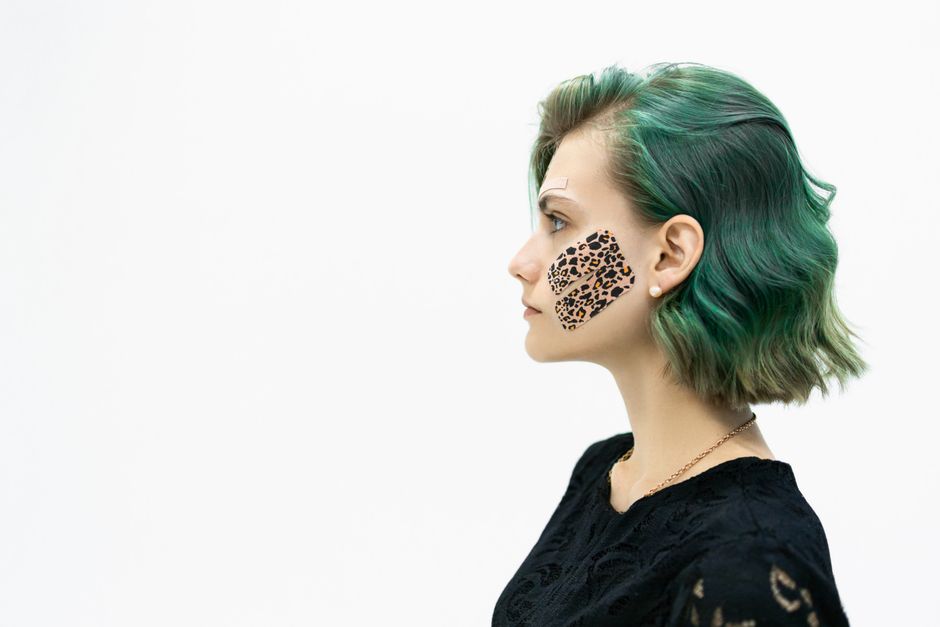
Mouth tape does not change your jawline. No clinical evidence shows that taping your lips shut at night reshapes bone, adds jaw muscle, or sharpens jaw definition. The jaw’s shape is set mainly by genetics, bone structure, and body fat. Mouth tape is a sleep aid aimed at encouraging nasal breathing — not a cosmetic treatment.
That gap between how mouth tape is marketed and what it can actually do is worth understanding. The product is real and some people find it useful for sleep. The jawline claims attached to it are not supported.
What Is Mouth Tape Supposed to Do?
Mouth tape is a small strip of adhesive placed over the lips at night. The goal is to keep the mouth closed so you breathe through your nose while you sleep.
Nasal breathing is a normal, well-understood function. Your nose filters, warms, and humidifies air before it reaches your lungs. It also produces nitric oxide, a gas that helps blood vessels relax. Some of that nitric oxide is carried into the lungs with each breath. Breathing through the mouth skips these steps.
So the theory behind mouth tape is straightforward: if you keep the mouth closed, you breathe through the nose, and you get the benefits of nasal breathing. Whether that improves sleep quality in a meaningful way is still being studied. The evidence is limited and mixed.
What mouth tape is not designed to do is alter your facial anatomy. That is a separate claim, and it deserves separate scrutiny.
Does Mouth Tape Help With Jawline Definition?
No. There is no established mechanism by which taping your mouth at night could reshape the jaw, and no clinical research showing that it does.
Jawline appearance comes down to three main factors:
- Bone structure. The size and shape of your mandible (lower jaw) are largely genetic. Bone does not reshape from soft pressure or a change in breathing route during sleep.
- Body fat. Fat stored under the chin and along the jaw can soften the outline. Changes in overall body fat can change how defined the jaw looks.
- Muscle and skin. The masseter and other jaw muscles, plus skin elasticity, affect the visible contour.
Mouth tape touches none of these in any meaningful way. It is a thin adhesive strip on the outside of your lips. It does not load the jaw muscles, move bone, or burn fat.
Some online claims suggest that keeping the mouth closed “trains” the jaw or supports a “proper” jaw position. That idea borrows language from orthodontic and myofunctional therapy concepts. But those are clinical treatments delivered by trained professionals, often with appliances or exercises, and even they are aimed at function and alignment — not at sculpting a jawline. A piece of tape on the lips is not equivalent to any of them.
Where Does the Jawline Claim Come From?
The claim likely grows out of a real observation: people who breathe through their mouths long-term, especially during childhood growth, can develop different facial development patterns. Research on mouth breathing and craniofacial growth has found associations with changes in facial structure in children.
That is a genuine area of study. But it is about children whose jaws are still growing, and about chronic, habitual mouth breathing — often linked to enlarged tonsils, allergies, or nasal blockage. It is not about adults who occasionally sleep with their mouth open, and it is not evidence that taping the mouth changes jaw shape.
This is the key distinction. An association between chronic mouth breathing and facial development in growing children does not translate into a cosmetic fix for adults using tape at night. The logic sounds plausible, which is exactly why the claim spreads. Plausible is not the same as proven.
What Does the Evidence on Mouth Tape Actually Show?
The research on mouth tape is thin. Some small studies have looked at whether mouth taping affects sleep measures in people with mild sleep apnea or snoring, and results have been mixed. The studies are generally small, short, and not designed to assess cosmetic outcomes.
No clinical evidence currently confirms that mouth tape improves jawline appearance. That is the honest position.
There is also a safety concern worth stating plainly. Mouth taping is not recommended for people with obstructive sleep apnea. If your airway is prone to collapsing during sleep, sealing your mouth does not fix the underlying problem and could be risky. The same caution applies to anyone with significant nasal congestion or blockage, since forcing nasal breathing through a blocked nose is counterproductive.
Nasal obstruction has many possible causes — a deviated septum, chronic allergies, nasal polyps, and others — and they can look similar from the outside. If you cannot breathe comfortably through your nose, that is worth discussing with a clinician rather than taping over.
What Actually Affects Jawline Appearance?
If jawline definition is your goal, the factors that genuinely influence it are well established. None of them involve mouth tape.
- Body composition. Reducing overall body fat can make the jaw and neck contour more visible. This is the factor most within your control.
- Genetics and bone structure. The underlying shape of your jaw is largely inherited and not something tape can change.
- Posture. Head and neck posture can affect how the jaw and neck look in photos and in the mirror, though the effect is about positioning, not anatomy.
- Skin and aging. Loss of skin elasticity with age can soften the jawline. This is a normal part of aging.
For people genuinely concerned about jaw structure or facial development, the appropriate professionals are orthodontists, oral and maxillofacial specialists, or plastic surgeons — not a sleep product. Those conversations involve real assessment and, where relevant, evidence-based options with known risks. A tape strip does not belong in that category.
Is Mouth Tape Worth Trying for Sleep?
That depends on why you are considering it. If your goal is a sharper jawline, mouth tape will not deliver it, and the claim should be set aside.
If your interest is sleep or breathing, the picture is more nuanced. Some people report sleeping better with mouth tape, but the evidence base is limited and mixed. It is not a treatment for sleep apnea, and it should not be used as a substitute for proper evaluation of snoring or breathing problems during sleep.
If you snore heavily, wake unrefreshed, or have been told you stop breathing in your sleep, those are reasons to see a clinician. Sleep apnea is a real medical condition with established treatments. Mouth tape is not one of them.
The simplest honest summary: mouth tape is a sleep product with an unproven cosmetic reputation. It will not change your jawline. Whether it helps your sleep is a separate question with an incomplete answer.
Frequently Asked Questions
Does mouth tape help with jawline?
No. There is no clinical evidence that mouth tape changes jaw shape, bone structure, or muscle definition. Jawline appearance is determined mainly by genetics, bone structure, and body fat.
Can mouth tape change your face shape?
No. A strip of tape on the lips cannot reshape facial bones or redistribute fat. Claims that it can are not supported by clinical research.
Is mouth taping safe for everyone?
No. Mouth taping is not recommended for people with obstructive sleep apnea or significant nasal congestion. If you have breathing concerns during sleep, talk to a clinician before trying it.
What actually improves jawline definition?
Changes in overall body fat have the clearest effect on how defined the jaw looks, along with factors like genetics, posture, and skin elasticity. For structural concerns, a qualified specialist is the right resource.
