
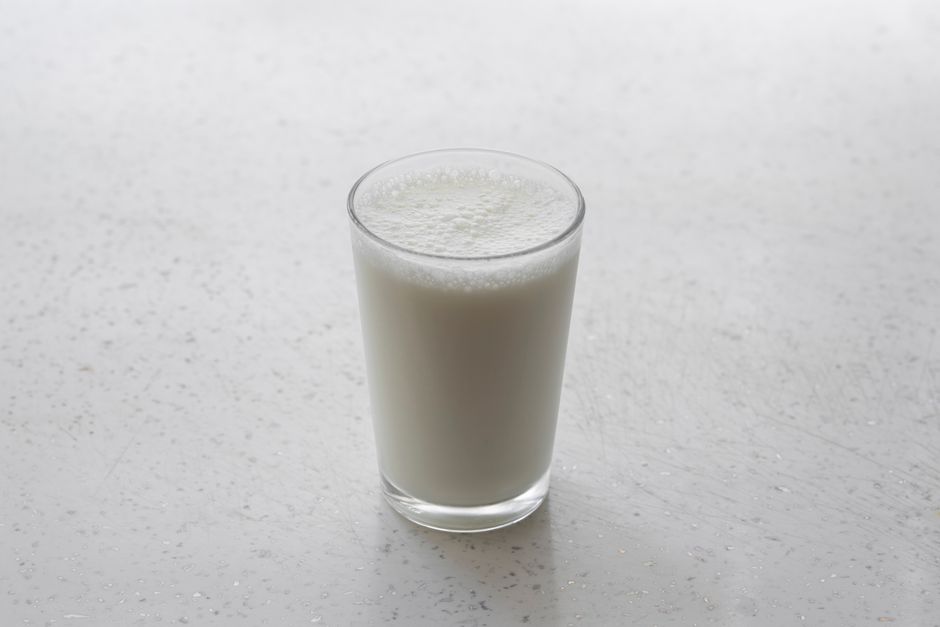
Drinking milk does not directly cause belly fat. Body fat, including fat around the waist, comes down to total calorie balance over time — how much you eat and drink compared with how much energy you burn. Milk is a nutrient-dense food, not a fattening one, and the research does not show that dairy itself targets your midsection.
That said, milk is not calorie-free. Whole milk carries more calories and fat than skim. If milk pushes your daily intake past what your body uses, the surplus can contribute to weight gain like any other food. The type of milk, how much you drink, and what the rest of your diet looks like all matter more than milk on its own.
Does milk make you gain belly fat?
No food causes belly fat by itself, and milk is no exception. Fat accumulates around the waist when you consistently take in more calories than you burn. Where your body stores that fat is shaped mostly by genetics, hormones, age, and sex — not by any single food.
Belly fat, especially the fat stored deep inside the abdomen around the organs (called visceral fat), tends to build up with overall weight gain. It is also linked to insulin resistance, hormonal shifts, poor sleep, and long-term stress. Milk does not act on any of these pathways in a way that would drive fat specifically to your waist.
What the evidence does show is that dairy is not associated with weight gain in most observational studies. Some research even suggests dairy intake is neutral or slightly favorable for body weight, though the effects are small and the studies cannot prove cause and effect. The idea that milk is uniquely fattening does not hold up.
How many calories are in milk, and why does that matter?
Calories are the part of milk that actually matters for weight. Different types of milk vary a lot in calorie and fat content, so the choice can add up over weeks and months.
| Type of milk (1 cup, 8 oz) | Approximate calories | Approximate fat |
|---|---|---|
| Whole milk (3.25% fat) | About 150 | About 8 g |
| 2% reduced-fat milk | About 120 | About 5 g |
| 1% low-fat milk | About 100 | About 2.5 g |
| Skim milk (nonfat) | About 80 | About 0 g |
These figures come from standard USDA nutritional data. The point is not that whole milk is bad. It is that a person drinking several cups of whole milk a day takes in meaningfully more calories than someone drinking skim. Whether that matters depends on the rest of the day’s food.
A cup of whole milk is roughly 150 calories. Three cups a day is about 450 calories — a real chunk of many people’s daily intake. Swapping to a lower-fat option trims that without removing the protein or calcium.
Is dairy linked to weight gain in research?
The research overall does not support the claim that dairy causes weight gain. Large observational studies have generally found that people who eat more dairy are not heavier than those who eat less, and in some analyses they are slightly leaner.
Clinical trials on dairy and weight loss have produced mixed and mostly modest results. Some show small benefits when dairy is part of a reduced-calorie diet; others show no difference. The effects are too small and inconsistent to call dairy a weight-loss tool. What the trials do not show is dairy causing weight gain when calories are held steady.
One clarification worth making: the claim that dairy “burns fat” or “boosts metabolism” is not supported by strong evidence. Calcium and protein in milk play real roles in the body, but turning them into a fat-loss strategy goes beyond what the data show.
Could milk cause bloating that looks like belly fat?
Sometimes what feels like belly fat is actually bloating or gas. This is common in people who have trouble digesting lactose, the natural sugar in milk.
Lactose intolerance happens when the body produces less of the enzyme lactase, which breaks down lactose. The undigested sugar ferments in the gut and can cause gas, cramping, and a swollen belly. This is temporary and not fat, but it can be uncomfortable and confusing.
Lactose intolerance is more common in some populations than others, and it often develops gradually in adulthood. If milk reliably causes gas or bloating, that is a digestion issue, not a sign you are gaining fat. Lactose-free milk, smaller servings, or other calcium sources may help. A persistent or painful digestive reaction should be checked by a doctor, since lactose intolerance is not the only possible cause.
Does milk help or hurt weight management?
Milk can support weight management as part of a balanced diet, mainly because protein helps you feel full. Protein is the most satiating macronutrient, and a glass of milk provides a steady amount of it. Feeling satisfied can make it easier to eat less overall.
Milk also provides calcium, vitamin D (in fortified products), and other nutrients that are genuinely useful. For many people, cutting milk out entirely is unnecessary and can make it harder to meet calcium needs.
The practical picture is simple. If you enjoy milk and it fits your daily calories, it is unlikely to cause belly fat. If you are drinking large amounts of whole milk on top of an already high-calorie diet, the extra calories can add up. The fix is portion and type, not avoidance.
- Choose skim or 1% if you want to save calories without losing protein.
- Keep an eye on total daily intake rather than any single food.
- Use milk as a protein source, not as a treat to drink mindlessly.
- If dairy upsets your stomach, that is a digestion issue — address it directly.
What actually causes belly fat?
Belly fat is driven by sustained calorie surplus and a cluster of lifestyle and biological factors. No single food, milk included, is the culprit on its own.
The main contributors are well established:
- Calorie surplus — eating and drinking more than you burn over time.
- Physical inactivity — less movement lowers daily energy use.
- Poor sleep — short or disrupted sleep is linked to weight gain and cravings.
- Chronic stress — long-term stress hormones can encourage fat storage, particularly around the middle.
- Age and hormones — body fat distribution shifts with age and hormonal changes, including menopause.
- Genetics — where your body stores fat is partly inherited.
Alcohol and sugary drinks are more strongly tied to belly fat than milk is. Liquid calories in general are easy to overconsume because they do not fill you up the way solid food does. Milk is a liquid calorie source too, which is why portion matters — but it also carries protein and nutrients that soda and alcohol do not.
Should you cut out milk to lose belly fat?
Cutting milk is not a proven way to lose belly fat. There is no strong evidence that removing dairy reduces waist fat specifically, and for most people it is not necessary.
If you are trying to reduce belly fat, the levers that matter are total calorie intake, physical activity, sleep, and stress. Removing milk might help only if it meaningfully lowers your daily calories — and you can often get the same effect by switching to a lower-fat milk or drinking less of it.
Some people avoid dairy for other reasons, such as lactose intolerance or personal preference. That is fine, but it should be a deliberate choice with other calcium sources in place, not a weight-loss strategy built on a myth.
Frequently Asked Questions
Does drinking milk at night cause belly fat?
No. The time of day you drink milk does not determine where fat is stored. Belly fat comes from total calorie balance over time, not from when you eat.
Is whole milk more fattening than skim milk?
Whole milk has more calories and fat per cup than skim, so it can contribute more to a calorie surplus if you drink a lot of it. It is not inherently fattening, and the difference is modest for most people.
Can milk cause bloating that looks like belly fat?
Yes, in people who have trouble digesting lactose, milk can cause gas and a swollen belly that is temporary and not fat. If this happens consistently, lactose-free milk or a doctor’s evaluation may help.
Does dairy help you lose belly fat?
No strong evidence shows dairy targets belly fat or boosts fat loss. Some studies suggest dairy is neutral for weight, but it is not a fat-loss tool on its own.
