
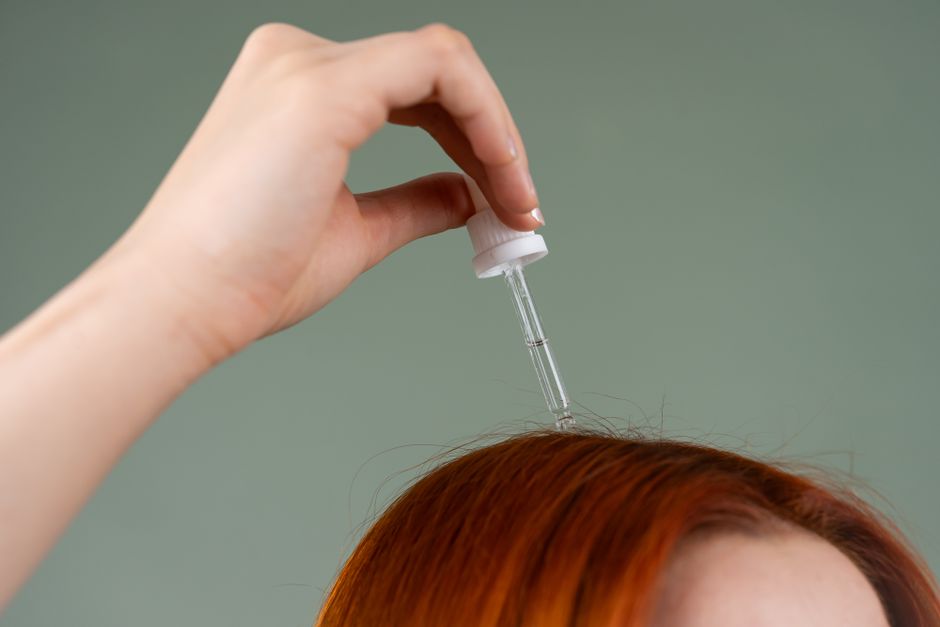
Microneedling for hair loss is one of the few at-home and in-clinic treatments that has real human studies behind it. The evidence is not as strong as the marketing suggests, but it is stronger than most hair growth gadgets. Research consistently shows that microneedling can improve hair density when it is combined with standard treatments like minoxidil, and weaker evidence suggests it may do something on its own. It does not work for every type of hair loss, and the results are modest.
What Is Microneedling and How Does It Work?
Microneedling uses a device covered in tiny needles to poke shallow holes in the skin. On the scalp, those needles are usually between 0.5 and 1.5 millimeters long. The punctures are small enough that they do not cause lasting damage. They do trigger the skin’s wound-healing response.
That healing response is the whole point. When skin is injured, it releases growth factors and proteins involved in repair. Some of those signals appear to influence hair follicles. The idea is that a controlled, minor injury nudges resting or miniaturized follicles back into a growth phase.
There is a second proposed mechanism. The tiny channels created by the needles may improve how well topical products absorb into the scalp. This matters because minoxidil, the most common topical hair loss treatment, does not absorb especially well through intact skin. If microneedling opens the skin slightly, more of the drug may reach the follicle.
What the devices actually are
Two main types exist. A dermaroller is a cylinder studded with needles that you roll across the scalp. A dermapen is a motorized device that stamps needles in and out. Professional versions used in clinics penetrate deeper and are typically operated by a clinician. At-home versions are shorter and designed for personal use.
Depth matters. Needles that are too short may not reach the layer where the relevant healing signals are triggered. Needles that are too long, used at home, raise the risk of injury and infection. The published studies on hair mostly used depths in the 0.5 to 1.5 millimeter range, often in a clinic setting.
Does Microneedling Work for Hair Loss on Its Own?
The evidence here is limited and mixed. Some small studies have tested microneedling alone against no treatment and reported improvements in hair count or density. Many of these studies were small, short, and did not use a placebo control that would account for the natural ups and downs of hair growth.
Hair shedding and regrowth fluctuate on their own. Without a proper control group, it is hard to know whether a change came from the treatment or from the passage of time. That is the central weakness in the standalone evidence.
The stronger and more consistent findings come from microneedling used alongside minoxidil. Several randomized trials have compared minoxidil alone versus minoxidil plus microneedling. In general, the combination groups showed greater improvement in hair count and hair thickness than minoxidil alone. Some of these trials were conducted in people with androgenetic alopecia, the common pattern hair loss driven by genetics and hormones.
One frequently cited study found that adding weekly microneedling to minoxidil produced better results than minoxidil used twice daily by itself. That finding has been repeated in other trials, though sample sizes tend to be modest and study designs vary. The direction of the evidence is fairly consistent even if the strength is not overwhelming.
Which Types of Hair Loss Might It Help?
Most of the human research has focused on androgenetic alopecia, also called male or female pattern hair loss. This is the condition where follicles gradually miniaturize under the influence of hormones and genetics. It affects a large share of men and a meaningful number of women.
There is also some research into microneedling for alopecia areata, an autoimmune condition that causes patchy bald spots. Results there are less consistent, and alopecia areata can resolve on its own, which makes small studies hard to interpret.
For other forms of hair loss, the picture is much less clear. Hair loss from thyroid disease, iron deficiency, medication side effects, or scarring conditions like lichen planopilaris has not been well studied with microneedling. In scarring alopecia specifically, the follicle is destroyed and replaced by scar tissue, so a treatment aimed at stimulating follicle activity has little to work with.
This matters for anyone trying to self-diagnose. Pattern hair loss, telogen effluvium, and alopecia areata can look similar to a non-expert but have different causes and different responses to treatment. A dermatologist can usually tell them apart with an exam and sometimes a scalp biopsy.





How Is It Used in Practice?
In clinical studies, microneedling was typically done every one to two weeks. Some protocols used it weekly, others less often. Sessions were usually performed by a clinician using a device with needles long enough to reach the target depth.
At-home dermarollers are widely sold, but they are not the same product used in most trials. The needles are often shorter, the depth is not adjustable, and there is no way to confirm you are reaching the intended layer of skin. No clinical guidelines currently specify an optimal at-home protocol for hair loss, because the research has not established one.
If you are considering it, a few practical points are worth knowing:
- Devices used on the scalp should not be shared, and needles should be replaced regularly.
- Skin should be clean, and the device should be disinfected before and after use.
- Using a device on irritated, broken, or infected skin raises the risk of problems.
- Applying minoxidil immediately after microneedling may increase absorption and, with it, the chance of side effects. Some clinicians advise waiting before applying topical products, but protocols vary.
That last point deserves attention. Minoxidil is generally well tolerated, but it can cause scalp irritation, and in some people it causes unwanted facial hair growth or a drop in blood pressure when too much is absorbed. Opening the skin barrier before applying it could increase those effects. The evidence on the best timing is not settled.
What Are the Risks and Downsides?
For most people using clean technique and reasonable needle depth, side effects are mild and temporary. Redness, mild discomfort, and minor bleeding during the session are common. These usually settle within a day or two.
More serious problems are possible but uncommon. These include infection, scarring, and a reaction called granuloma formation. Reusing a dull or unsterile device raises these risks. So does going too deep, especially at home without training.
There is also a real risk of disappointment. Even in the studies that showed benefit, the improvements were usually modest. Microneedling is not a cure for pattern hair loss, and it does not stop the underlying process. If you stop using it and stop your other treatments, any gains are likely to fade.
People with certain conditions should be cautious. That includes anyone with an active scalp infection, a bleeding disorder, or a history of poor wound healing. If you are pregnant or breastfeeding, there is no reliable safety data for microneedling on the scalp, and no clinical guidelines currently exist for this group. Talk to a doctor before starting.
How Does It Compare to Other Treatments?
Microneedling is not a replacement for proven treatments. The most studied options for pattern hair loss are minoxidil, a topical liquid or foam, and finasteride, an oral prescription medication for men. Both have larger and longer bodies of evidence than microneedling.
Other options include low-level laser therapy, which has some supporting research but generally shows modest effects, and platelet-rich plasma injections, which have mixed evidence and are typically expensive. Hair transplant surgery remains the most reliable way to restore hair in areas that are already bald, though it does not stop future loss.
| Treatment | Evidence Strength | Typical Use |
|---|---|---|
| Minoxidil (topical) | Strong | Daily, ongoing |
| Finasteride (oral, men) | Strong | Daily, prescription |
| Microneedling | Moderate when combined with minoxidil; limited alone | Every 1-2 weeks in studies |
| Low-level laser therapy | Some evidence, modest effect | Several times per week |
| Platelet-rich plasma | Mixed | In-clinic injections |
The pattern in the research is that microneedling works best as an add-on. It appears to make an existing treatment work a little better rather than doing the heavy lifting by itself.
Does Microneedling Work for Hair Loss? The Bottom Line
Microneedling has genuine human research behind it, which puts it ahead of most hair growth products on the market. The most reliable finding is that it improves results when combined with minoxidil in people with pattern hair loss. The evidence for microneedling alone is weaker and less consistent.
It is not a cure, and it does not replace proven treatments. Results are modest, and they depend on continuing treatment. If you have hair loss, the most useful first step is finding out what type you have, because that determines what is likely to help. A dermatologist can sort that out.
Frequently Asked Questions
Does microneedling actually regrow hair?
Studies show it can improve hair density and thickness, especially when used with minoxidil, but the improvements are usually modest. It is not a cure for pattern hair loss.
How often should you microneedle your scalp?
Clinical studies typically used microneedling every one to two weeks. No established guideline specifies an optimal schedule for at-home use.
Can you use minoxidil right after microneedling?
Some clinicians advise waiting before applying minoxidil, because opening the skin may increase absorption and side effects. Protocols vary and the best timing is not settled.
Is microneedling safe for women with hair loss?
It has been studied in women with pattern hair loss with generally mild side effects. Pregnant and breastfeeding women should avoid it, since no safety data exist for those groups.
