
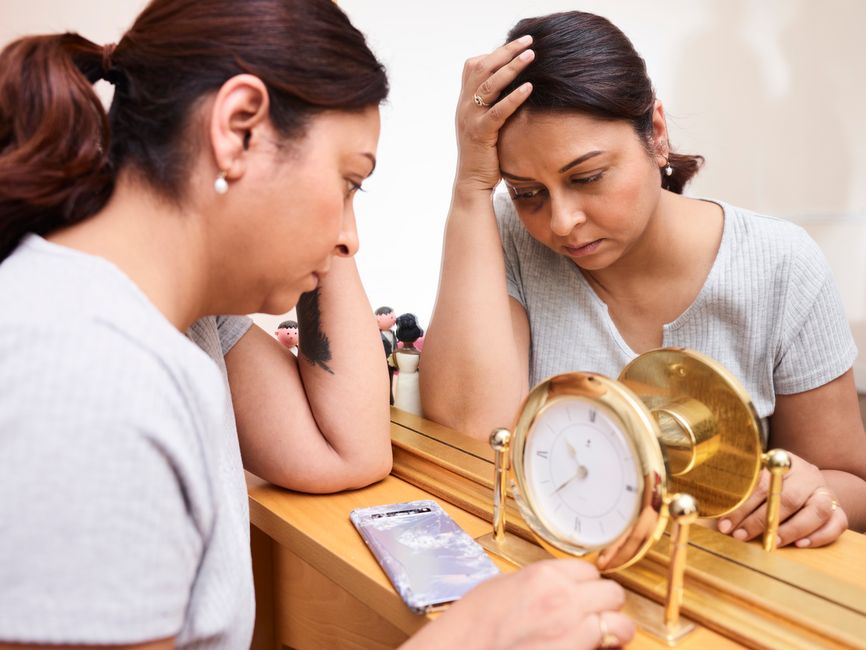
If you are in perimenopause or menopause and feel tired in a way that sleep does not fix, you are not imagining it. For most women, this fatigue does improve — but the timeline is measured in months and years, not days. It rarely resolves on its own without addressing what is driving it, and the drivers are often more than one at the same time.
The short answer: menopause fatigue does go away for many women, usually after the hormonal transition settles. But “settles” can take years, and some causes of fatigue in this stage of life are not hormonal at all. Those need their own attention.
Why Does Menopause Cause Fatigue in the First Place?
Estrogen and progesterone do more than regulate the menstrual cycle. Both hormones influence sleep architecture, body temperature regulation, mood, and energy metabolism. When their levels swing unpredictably during perimenopause and then fall permanently after menopause, all of those systems can be affected at once.
The most direct mechanism is sleep disruption. Hot flashes and night sweats fragment sleep even when a woman does not fully wake. Research consistently shows that sleep quality declines during the menopausal transition, and fragmented sleep does not restore energy the way consolidated sleep does. You can spend eight hours in bed and still wake up depleted.
Progesterone has a mild sedative effect, and falling levels may make sleep lighter and easier to interrupt. Estrogen interacts with serotonin and norepinephrine, both involved in mood and alertness. When those systems are destabilized, low mood and low energy often travel together.
There is a second layer that gets less attention. Fatigue during this transition is frequently multifactorial. Hormones may be one contributor while thyroid function, iron status, sleep apnea, or depression are contributing separately. Treating only the hormonal piece when something else is also driving the fatigue is a common reason women feel like nothing is working.
Does Menopause Fatigue Ever Go Away on Its Own?
For some women, yes. Fatigue that is purely tied to the hormonal swings of perimenopause often eases once hormone levels stabilize after the final menstrual period. The transition itself is the turbulent part.
But “on its own” is doing a lot of work in that sentence. Many women find that fatigue does not lift simply with time. It lifts when the specific cause is identified and addressed. If the cause is chronic poor sleep from night sweats, that needs management. If the cause is an underactive thyroid, time alone will not fix it.
The honest position is this: the hormonal contribution to fatigue tends to improve as the transition completes. The non-hormonal contributions do not resolve just because menopause has ended. They persist until they are recognized and treated.
This is why two women the same age, both two years past menopause, can feel completely different. One had fatigue driven mainly by hormonal fluctuation. The other had fatigue driven by sleep apnea that was never diagnosed.
How Long Does Menopause Fatigue Usually Last?
There is no single number, and anyone who gives you one is guessing. The menopausal transition itself varies widely. For many women it spans about four to eight years from the start of perimenopause to one year after the final period. Fatigue is often most pronounced during the later perimenopausal years when hormone swings are largest.
After the final menstrual period, hormone levels become more stable, though at a lower level. Many women notice their energy gradually improves over the following months to a few years. The word “gradually” matters. This is rarely a switch that flips.
Some women continue to experience fatigue well beyond that window. When fatigue persists for years after menopause, it is worth asking whether something else is going on rather than assuming it is still hormonal.





What Else Causes Fatigue During Menopause?
Assuming all fatigue in midlife is hormonal is one of the most common mistakes. Several conditions become more common in this age range and produce fatigue that overlaps almost perfectly with the menopausal kind.
- Thyroid disease. Hypothyroidism is more common in women and becomes more frequent with age. It causes fatigue, cold intolerance, and low mood — easily mistaken for menopause.
- Iron deficiency. Heavy periods during perimenopause can deplete iron stores. Fatigue and shortness of breath are classic signs.
- Sleep apnea. Risk rises after menopause. It fragments sleep in a way that feels exactly like hormonal fatigue.
- Depression. The menopausal transition is a period of increased risk for depressive symptoms, and fatigue is a core symptom.
- Medication side effects. Blood pressure medications, some antidepressants, and others can cause fatigue.
- Blood sugar issues. Type 2 diabetes risk rises with age and can present with persistent tiredness.
None of these can be ruled out by how the fatigue feels. They are identified through blood tests, sleep studies, and a careful history. This is why persistent fatigue deserves a real medical workup rather than an assumption.
What Actually Helps Menopause Fatigue?
The most effective approach depends on what is causing the fatigue. There is no single fix, and anything marketed as one should be treated with skepticism.
When night sweats and hot flashes are disrupting sleep, addressing those symptoms directly tends to improve daytime energy. Some women find relief through lifestyle measures such as keeping the bedroom cool and avoiding triggers like alcohol and spicy food close to bedtime. Others need medical treatment for vasomotor symptoms. Menopausal hormone therapy is the most effective treatment for hot flashes and night sweats in appropriate candidates, though it carries its own risks and benefits that vary by person and must be discussed with a clinician.
For fatigue driven by poor sleep habits rather than night sweats, standard sleep hygiene measures can help. Consistent sleep and wake times, limiting screens before bed, and avoiding caffeine late in the day are reasonable starting points. Their effect on menopausal fatigue specifically is modest, but they support the basics.
Regular physical activity is one of the few interventions with reasonably consistent evidence for improving energy and mood during the menopausal transition. This does not mean pushing through exhaustion. It means regular movement, even moderate, tends to help over time rather than harm.
If a non-hormonal cause is found — thyroid, iron, sleep apnea, depression — treating that condition directly is what resolves the fatigue. No amount of hormonal adjustment will fix an iron deficiency.
For supplements and products marketed specifically for “menopause energy,” the evidence is thin. Some ingredients have small studies behind them, but few have large, well-controlled human trials confirming a real effect on fatigue. Be cautious of anything promising a fast, dramatic turnaround.
When Should You See a Doctor About Menopause Fatigue?
Fatigue that interferes with daily life for more than a few weeks deserves a medical evaluation. This is not about being dramatic. It is about ruling out treatable causes that look identical to hormonal fatigue.
See a clinician sooner if fatigue comes with any of these:
- Shortness of breath, chest pain, or a racing heart
- Unintentional weight loss or gain
- Feeling cold all the time, or hair thinning
- Loud snoring or pauses in breathing during sleep
- Persistent low mood, loss of interest, or hopelessness
- Fatigue that is severe or getting worse
A basic workup usually includes blood tests for thyroid function, iron and ferritin levels, blood sugar, and a complete blood count. Depending on symptoms, a sleep study or depression screening may be appropriate. These tests are how the non-hormonal causes get found.
The key point: fatigue during menopause is common, but common does not mean it should be accepted without investigation. Many of the causes are treatable, and finding them changes the outcome.
Frequently Asked Questions
Does menopause fatigue ever go away completely?
For many women it improves significantly once hormone levels stabilize after the final menstrual period. Whether it goes away completely depends on whether the fatigue was purely hormonal or had another cause like thyroid disease or sleep apnea.
How long does menopause fatigue last?
There is no fixed number, but the menopausal transition often spans roughly four to eight years, and energy tends to improve gradually in the months to years after the final period. Fatigue that persists for years afterward usually points to another cause.
What helps menopause fatigue the most?
It depends on the cause. Addressing night sweats that disrupt sleep, treating any thyroid or iron problem, and regular physical activity all help. No single remedy works for everyone.
Can low iron cause fatigue during menopause?
Yes. Heavy periods during perimenopause can deplete iron stores, and iron deficiency causes fatigue that is easily mistaken for hormonal fatigue. A ferritin blood test can identify it.
