
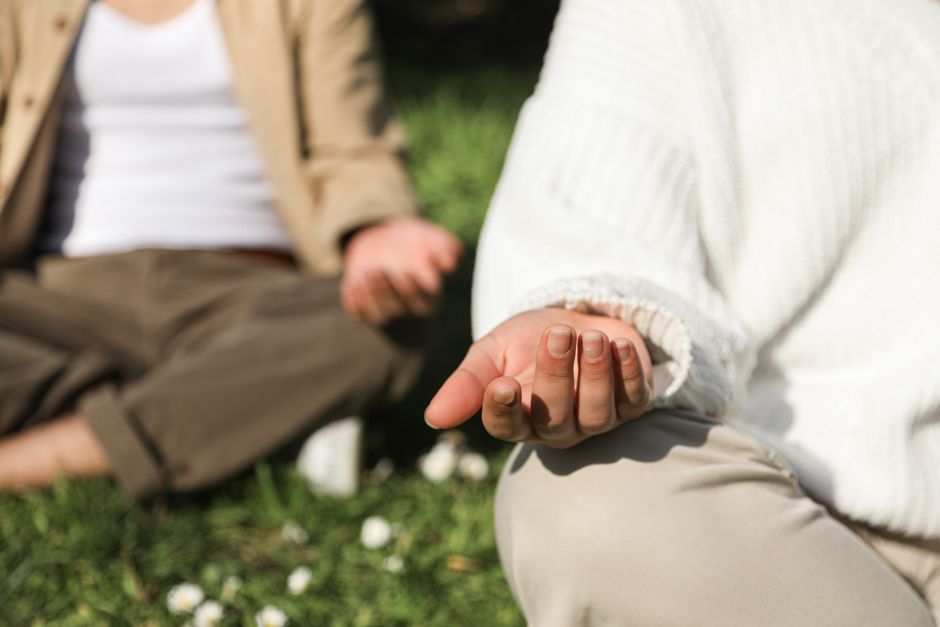
Yes, meditation can help with anxiety. Research over the past two decades shows that regular meditation practice reduces anxiety symptoms for many people. The effects are modest but real — not a cure, but a useful tool. Some studies find it works as well as medication for mild to moderate anxiety. For severe anxiety, it works best alongside professional treatment, not instead of it.
What Does the Research Actually Say About Meditation for Anxiety?
The strongest evidence comes from a 2014 meta-analysis published in JAMA Internal Medicine. Researchers looked at 47 clinical trials involving over 3,500 people. They found that mindfulness meditation programs reduced anxiety symptoms by about 20 to 30 percent. That is roughly the same effect size as antidepressant medication in mild to moderate cases.
A more recent 2021 review in the journal Behaviour Research and Therapy confirmed these findings. The researchers analyzed 23 studies specifically on generalized anxiety disorder. They found that meditation-based therapies worked significantly better than no treatment. They worked about as well as cognitive behavioral therapy, which is the gold standard for anxiety treatment.
The American Psychological Association now lists mindfulness meditation as a recommended treatment for anxiety disorders. This is not fringe wellness advice. It is mainstream clinical practice.
But here is the honest part — meditation does not work for everyone. About 30 to 40 percent of people in these studies did not see meaningful improvement. Some people actually felt more anxious when they tried to meditate. That is real and worth acknowledging.
How Exactly Does Meditation Change the Anxious Brain?
Anxiety is not just in your head. It is in your brain’s wiring. The amygdala, a small almond-shaped structure, acts as your alarm system. When it detects a threat, it sends signals that trigger the fight-or-flight response. In people with anxiety, this alarm goes off too easily and stays on too long.
Brain imaging studies show that regular meditation shrinks the amygdala’s gray matter. A 2010 study from Harvard researchers found that eight weeks of mindfulness meditation reduced amygdala volume. Participants reported less stress and anxiety. The more the amygdala shrank, the more their anxiety dropped.
Meditation also strengthens the prefrontal cortex — the part of your brain that helps you reason and stay calm. It builds a stronger connection between the prefrontal cortex and the amygdala. This means your rational brain can quiet your alarm brain more effectively.
There is also evidence that meditation lowers cortisol levels. Cortisol is the primary stress hormone. Chronically high cortisol keeps your body in a state of alert. Meditation helps reset that system. A 2017 study in the journal Psychoneuroendocrinology found that experienced meditators had lower cortisol responses to stressful situations compared to non-meditators.
What Type of Meditation Works Best for Anxiety?
Not all meditation is the same. Different styles affect anxiety differently. Here is what the research shows about the most studied approaches:
Mindfulness meditation has the most evidence. This involves paying attention to the present moment without judgment. You notice your thoughts and feelings without getting caught up in them. The mindfulness-based stress reduction program, or MBSR, was developed by Jon Kabat-Zinn in the 1970s. It is the most studied meditation program in the world. Clinical trials consistently show it reduces anxiety.
Loving-kindness meditation focuses on sending goodwill to yourself and others. A 2015 study in the journal Emotion found that this practice reduced social anxiety. Participants who practiced for seven weeks reported less anxiety and more positive emotions when interacting with strangers.
Body scan meditation involves systematically moving your attention through different parts of your body. This helps you notice where anxiety lives physically — tight shoulders, a clenched jaw, shallow breathing. Learning to release that tension can interrupt the anxiety cycle.
Breath-focused meditation is the simplest form. You simply focus on the sensation of breathing. When your mind wanders, you bring it back. A 2019 study in the journal Frontiers in Psychology found that just five minutes of slow breathing reduced state anxiety in college students.
Here is a comparison of the main types:
| Type | How It Works | Best For |
|---|---|---|
| Mindfulness | Observing thoughts without judgment | General anxiety, rumination |
| Loving-kindness | Cultivating compassion for self and others | Social anxiety, self-criticism |
| Body scan | Releasing physical tension | Somatic anxiety, panic symptoms |
| Breath focus | Calming the nervous system | Acute anxiety, panic attacks |





How Much Meditation Do You Need to See Results for Anxiety?
The most common question people ask is how long they need to meditate. The honest answer is that more is better, but even small amounts help.
The standard MBSR program requires 45 minutes of meditation per day, six days a week, for eight weeks. That is a lot. Most people cannot sustain that. The good news is that shorter practices also work.
A 2018 study in the journal Behavioural Brain Research found that 13 minutes of daily meditation for eight weeks reduced anxiety and improved mood. Participants who meditated less than 10 minutes per day still saw benefits, though smaller ones.
The key is consistency, not duration. Five minutes every day is more effective than 45 minutes once a week. Your brain needs repeated practice to build new neural pathways. Sporadic meditation does not produce lasting changes.
Some people report feeling worse when they first start meditating. This is called the “backdraft effect.” When you sit still and become quiet, anxious thoughts that you have been avoiding can surface. This is uncomfortable but usually temporary. If it persists for more than a few weeks, talk to a therapist or try a different meditation style.
Here is a realistic starting plan based on the research:
- Start with 3 to 5 minutes per day. Set a timer. Do not try to do more.
- Use a guided meditation app for the first few weeks. The structure helps.
- Practice at the same time each day. Morning works well for most people.
- Do not judge whether it is working for at least four weeks. The benefits are cumulative.
- If you miss a day, just start again. Perfection is not the goal.
What Are the Common Misconceptions About Meditation for Anxiety?
There is a lot of bad information about meditation online. Some of it is harmless hype. Some of it is actively harmful.
Misconception: Meditation will stop your anxious thoughts. This is false. Meditation does not stop thoughts. It changes your relationship to them. You learn to observe thoughts without reacting to them. The thoughts still come. They just have less power over you.
Misconception: You need to clear your mind completely. This is not how meditation works. A completely empty mind is not the goal. The goal is to notice when your mind wanders and gently bring it back. That act of noticing and returning is the practice. If your mind is busy, you are doing it right.
Misconception: Meditation is a replacement for therapy or medication. This is dangerous advice. For mild anxiety, meditation may be enough on its own. For moderate to severe anxiety, it should be part of a broader treatment plan. The National Center for Complementary and Integrative Health states clearly that meditation should not replace conventional care for serious mental health conditions.
Misconception: All meditation is the same. As discussed above, different styles produce different effects. If one type does not work for you, try another. Some people find sitting meditation unbearable but respond well to walking meditation or yoga.
Misconception: Meditation works immediately. Some people feel calmer after a single session. That is a relaxation response, not a lasting change. The real benefits for anxiety take weeks or months of consistent practice. Do not expect a quick fix.
What to Avoid When Using Meditation for Anxiety
Meditation is generally safe, but there are things to watch out for. A 2020 study in the journal PLOS ONE surveyed meditators about negative experiences. About 25 percent reported unwanted effects, including increased anxiety, depersonalization, or re-experiencing trauma.
Avoid forcing yourself through intense discomfort. Some discomfort is normal — restlessness, boredom, mild frustration. But if you feel panicked, dissociated, or flooded with traumatic memories, stop. This is not a sign that you need to push harder. It is a sign to try a different approach or seek professional guidance.
Avoid using meditation to suppress emotions. The goal is not to push anxiety away. That backfires. The goal is to acknowledge anxiety and let it be there without fighting it. If you find yourself using meditation to avoid feelings, you are doing the opposite of what helps.
Avoid meditation retreats if you have severe anxiety or trauma. Intensive meditation can destabilize people with certain conditions. A 2017 study in the journal Mindfulness found that some participants in meditation retreats experienced worsening of anxiety and depression symptoms. Start with short, gentle practices at home.
Avoid believing that meditation alone will fix everything. Anxiety often has multiple causes — genetics, life circumstances, health issues, trauma. Meditation addresses some of these but not all. If your anxiety is significantly affecting your daily life, see a mental health professional. Meditation can be a complement to treatment, not a substitute.
Frequently Asked Questions
How long does it take for meditation to work for anxiety?
Most studies show noticeable improvement after 4 to 8 weeks of daily practice. Some people feel calmer immediately, but lasting brain changes take consistent effort over time.
Can meditation make anxiety worse?
Yes, for some people. About 25 percent of meditators report temporary increases in anxiety, especially when starting. This usually passes, but if it persists, stop and talk to a therapist.
What is the best meditation app for anxiety?
Headspace and Calm have the most clinical research supporting their effectiveness. Both offer structured programs specifically designed for anxiety that follow evidence-based protocols.
Should I stop taking anxiety medication if I meditate?
No. Never stop prescribed medication without talking to your doctor. Meditation can complement medication but should not replace it unless your healthcare provider advises otherwise.
