
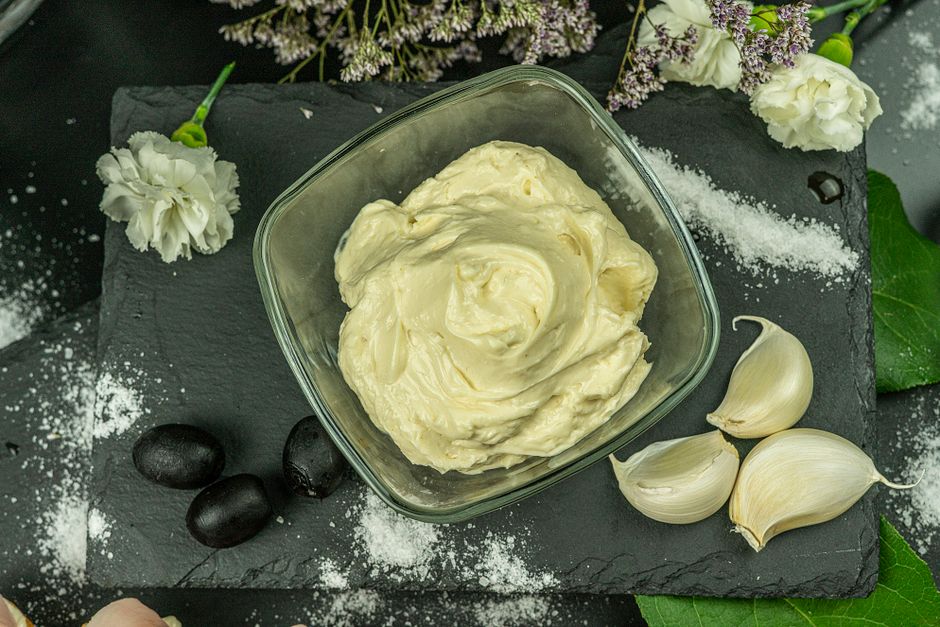
Mayonnaise is almost always gluten-free. Its classic ingredients are oil, egg yolk, vinegar or lemon juice, and seasonings — none of which contain gluten. The exceptions are rare but real: some flavored or “sandwich spread” versions add wheat-derived ingredients, and cross-contamination can happen in a shared kitchen. If you have celiac disease or a wheat allergy, reading the label matters more than the name on the jar.
Does Mayonnaise Have Gluten?
Standard mayonnaise does not contain gluten. The core recipe is an emulsion of oil and egg yolk, acidified with vinegar or lemon juice, and seasoned with salt, sugar, or mustard. Wheat, barley, rye, and their derivatives do not appear in that list.
Distilled vinegar deserves a specific note because it is one of the most misunderstood ingredients in gluten-free eating. Distillation separates volatile compounds from the starting material. Gluten proteins are not volatile, so they do not carry over into the distilled product. This is why distilled white vinegar is generally considered gluten-free even when it was made from wheat. The same logic applies to distilled spirits made from wheat or barley.
Malt vinegar is the exception. It is not distilled in the same way, and it is made from barley. If a mayonnaise lists malt vinegar, that is a gluten source. This matters most for people with celiac disease, who need to avoid even small amounts of gluten.
Which Mayonnaise Ingredients Can Contain Gluten?
Most mayonnaise problems come from added ingredients, not the base recipe. Plain mayonnaise is short and predictable. Flavored versions are where things get complicated.
Watch for these on a label:
- Malt vinegar — made from barley, not distilled, and a genuine gluten source.
- Modified food starch — usually corn or potato, but wheat starch can be used. In the US, wheat must be declared if it is present.
- Wheat starch — a direct wheat ingredient.
- Soy sauce or teriyaki — traditional soy sauce is brewed with wheat. This shows up in Asian-style mayo blends.
- Hydrolyzed wheat protein — a wheat derivative used in some savory spreads.
- Natural flavors — rarely a gluten source, but worth a call to the manufacturer if you are highly sensitive.
- Barley malt or malt extract — used for sweetness or flavor in some spreads.
Sandwich spreads are the biggest risk. These products are often labeled “mayonnaise” in casual speech but are not mayonnaise by standard of identity. They add starch, sugar, and other ingredients to stretch the product and change the texture. Some of those additives can be wheat-based.
How Do You Read a Mayonnaise Label for Gluten?
Start with the ingredient list, not the front of the jar. Front-of-package claims are marketing. The ingredient list is regulated.
In the United States, the Food Allergen Labeling and Consumer Protection Act requires wheat to be declared on the label when it is present in a food. Wheat is one of the eight major allergens covered by that law. This means you will see “wheat” in the ingredient list or in a “Contains: wheat” statement.
Here is the catch. Barley and rye are not on that major allergen list. A product can contain barley malt or malt vinegar without any allergen warning. That is why the ingredient list still matters even when there is no “Contains” statement.
For people with celiac disease, gluten-free certification is the most reliable shortcut. Third-party certifications require testing and ongoing verification. A product labeled “gluten-free” in the US must meet the FDA standard of less than 20 parts per million of gluten. That threshold was set based on the available evidence for what most people with celiac disease can tolerate without triggering intestinal damage.
If a product is not certified and you cannot tell whether an ingredient is gluten-free, contact the manufacturer. Many companies will confirm the gluten status of a specific product by phone or email.




Is Mayonnaise Safe for Celiac Disease and Gluten Sensitivity?
Plain mayonnaise is generally considered safe for people with celiac disease, provided it is not contaminated and does not contain a gluten ingredient. This is the position of major celiac advocacy organizations, and it aligns with the ingredient science.
Celiac disease is an autoimmune condition, not a sensitivity. Even trace amounts of gluten can trigger an immune response and damage the small intestine in people with the condition. That is why the 20 ppm threshold exists and why cross-contamination matters.
Non-celiac gluten sensitivity is a different situation, and the science here is less settled. There is no diagnostic biomarker for it, and some researchers question how much of the reaction is actually to gluten versus other components of wheat. If you have been diagnosed with non-celiac gluten sensitivity, you may tolerate small amounts of gluten that would harm someone with celiac disease. That is a conversation for your doctor, not a label decision.
Wheat allergy is a third category. It is an immune reaction to wheat proteins, and it can be severe. People with wheat allergy need to avoid wheat specifically, which is a slightly different question than avoiding gluten. Mayonnaise made with distilled wheat vinegar is generally not a concern for wheat allergy either, because the protein is removed during distillation.
Can Cross-Contamination Make Mayonnaise Unsafe?
Cross-contamination is a real concern in food service, though not usually in the jar. A sealed, commercially produced jar of mayonnaise is not a cross-contamination risk. The problem shows up in restaurants and shared kitchens.
Common scenarios:
- A deli knife used on wheat bread is wiped and then used to spread mayo on your gluten-free sandwich.
- A sandwich prep station where crumbs from regular bread land in the mayo container.
- A shared condiment jar where a knife that touched bread goes back into the jar.
- A fryer or grill where breaded items and gluten-free items share surfaces.
At home, the fix is simple. Use a clean utensil every time. Do not double-dip a knife that has touched bread. Keep a separate squeeze bottle or jar for the gluten-free household member if cross-contact is a frequent issue.
One clarification worth making: mayonnaise itself is not a food safety risk for gluten, but it is a perishable product. Once opened, it should be refrigerated. The acid in mayo slows bacterial growth, but it does not stop it. Leaving mayo out for long periods is a food safety issue separate from gluten.
What About Restaurant Mayonnaise and Fast Food?
Restaurant mayonnaise is usually the same commercial product you buy at the store, and it is usually gluten-free. The risk is what happens around it.
Fast food is a mixed picture. A plain mayo packet is generally fine. A “special sauce” or “secret sauce” is not the same thing. These sauces often combine mayonnaise with ketchup, relish, and other ingredients, and some versions include soy sauce, Worcestershire sauce, or malt vinegar. Worcestershire sauce traditionally contains barley malt vinegar and anchovies, which makes it a gluten source.
If you are eating out and the sauce is not a standard mayo packet, ask. A server may not know, but the kitchen often has an ingredient list. For people with celiac disease, the safest approach is to ask for plain mayonnaise or bring your own.
Does Mayonnaise Have Gluten? The Short Answer
Plain mayonnaise made from oil, egg, vinegar, and salt is gluten-free. Distilled vinegar is not a gluten concern. Malt vinegar is. Flavored spreads and sandwich sauces are where gluten hides.
For most people, the label on a standard jar of mayonnaise will confirm what the recipe already suggests. For people with celiac disease or wheat allergy, the extra step of checking for certification or calling the manufacturer is worth the effort. The ingredient list is your most reliable tool, and it takes about ten seconds to read.
Frequently Asked Questions
Is Hellmann’s mayonnaise gluten-free?
Hellmann’s Real Mayonnaise is generally considered gluten-free and does not list wheat, barley, or rye ingredients. Flavored varieties and sandwich spreads should be checked individually because their ingredient lists differ.
Does mayonnaise contain wheat?
Standard mayonnaise does not contain wheat. Some flavored spreads and sandwich sauces add wheat-based ingredients like modified wheat starch or soy sauce, which is why the ingredient list matters.
Is mayonnaise safe for celiac disease?
Plain mayonnaise is generally considered safe for celiac disease when it does not contain a gluten ingredient and is not cross-contaminated. Certified gluten-free products offer the most reliable assurance.
Is malt vinegar in mayonnaise a gluten problem?
Yes. Malt vinegar is made from barley and is not distilled in a way that removes gluten, so mayonnaise containing malt vinegar is not gluten-free. Distilled white vinegar is a different product and is generally considered safe.
