
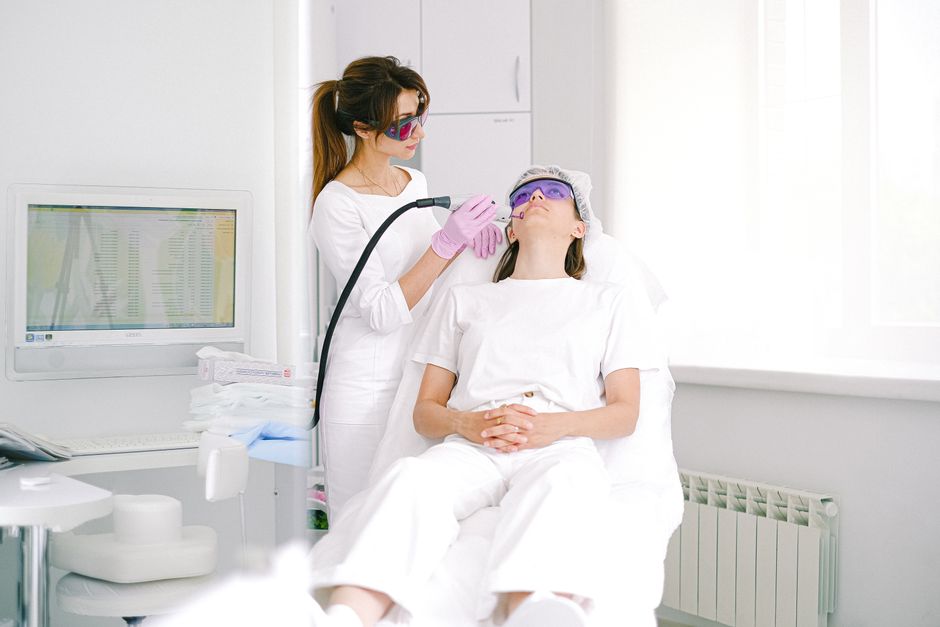
Low-level laser therapy does appear to help some people with inherited hair loss, but the effect is modest and depends on consistent, long-term use. The strongest evidence is for androgenetic alopecia — the common pattern baldness that affects both men and women — and it comes mainly from small to medium-sized trials. It is not a cure, it does not work for every type of hair loss, and results vary widely between individuals.
What is low-level laser therapy and how is it supposed to work?
Low-level laser therapy, often shortened to LLLT, uses devices that emit red or near-infrared light at low power. You will see it sold as laser combs, helmets, caps, and bands. The light does not cut or burn. The idea is that it delivers energy to cells in the scalp without damaging tissue.
The proposed mechanism centers on the hair follicle. Hair grows in cycles, and in pattern baldness the growth phase shortens while follicles shrink over time. Lab and animal studies suggest that light at certain wavelengths can stimulate activity in the mitochondria — the energy-producing structures inside cells — and may influence blood flow and inflammation around the follicle. Some research also points to effects on how long follicles stay in the growth phase.
Here is the honest part. Much of what we know about the mechanism comes from laboratory and animal work, not from humans. A plausible biological mechanism is not proof of clinical benefit. Whether these cellular effects translate into visibly thicker hair in a real person is a separate question, and that is what the human trials try to answer.
Does low-level laser therapy work for hair loss?
For pattern hair loss in men and women, the evidence leans positive but is not overwhelming. Several randomized controlled trials have reported increases in hair density or hair count compared with a sham device, and a number of systematic reviews have concluded that LLLT shows promise for androgenetic alopecia.
The size of the benefit matters. Across studies, the improvements tend to be modest — measured in small changes in hair count or density over months of use, not dramatic regrowth. Many trials are small, short, and vary in the device used, the wavelength, the treatment schedule, and how results were measured. That makes it hard to compare studies directly or predict exactly how much any one person will gain.
What the research does not support is the idea that LLLT regrows a full head of hair or reverses advanced baldness. People with significant existing loss should expect limited results. It also is not established as effective for other forms of hair loss, such as that caused by illness, medication, nutritional deficiency, or autoimmune conditions like alopecia areata.
One point that gets lost: hair loss has many causes, and the right first step is often figuring out which one you have. A treatment aimed at pattern baldness will not fix hair loss driven by an untreated thyroid problem, low iron, or a medication side effect.
What does the evidence actually show?
The clinical evidence is best described as encouraging but limited. Multiple reviews of the published trials have found that LLLT performs better than placebo devices for pattern hair loss, with a good safety profile in the studies conducted so far. That is a fair summary of where the science sits.
Several caveats keep this from being a settled answer:
- Many trials are small and funded or supported by device manufacturers, which raises the risk of bias.
- Devices differ enormously — wavelength, power, number of diodes, and how often you use them — so results from one device do not automatically apply to another.
- Follow-up periods are often short, so we know less about whether benefits hold up over years.
- Hair loss treatments in general tend to require ongoing use; stopping usually means losing gains.
Some clinicians recommend LLLT as an add-on to established treatments rather than a replacement. That reflects common practice more than a strong head-to-head evidence base. We do not have large, high-quality trials directly comparing LLLT against the mainstay treatments for pattern baldness, so claims that it works “as well as” or “better than” them are not well supported.
How does it compare with other hair loss treatments?
LLLT sits alongside two better-studied options for pattern hair loss: minoxidil, a topical or oral medication, and finasteride, an oral prescription for men. Both have larger and longer bodies of evidence behind them than LLLT does. That does not make LLLT useless — it makes it less proven.
The table below compares the general picture. It describes typical evidence and use, not a personal recommendation.
| Approach | Evidence strength | Typical use | Main notes |
|---|---|---|---|
| Minoxidil | Strong, long-standing | Topical daily; oral by prescription | Well studied; needs ongoing use; side effects possible |
| Finasteride | Strong for men | Oral prescription | Not for women of childbearing age; sexual side effects possible |
| Low-level laser therapy | Modest, mixed quality | Home devices used several times a week | Generally well tolerated; results modest and variable |
| Hair transplant | Established surgical option | Procedure for suitable candidates | Permanent relocation of follicles; cost and surgery risks |
These options are not mutually exclusive, and many people combine approaches. Any decision about medication or surgery belongs with a clinician who can assess your specific situation.
Is low-level laser therapy safe?
In the trials conducted so far, LLLT has generally been well tolerated. Reported side effects are usually mild and temporary — scalp irritation, redness, itching, or a feeling of warmth. Serious adverse events have been uncommon in the published research.
That said, “generally safe in short trials” is not the same as “proven safe for everyone over the long term.” The long-term safety data are limited. People with certain conditions, or who are pregnant, should talk to a clinician before using a device, because these groups are often underrepresented in the trials. If you have a photosensitivity condition or are taking a medication that makes your skin sensitive to light, that is worth raising with a doctor first.
Be careful with the wider market. Many devices are sold with bold claims and little regulatory scrutiny, and some products labeled “laser” may not deliver the light parameters used in the studies. Buying a device that matches the type tested in research is not guaranteed to be easy.
What should you realistically expect?
Expect modest results at best, and expect to wait. Hair grows slowly, and trials typically run for several months before changes are measured. You will not see a difference in a week or two. Consistent use matters — the benefits in studies came from people using the devices on a regular schedule, and skipping sessions likely reduces results.
Set your expectations around stabilization and modest thickening rather than regrowth. If you have early thinning, that is a more realistic scenario for any benefit than advanced baldness. If your hair loss is not pattern-related, LLLT is unlikely to be the answer.
And keep the bigger picture in view. Hair loss can be distressing, and that makes the market for quick fixes strong. The most useful step is often a proper evaluation to identify the cause, followed by a plan built on the treatments with the strongest evidence. LLLT can be part of that conversation, but it should not be the whole of it.
Frequently Asked Questions
Does low-level laser therapy really regrow hair?
Studies show modest increases in hair density or count in some people with pattern hair loss, not full regrowth. Results are variable and typically small.
How long does it take to see results from laser therapy for hair?
Trials usually measure changes over several months, so any benefit takes time and consistent use. There is no reliable timeline that applies to everyone.
Can I use a laser hair device at home?
Yes, many LLLT devices are sold for home use, and they have generally been well tolerated in trials. Discuss it with a clinician first if you are pregnant or have a light-sensitive skin condition.
Does low-level laser therapy work for all types of hair loss?
No. The evidence is mainly for pattern baldness, and it is not established for hair loss caused by illness, medication, or autoimmune conditions.
