
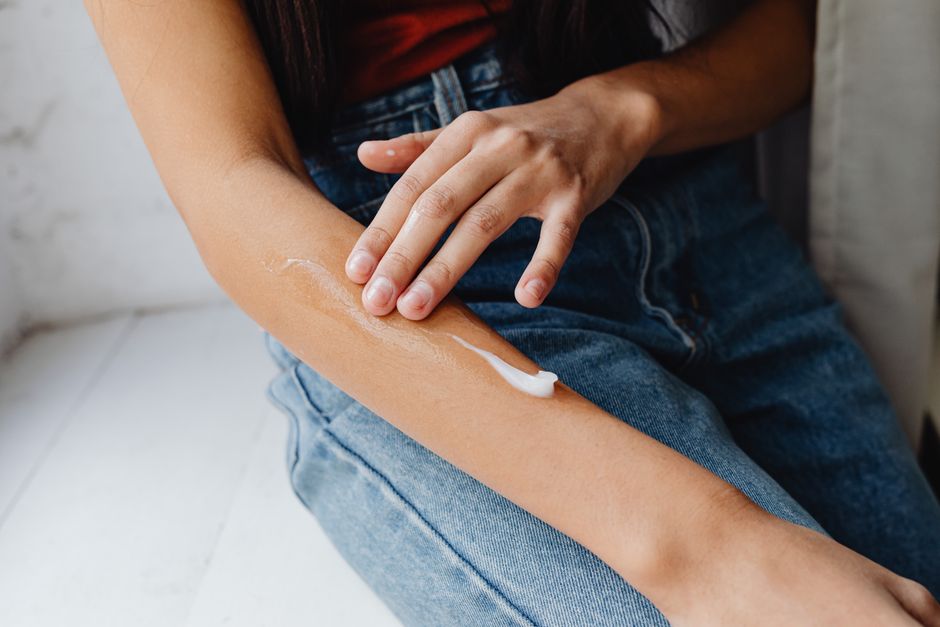
Lotion helps your skin when it replaces what your skin has lost and holds in water. It can hurt your skin when it contains ingredients your skin reacts to, or when you use it to treat a condition that needs actual medical care. Most people get real benefit from a plain moisturizer and real problems from fragranced, alcohol-heavy, or irritant-laden products.
What Does Lotion Actually Do to Your Skin?
Your skin has an outer layer called the stratum corneum. Think of it as a brick wall. The “bricks” are flattened skin cells, and the “mortar” is a mix of fats — ceramides, cholesterol, and fatty acids — that seal the gaps between them.
That seal keeps water inside your body and keeps irritants and microbes out. When the mortar breaks down, water escapes. Your skin feels tight, rough, and itchy. This is called transepidermal water loss, and it is the core problem most lotions are designed to address.
A good lotion does two things. It adds water-attracting ingredients called humectants, like glycerin, that pull water into the outer layer. It also adds occlusives and emollients — petrolatum, dimethicone, plant oils, fatty alcohols — that slow water from escaping. Some formulas include ceramides and other fats that can help rebuild the mortar itself.
That is a mechanical and chemical job, not a marketing one. A $4 tub of petrolatum-based cream and a $90 jar of luxury lotion can work through the same basic mechanisms. Price does not determine whether a moisturizer functions.
Does Lotion Actually Help Dry Skin?
Yes, for ordinary dry skin. Moisturizers are one of the most studied categories in dermatology, and the evidence consistently shows they reduce water loss, improve skin hydration, and reduce the roughness and tightness people associate with dryness.
What lotion does not do is “repair” skin in a permanent sense. It is not a treatment that fixes an underlying defect. It is maintenance. Stop using it and your skin returns to whatever state it was in before, usually within days.
There is a useful distinction here that gets lost in marketing. Dry skin — medically called xerosis — is a lack of water and oil in the outer layer. It is not the same as dehydrated skin, which is not a recognized medical diagnosis, or “aging skin,” which involves structural changes lotion cannot reverse.
If your skin is dry because of cold weather, low humidity, frequent hot showers, or harsh soap, a plain moisturizer applied within a few minutes of bathing will help. That timing matters because it traps water that is already on the skin.
How Can Lotion Hurt Your Skin?
Lotion causes problems in three main ways: irritation, allergy, and masking.
Irritation is the most common. Ingredients like fragrance, essential oils, alcohol, and some preservatives can strip or inflame the skin, especially on the face and hands. If your skin stings or burns when you apply a product, that is not “it working.” That is irritation.
Allergic contact dermatitis is different. It is an immune reaction that can develop after repeated exposure to something you tolerated for years. Common culprits include fragrance mixes, certain preservatives, and some botanical extracts. Once sensitized, even tiny amounts can trigger a rash.
Masking is the subtler problem. If you keep moisturizing a rash that is actually eczema, psoriasis, or a fungal infection, you may temporarily soften the surface while the underlying condition continues. Some fungal infections can even worsen with heavy occlusive creams, because the fungus thrives in a warm, moist environment.
None of this means lotion is dangerous. It means the product matters, and so does what you are trying to treat.




Does Lotion Actually Help Your Skin Or Hurt It — Which Ingredients Matter?
The ingredient list tells you more than the front of the bottle. Here is how the main categories compare.
| Ingredient type | What it does | Watch out for |
|---|---|---|
| Humectants (glycerin, hyaluronic acid, urea) | Pull water into the outer layer | Can sting on cracked skin; need an occlusive on top in dry climates |
| Occlusives (petrolatum, dimethicone, mineral oil) | Slow water loss; strongest barrier protection | Can feel heavy or trap sweat; petrolatum is well tolerated by most people |
| Emollients (plant oils, fatty alcohols, lanolin) | Soften and smooth the surface | Lanolin and some oils can trigger allergy in sensitive people |
| Ceramides and cholesterol | Help rebuild the skin’s natural fats | Generally well tolerated; evidence for added benefit over plain moisturizers is mixed |
| Fragrance and essential oils | Smell | Leading cause of cosmetic contact allergy |
| Alcohol (denatured, SD alcohol) | Fast drying, light feel | Can be drying and irritating with frequent use |
If your skin is sensitive, the safest approach is a short ingredient list, no fragrance, and a product labeled for sensitive skin. “Unscented” and “fragrance-free” are not the same thing. Unscented products may contain masking fragrance to cover the smell of raw ingredients.
Should You Put Lotion on Your Face?
Yes, but the face needs a different formula than the body. Facial skin is thinner and has more oil glands. A heavy body cream can clog pores and cause breakouts in people prone to acne.
Facial moisturizers are usually lighter and labeled non-comedogenic, meaning the formula is less likely to block pores. That label is based on testing, though it is not a guarantee for every person.
The bigger issue is what you put on before or after. Applying moisturizer over a dirty face traps grime and oil. Applying it before sunscreen can dilute the sunscreen’s protection. The usual order is cleanser, any treatment product, moisturizer, then sunscreen in the morning.
One clarification worth knowing: moisturizer does not replace sunscreen, and sunscreen does not replace moisturizer. They do different jobs and both matter for skin health.
When Does Lotion Not Help?
Lotion will not fix a skin condition that needs treatment. If you have redness, scaling, itching, or a rash that has lasted more than a couple of weeks, or that keeps coming back, moisturizer alone is not the answer.
Conditions like eczema, psoriasis, seborrheic dermatitis, and fungal infections all involve different underlying processes. Moisturizing is often part of managing them — it is a standard part of eczema care, for example — but it is not a substitute for a diagnosis or for treatment a clinician would recommend.
Signs you should stop self-treating and see a clinician include:
- A rash that is spreading, blistering, or oozing
- Skin that is hot, painful, or swollen
- Signs of infection such as pus, yellow crusting, or fever
- A mole or spot that is changing in size, shape, or color
- Any skin problem that is not improving after a few weeks of gentle care
This is not about being cautious for its own sake. Some skin conditions look similar to each other and require different treatments. A fungal infection treated with a steroid cream can get worse. A bacterial infection treated with moisturizer can spread.
How Do You Choose a Lotion That Helps?
Start simple. For most people, a fragrance-free moisturizer with petrolatum, glycerin, or ceramides does the job. You do not need a long ingredient list or a high price tag.
Apply it within a few minutes of bathing, while skin is still slightly damp. That step does more than the specific brand you choose. For very dry skin, a thicker cream or ointment works better than a thin lotion, because it slows water loss more effectively.
If a product burns, stings, or causes redness, stop using it. That reaction is information, not a sign you need to push through. And if your skin is not improving with consistent, gentle moisturizing, that is a reason to get it looked at rather than to keep buying new products.
Frequently Asked Questions
Does lotion actually help your skin or hurt it?
For most people, a plain fragrance-free moisturizer helps by reducing water loss and improving hydration. It hurts when the formula contains irritants or allergens, or when it is used to treat a condition that needs medical care.
Is it bad to put lotion on your face every day?
Daily facial moisturizer is generally fine and often helpful, as long as the product is non-comedogenic and free of ingredients that irritate your skin. If you notice breakouts or stinging, the formula is likely the problem.
What is the difference between unscented and fragrance-free lotion?
Fragrance-free means no fragrance is added, while unscented means the product may contain a masking fragrance to hide the smell of other ingredients. People with sensitive skin or fragrance allergy should look for fragrance-free.
Can lotion make a rash worse?
Yes, if the rash is caused by a fungal infection or if you are reacting to an ingredient in the lotion. A rash that is spreading, painful, or not improving after a few weeks should be checked by a clinician.
