
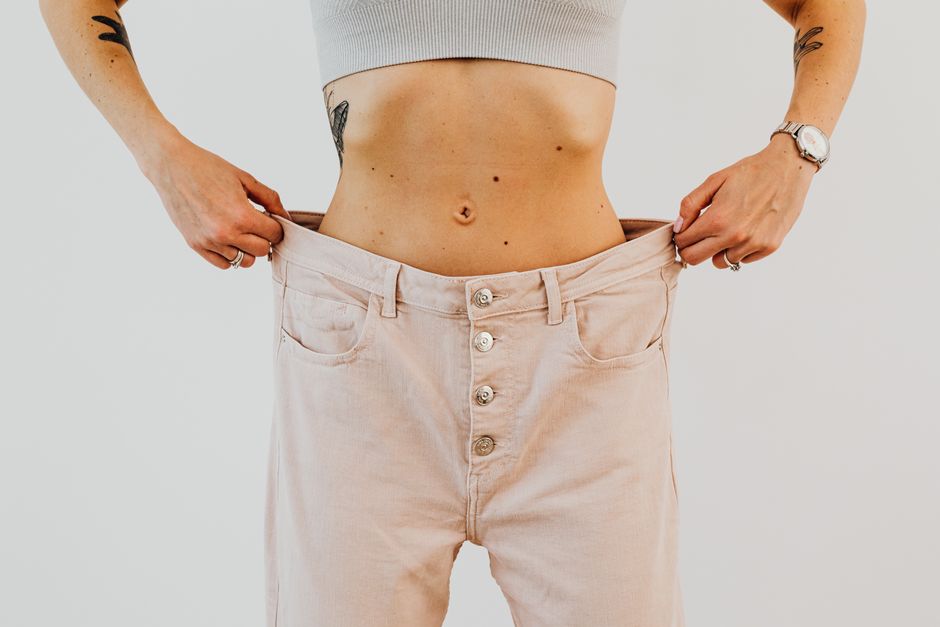
Weight loss does not grow new penile tissue. What it can do is reveal length that was already there but partly hidden by fat around the lower belly and pubic area. For men carrying extra weight, especially around the midsection, losing fat often makes the visible and usable portion of the penis look longer, even though the organ itself has not changed size.
This is a real effect, not a marketing trick. It is also frequently overstated online, where weight loss gets sold as a way to add inches that were never buried in the first place. Here is what the anatomy and the evidence actually support.
How Does Weight Gain Hide Part of the Penis?
The penis is anchored to the pubic bone by ligaments and connective tissue. The part you see outside the body is only a portion of its total length. The rest sits inside, attached to the pelvic bones and surrounded by the pubic fat pad.
When fat builds up in that pad, it can rise up around the base of the penis. The shaft does not shrink. It gets partly buried. Clinicians sometimes describe this as a “buried” or “hidden” penis, and it is common in men with significant central weight gain.
This matters because the visible length a man measures is not the same as his anatomical length. A thick layer of pubic fat can hide anywhere from a small amount to a substantial portion of the shaft. The tissue is still there. It is just covered.
There is also a vascular angle. Erections depend on blood flow, and excess weight is linked to poorer endothelial function — the ability of blood vessels to relax and open properly. That connection is well established in cardiovascular research. Whether it directly shortens an erection is more complicated, and the evidence is not clean enough to state as fact.
Does Losing Weight Increase Penile Length?
If you are overweight, losing fat can make your penis appear longer. It does not make it physically longer. The gain you see comes almost entirely from two things: less fat covering the base, and — in some men — improved erectile quality that makes the erection look fuller and more extended.
The first effect is mechanical and predictable. Reduce the fat pad, and more of the shaft becomes visible. This is why some men report noticeable changes after major weight loss, including after bariatric surgery. The change is real and measurable in terms of what is exposed.
The second effect is less certain. Weight loss is associated with better erectile function in many studies, and erectile quality can affect how long and firm the penis appears. But the size of that effect varies widely between men, and it depends on how much vascular damage already exists.
What weight loss will not do is add tissue to the penis itself. If you are already lean and at a healthy weight, losing more fat will not add length. There is nothing left to uncover.
What Actually Determines Penile Size?
Penile size is set by genetics and hormones during development. The main factors are your DNA and testosterone exposure in the womb and during puberty. After puberty ends, the penis does not grow further from diet, exercise, or weight change.
Adult penile length varies widely and normal ranges are broad. Research on measured erectile length has generally found averages in the range of roughly 5 to 6 inches, with a wide spread on both sides. A penis that falls outside that range is not automatically abnormal.
Several things can affect how large the penis appears or functions, separate from true size:
- Pubic fat pad thickness — more fat hides more of the shaft.
- Erection quality — a fuller erection appears longer than a partial one.
- Body proportions — a larger frame can make the same penis look smaller by comparison.
- Age — vascular and hormonal changes over time can affect erection firmness.
The fat pad is the one factor most directly under your control, and it is the one most tied to weight.
How Much Difference Can Weight Loss Really Make?
There is no reliable formula that predicts how much length a given amount of weight loss will reveal. The change depends on where your body stores fat, how thick your pubic fat pad is, and how much of the shaft is currently buried.
Men who carry most of their weight in the belly and pubic area tend to see the most visible change. Men who are already lean will see little or none, because there is little fat covering the base.
Be cautious with any source that promises a specific number of inches per pound lost. No clinical guideline supports that kind of calculation, and the individual variation is too large to make it meaningful.
One non-obvious point: the fat pad is not the same as belly fat overall. You can lose a good deal of visceral fat — the fat around your organs — without a dramatic change to the pubic pad. That is one reason two men who lose the same amount of weight can see very different results.
Can Weight Loss Improve Erection Quality?
Weight loss is linked to better erectile function in a large body of research. The relationship shows up across many studies, and it is strongest in men who are overweight or obese and who have erectile difficulties tied to poor blood flow.
The proposed mechanism is vascular. Excess weight is associated with inflammation, insulin resistance, and impaired endothelial function. Those factors can reduce blood flow throughout the body, including to the penis. Losing weight tends to improve these markers, and improved blood flow can support firmer erections.
This is where the evidence is more solid than for length. Erectile function is a recognized marker of vascular health, and the link between weight, cardiovascular risk, and erectile quality is well documented. That said, results vary. Men with significant vascular damage or other causes of erectile dysfunction may see limited improvement from weight loss alone.
A firmer erection can look longer than a partial one, so some of the perceived length gain may come from this effect rather than from the fat pad alone. The two often work together.
What Weight Loss Will Not Do
It helps to be clear about the limits, because the internet is full of claims that do not hold up.
Weight loss will not add penile tissue or change your genetic size. It will not work for men who are already lean. It will not produce the kind of dramatic gains that supplements, pumps, or “male enhancement” products advertise.
Products marketed for penis enlargement have very little credible evidence behind them. Some carry real risks. Vacuum devices and traction devices have been studied, but the evidence for lasting length gains is limited and the results are modest at best. Surgical options exist for specific medical conditions, such as a buried penis or Peyronie’s disease, but they are not cosmetic add-ons and carry real risks.
No supplement has been shown in controlled human trials to increase penile size. If a product claims otherwise, that claim is not supported by clinical evidence.
When to Talk to a Doctor
If you are concerned about the size or appearance of your penis, or about erectile function, a doctor can help sort out what is going on. Some men have a condition called a buried penis, where the fat pad or other tissue covers the shaft to a degree that causes problems with urination, hygiene, or sexual function. That is a medical issue, not a cosmetic one, and it has treatment options.
Erectile dysfunction can also be an early sign of cardiovascular disease. Because the penile arteries are smaller than the coronary arteries, reduced blood flow may show up there first. If you develop new or worsening erectile difficulties, especially with other risk factors like high blood pressure, diabetes, or high cholesterol, it is worth getting checked.
Weight loss is a reasonable goal for many reasons — heart health, blood sugar, joint health, and energy. A modest visible change in penile length may be one small side benefit for men carrying extra weight. It is not a reason on its own to pursue extreme dieting or unproven treatments.
Frequently Asked Questions
Does losing weight actually make your penis bigger?
It does not make the penis itself bigger, but it can make more of it visible by reducing the fat pad that covers the base. For men who are overweight, this can look like a real increase in length.
How much length can you gain from weight loss?
There is no reliable formula, and the amount varies widely from person to person. Men with more pubic fat tend to see more visible change, while lean men typically see little or none.
Can being overweight cause erectile dysfunction?
Excess weight is linked to poorer blood flow and is associated with a higher risk of erectile dysfunction. Weight loss is associated with improved erectile function in many studies, though results vary between men.
Do penis enlargement pills or pumps work?
No supplement has been shown in controlled human trials to increase penile size. Some devices have been studied with limited and modest results, and they carry risks.
