
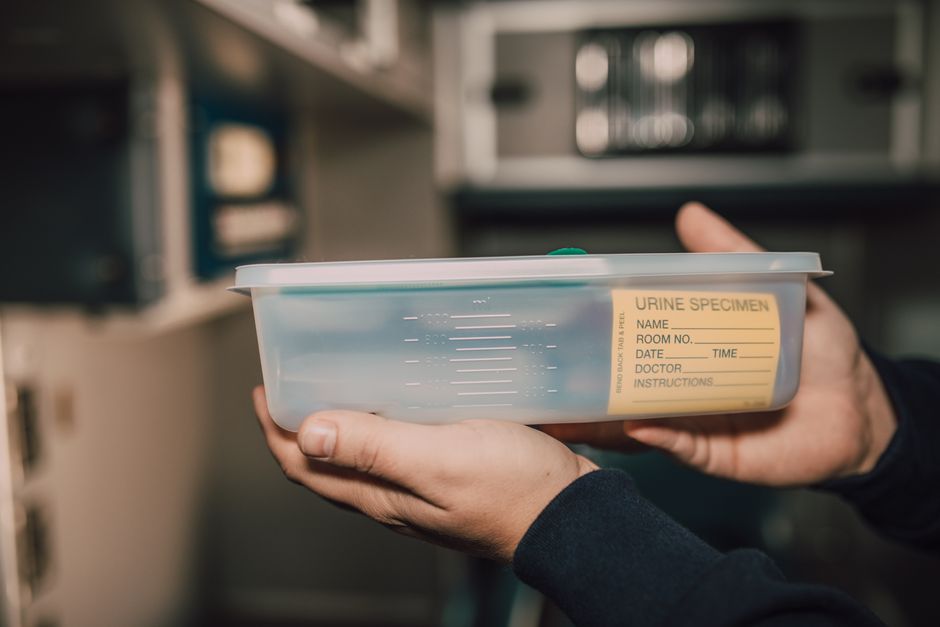
Yes. Legal THC shows up on a standard urine test, because the test does not detect whether a product was legal. It detects a metabolite your body makes after THC enters your system. That metabolite is the same whether the THC came from a state-licensed dispensary or anywhere else.
This is the single most important fact about cannabis urine testing, and it surprises a lot of people. Legality and detectability are unrelated. A urine drug screen looks for chemistry, not paperwork.
Here is how it actually works, how long the window lasts, and what can change your results.
Does Legal THC Show Up in a Urine Test?
It does, and the reason is simple. Standard urine drug screens do not test for THC itself. They test for THC-COOH, also called carboxy-THC. That is a metabolite your liver produces as it breaks down THC.
The test cannot tell where the THC came from. It cannot tell whether you used a legal product, an illegal one, or a hemp-derived product sold online. It only reports whether that metabolite is present above the cutoff.
Most labs use an initial immunoassay screen. If that comes back positive, a confirmatory test such as gas chromatography-mass spectrometry (GC-MS) is typically run. The confirmation step identifies the molecule itself, not its source.
One clarification worth knowing: federal law in the US distinguishes hemp from marijuana by delta-9 THC concentration on a dry weight basis. Hemp must contain no more than 0.3% delta-9 THC. That legal line has nothing to do with what a urine test measures. A product can be legally hemp and still contain enough THC to trigger a positive result.
How Long Does THC Stay in Your Urine?
For most occasional users, THC metabolites clear urine in roughly three to thirty days. For heavy, daily, long-term users, detection windows can stretch to several weeks or longer.
That range is wide because the answer depends on the person, not the product. The main factors are:
- Frequency of use. Daily use builds up more stored metabolite than occasional use.
- Body fat. THC is fat-soluble and accumulates in fat tissue. It releases slowly over time.
- Metabolism and age. Faster metabolism tends to clear metabolites sooner.
- Dose and potency. Higher doses and stronger products generally mean more metabolite to clear.
- Hydration and kidney function. These affect how quickly waste leaves the body.
Be cautious with any specific number you see online. Detection windows are estimates from population data, not a guarantee for any one person. Someone who uses daily for years may test positive well past thirty days. Someone who tried a single edible may clear in a few days.
There is also a detail many people miss. THC metabolites are stored in fat and released gradually. That slow release is why a heavy user can stay positive for a long time even after stopping completely.
Can CBD Products Cause a Positive THC Test?
They can. This is not a myth, and it is one of the most common ways people test positive without realizing it.
CBD itself does not convert to THC-COOH in any meaningful amount. The problem is what else is in the product. CBD is often extracted from hemp that contains small amounts of THC. If that THC is not fully removed, it can accumulate in the body with regular use.
The research here is limited but real. Some studies have found that people using certain CBD products daily showed detectable THC metabolite levels in urine, even when the label claimed the product was THC-free. The key phrase is “certain products.” Quality and testing vary widely across the CBD market.
Full-spectrum and broad-spectrum CBD products are more likely to contain trace THC than isolated CBD. Product labels are not always accurate. Independent testing has repeatedly found that some products contain more THC than the label states.
This does not mean every CBD user will test positive. It means the risk is real and depends heavily on the specific product and how much you use.





What About Delta-8, Delta-10, and Other Hemp-Derived THC?
These can also trigger a positive result on a standard urine test. Delta-8 THC and similar compounds are close chemical relatives of delta-9 THC, and the body processes them into metabolites that standard screens can detect.
Many of these products are sold legally under the hemp framework, which is why people assume they are safe for a drug test. They are not, from a testing standpoint. The legality of the product and its detectability are separate questions.
There is an important gap in the evidence here. Standard urine immunoassays are designed and validated primarily for delta-9 THC metabolites. How well they cross-react with delta-8 and other minor cannabinoid metabolites varies by test and lab. Some screens may detect them; others may not. No clinical guidance can tell you with certainty how a specific product will read on a specific test.
The conservative assumption is that any product containing THC, in any form, carries a risk of a positive result.
What Can Cause a False Positive on a THC Urine Test?
True false positives on modern THC immunoassays are uncommon, but they are documented. The confirmation step exists precisely because initial screens are not perfect.
Some substances and situations that have been reported in connection with THC screen interference include certain nonsteroidal anti-inflammatory drugs such as ibuprofen and naproxen, and some other medications. Reports vary, and most people taking these drugs do not test positive. The evidence is not strong enough to say these reliably cause false positives.
What is more reliable is the confirmation process. If an initial screen is positive, a confirmatory test using a different method is standard practice in workplace and legal testing. That step dramatically reduces the chance of a false positive being reported as final.
If you believe a result is wrong, the correct step is to request confirmation testing, not to try to flush your system. More on that below.
Do Detox Products and Home Remedies Work?
There is no reliable evidence that detox drinks, supplements, or home remedies reliably beat a urine test. This is where a lot of marketing lives and very little science does.
Drinking large amounts of water can dilute urine and lower metabolite concentration. Labs often flag dilute samples as invalid, and a dilute sample may be rejected or require a retest. This is not a reliable strategy, and it can backfire.
Products marketed as “detox” or “cleanse” kits have not been shown in controlled studies to reliably produce a negative result. Some may cause gastrointestinal upset or other side effects. None of them change how much metabolite is stored in your fat tissue.
The only dependable way to reduce THC metabolite levels is time without use. That is a slow process and not something a product can speed up in a meaningful, proven way.
What Should You Do If You Use Legal THC and Face a Drug Test?
Be honest with yourself about the risk first. If you use any THC product regularly, assume a standard urine test may detect it. Plan around that rather than around a product’s legal status.
If you have an upcoming test, the most reliable step is to stop using THC products and allow time. How much time depends on your history, and no one can give you a guaranteed number.
If a result comes back positive and you believe it is wrong, request a confirmatory test. That is the legitimate path, and it is standard in most testing programs.
If you use cannabis for a medical reason, talk with your clinician about how testing might affect your care and your job. Some workplaces and programs have specific policies, and those vary widely. There is no single national rule that covers every situation.
One more point worth being clear about: this article is informational. It is not legal or medical advice, and testing policies differ by employer, state, and program.
Frequently Asked Questions
Does legal THC show up on a urine test the same as illegal THC?
Yes. Urine tests detect THC metabolites, not the legal status or source of the product. A legal dispensary product and an illegal one produce the same metabolite.
How long does legal THC stay in your urine?
For occasional users, roughly three to thirty days is typical, while heavy daily users may test positive for several weeks or longer. Detection windows vary widely by person and cannot be predicted exactly.
Can CBD make you fail a drug test?
It can if the product contains trace THC, which some full-spectrum and broad-spectrum products do. CBD isolate is less likely to contain THC, but label accuracy varies across the market.
Will a detox drink help you pass a urine test?
No reliable evidence shows that detox drinks or supplements produce a negative result. Diluting urine with excess water can flag a sample as invalid, which may cause problems of its own.
