
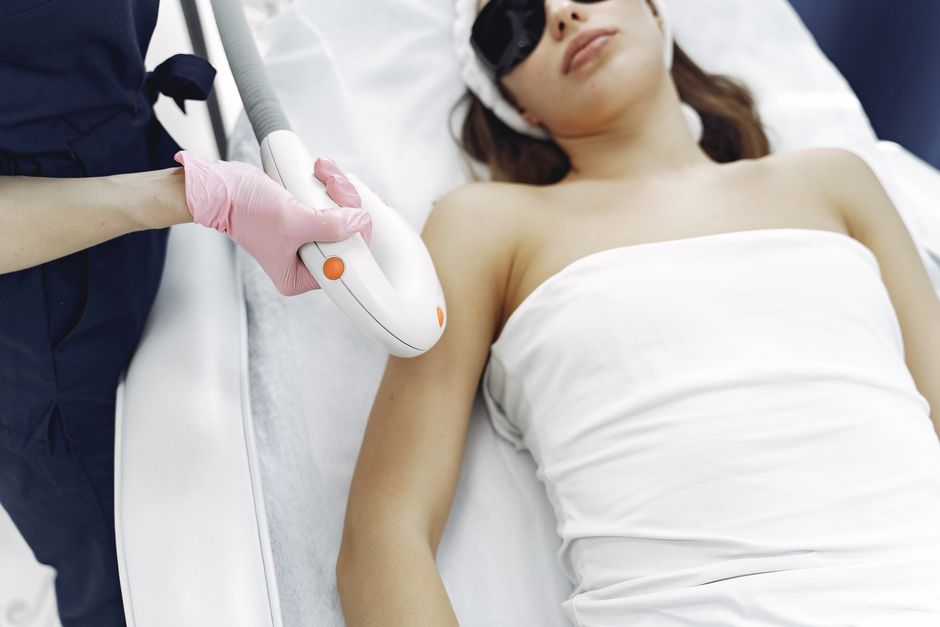
Laser hair removal does not remove scars. It targets hair follicles beneath the skin to reduce hair growth, and it has no proven ability to erase scar tissue. If you have scars in an area where you want hair removed, the laser can treat the hair around the scar, but the scar itself will remain. The real question is whether laser hair removal is safe to perform over scarred skin, and the answer depends on the type and age of the scar.
How Laser Hair Removal Actually Works
Laser hair removal uses concentrated light energy that is absorbed by melanin, the pigment in your hair. The light converts to heat, which damages the hair follicle enough to slow or stop future growth. The surrounding skin stays cool because the laser is calibrated to target dark pigment.
Scar tissue is made of collagen fibers, not hair follicles. It contains no pigment that the laser is designed to target. This is why the laser simply passes over scar tissue without changing its structure. The scar remains exactly as it was before treatment.
Can Laser Hair Removal Make Scars Worse?
In some cases, yes. The safety of treating scarred skin depends on the scar’s condition. Active acne scars that are still red or inflamed should not be treated. The laser’s heat can increase inflammation and potentially worsen the appearance.
Raised scars, such as keloids or hypertrophic scars, also require caution. Some research suggests laser treatment over these scars could stimulate more collagen production, making the scar larger. Other studies have found no change. The evidence is mixed, and most clinicians err on the side of caution.
Flat, mature, white or pale scars are generally considered safe to treat over. The skin in these areas has healed completely, and the laser will not disrupt the tissue. However, even with mature scars, the treated area may respond differently than normal skin. Some people experience more pain or redness in scarred areas.
What About Laser Scar Removal Treatments?
There is a separate category of lasers designed to treat scars. These are not hair removal lasers. They are called vascular lasers, fractional lasers, or pulsed dye lasers. They work by targeting blood vessels in red scars or by remodeling collagen in raised or depressed scars.
These treatments are performed by dermatologists or plastic surgeons, not by laser hair removal technicians. They require different wavelengths, different energy levels, and different recovery times. A laser hair removal device cannot achieve the same effect.
If your goal is to reduce the appearance of a scar, laser scar removal is a legitimate option. But it is a completely different procedure from laser hair removal. You would need to see a medical professional who specializes in scar treatment, not a hair removal clinic.





Types of Scars and How They Respond to Lasers
Scars are not all the same. Their structure determines how they respond to any treatment, including lasers.
- Atrophic scars are depressed or sunken, like most acne scars. They form when the skin loses collagen during healing.
- Hypertrophic scars are raised but stay within the boundary of the original wound.
- Keloid scars are raised and grow beyond the original wound boundary.
- Contracture scars tighten the skin, often after burns.
For atrophic scars, fractional lasers have shown benefit in some clinical studies. These lasers create tiny columns of injury in the skin, prompting new collagen production that fills in the depression. The evidence for this is moderate, and results vary widely between individuals.
For raised scars, pulsed dye lasers can reduce redness and flatten the scar in some cases. Again, results are inconsistent. No laser treatment guarantees scar removal. Most treatments improve appearance partially, not completely.
Does Shaving or Other Hair Removal Affect Scars?
If you cannot use laser hair removal on a scar, you still have options. Shaving is generally safe on mature scars. The blade moves across the surface and does not penetrate the tissue. Use a sharp blade and go slowly to avoid nicking the scar.
Waxing over scars is riskier. The wax pulls on the skin, which can irritate scar tissue or even tear it. This is especially true for raised or immature scars. Depilatory creams contain chemicals that can irritate sensitive scar tissue. Some people tolerate them well, but others develop redness or burning.
Electrolysis is another option. It uses a tiny needle to destroy individual hair follicles with heat or chemicals. It can be performed around scars, but it is more painful than laser and takes much longer for large areas.
When Can You Get Laser Hair Removal Around a Scar?
If you have a scar but want laser hair removal in that area, the safest approach is to wait until the scar is fully mature. A scar is considered mature when it has become pale, flat, and no longer painful or itchy. This process typically takes 12 to 18 months, but it can take longer for larger wounds.
During the first year, the scar is still remodeling. Collagen is being broken down and rebuilt. Treating this area with laser energy could interfere with that process. Most clinicians recommend waiting at least a year before any laser treatment over a scar.
You should also avoid laser hair removal over any wound that is still healing, any active acne lesion, or any area with an active skin infection. The laser can spread infection or delay healing.
What to Ask Before Your Appointment
Before booking a laser hair removal session, be upfront about your scars. Ask the technician or clinician these specific questions:
- Have you treated skin with scars like mine before?
- Is my scar mature enough to treat safely?
- What will you do differently over the scarred area?
- What should I expect in terms of pain and healing over the scar?
A reputable clinic will not dismiss your concerns. If they tell you the laser will remove your scars, that is a red flag. Laser hair removal does not remove scars, and any clinic claiming otherwise is not giving you accurate information.
If your scar is in an area you want treated, the clinician may choose to lower the laser energy over the scar tissue. This reduces the risk of complications but also means the hair in that spot may not be permanently reduced. You may need more sessions in that area or accept that some hair will regrow.
Alternative Treatments for Scars
If scar appearance is your main concern, laser hair removal will not help. Focus instead on treatments with actual evidence behind them.
Silicone gel sheets and silicone gels have the strongest evidence for improving scar appearance. They are applied daily for several months. They work by hydrating the scar and regulating collagen production. They are most effective on new scars but can also help older ones.
Pressure therapy is used for raised scars, especially after burns. Compression garments are worn for many hours a day over many months. The evidence is moderate, and compliance is difficult because the garments are uncomfortable.
Corticosteroid injections are a standard treatment for keloids and hypertrophic scars. They reduce inflammation and flatten the scar over time. They are administered by a dermatologist and typically require multiple sessions.
Surgical revision is an option for scars that are particularly bothersome. The scar is cut out and the wound is closed more carefully. This creates a new scar that may heal better, but it is still a scar. Surgery carries its own risks, including infection and poor healing.
Sunscreen and Scar Care
One of the most important things you can do for any scar is protect it from the sun. Sun exposure darkens scar tissue and makes it more noticeable. This effect can be permanent.
Use a broad-spectrum sunscreen with SPF 30 or higher on scarred areas every day, even when it is cloudy. Reapply every two hours if you are outdoors. This is especially important for new scars, which are more vulnerable to sun damage.
Moisturizing the scar also helps. Well-hydrated skin heals better and looks smoother. Plain moisturizers without fragrance are sufficient. You do not need expensive scar creams with exotic ingredients. The evidence for most of these products is weak.
Frequently Asked Questions
Can laser hair removal fade old scars?
No. Laser hair removal targets hair follicles and has no effect on scar tissue. The scar will remain unchanged after treatment.
Is it safe to do laser hair removal over a scar?
It can be safe on mature, flat, pale scars, but active, raised, or healing scars should not be treated. Ask a clinician to evaluate your specific scar before booking.
What laser removes scars?
Fractional lasers and pulsed dye lasers are used for scar treatment, but these are different devices used by dermatologists. They are not the same as laser hair removal machines.
How long after a scar forms can I get laser hair removal?
Most clinicians recommend waiting at least 12 to 18 months until the scar is fully mature. Treating a healing scar can interfere with the remodeling process.
