
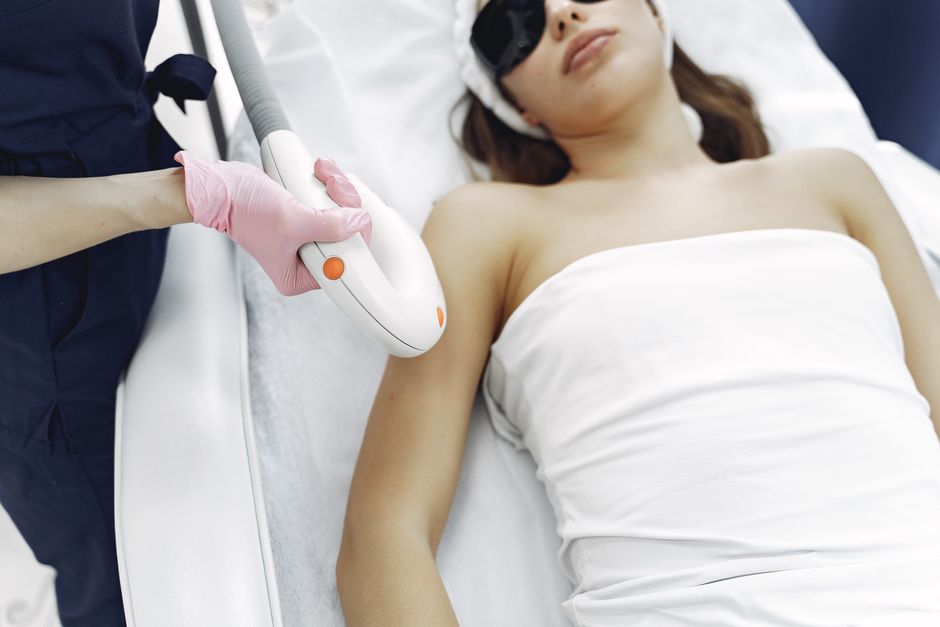
Laser hair removal can fade or damage a tattoo, and the risk is real enough that most laser manufacturers and trained operators advise against treating skin directly over tattooed areas. The laser doesn’t know hair from ink. It targets pigment, and tattoo ink is pigment sitting in the skin. When the beam reaches it, the ink can absorb the energy, which may lighten, blur, or scar the tattoo. The safest approach is to keep the laser off tattooed skin and treat only the surrounding areas.
Does Laser Hair Removal Fade Tattoos The Risks?
Yes, laser hair removal can fade a tattoo, and in some cases it can do more than fade it. The device is built to deliver energy to pigment in the skin. Tattoo ink is pigment too. If the laser passes over ink, that ink can absorb the light and heat up.
The result ranges from mild lightening to a patchy, blurred edge, and occasionally a burn or scar. How much damage occurs depends on the ink color, the laser type, the operator’s settings, and your skin. This is why reputable clinics ask about tattoos before treatment and mark a boundary around them.
One thing worth understanding: laser hair removal and laser tattoo removal are not the same procedure, even though both use light. They use different wavelengths, different pulse lengths, and different energy levels. A hair removal laser is tuned to reach the pigment in a hair follicle. A tattoo removal laser is tuned to shatter ink particles. When a hair removal laser hits ink, it is doing something it was never designed to do.
Why Does Laser Hair Removal Affect Tattoo Ink?
Hair removal lasers work on a principle called selective photothermolysis. The idea is to deliver light at a wavelength that melanin — the pigment in hair and skin — absorbs well, and to pulse it quickly enough that the pigment heats up and damages the hair follicle while nearby tissue is spared.
Tattoo ink is a competing target. Different ink colors absorb different wavelengths of light. Dark inks, especially black, absorb a broad range of wavelengths, which makes them particularly likely to interact with a hair removal laser. Some colored inks absorb other wavelengths.
When ink absorbs the laser energy, two things can happen. The pigment particles can break apart, which lightens the tattoo. Or the ink can heat rapidly and damage the surrounding skin, which can cause a burn, blister, or scar. The exact outcome is hard to predict because it depends on ink composition, which varies widely between tattoo artists and pigments.
Here is a point that surprises many people: some tattoo inks are not fully characterized, and their ingredients vary by brand and color. That makes it genuinely difficult for anyone — including your clinician — to predict exactly how a given tattoo will respond to laser energy. The uncertainty is part of the risk.
Which Tattoos Are Most at Risk?
Darker inks carry the highest risk with hair removal lasers because they absorb the most light across common wavelengths. Black and dark blue tattoos are the ones most often affected.
Several other factors raise the risk:
- Ink color. Black and dark inks absorb the most energy. Some colored inks also interact, depending on the wavelength used.
- Tattoo age. Fresh tattoos and older, faded tattoos may respond differently, though the evidence on how age changes risk is not strong.
- Location. A tattoo on the face, neck, underarms, or bikini line sits in areas people commonly want hair removed, which raises the chance the laser will be used near it.
- Skin tone. Higher melanin in the skin means the laser has more competing pigment to work around, which affects both safety and how the operator sets the device.
- Operator skill. Correct wavelength choice, spot size, and energy settings matter. An experienced operator will avoid ink entirely; an inexperienced one may not.
The location factor deserves emphasis. Many people seek hair removal precisely in the areas where tattoos are common — the underarms, the bikini line, the face. That overlap is where most accidental ink exposure happens.
What Happens If a Laser Hits a Tattoo?
The immediate sensation can be sharper than normal hair removal. Some people describe a sting or a snap over the tattooed area. Afterward, the skin may look red, raised, or blistered.
Over the following days and weeks, the tattoo itself may show changes. The ink can lighten in patches. Edges can blur. In more serious cases, the skin can blister, crust, or scar, and a scar through a tattoo permanently alters how it looks.
Not every pass over a tattoo causes visible damage. Some people have had laser hair removal near a tattoo with no obvious change. But the absence of a reaction in one session does not guarantee the next one will be safe. Energy settings, ink, and skin all interact, and the outcome is not fully predictable.
If you notice blistering, crusting, or a change in the tattoo after a session, stop treatment and have a clinician look at it. A burn that is not treated promptly can scar, and a scar is permanent.
Can You Get Laser Hair Removal If You Have Tattoos?
Often yes, with planning. The key is keeping the laser off the ink. Many clinics will treat skin around a tattoo and leave a margin of untreated skin at the tattoo’s edge. Some will ask you to confirm the tattoo’s location at consultation so they can map the treatment area.
What clinics generally will not do is fire the laser directly over tattooed skin. Most device manufacturers advise against it, and responsible operators follow that guidance. If a clinic offers to treat over a tattoo without discussion, that is a reason to ask questions or seek a second opinion.
There are practical limits. A tattoo in the middle of a treatment area — say, the center of the underarm — can make it hard to remove all the hair without touching ink. In that case, some people choose to accept incomplete hair removal in that spot, or to explore other hair removal methods for that area.
What Are the Alternatives If You Have a Tattoo?
If laser hair removal is not a good fit because of a tattoo, several other options exist. Each has tradeoffs.
- Shaving. Safe over tattoos and inexpensive. It is temporary and can cause irritation for some people.
- Waxing or sugaring. Also safe over tattoos, though it can be uncomfortable and may irritate sensitive skin. It does not damage ink.
- Depilatory creams. Chemical hair removers dissolve hair at the surface. They can irritate skin, especially over a tattoo, so test a small area first.
- Electrolysis. This uses a fine probe inserted into each hair follicle rather than light, so it does not target ink the way a laser does. It is slower and works hair by hair, but it can be an option for small areas. A trained electrologist should still be told about any tattoo in the area.
- Intense pulsed light (IPL). IPL also targets pigment and carries similar risks over tattoos. It is not a safe workaround for tattooed skin.
One clarification that gets lost: electrolysis is sometimes described as “permanent” hair removal, and it is the only method the FDA recognizes as permanent hair removal. Laser hair removal is recognized as permanent hair reduction. That distinction matters if you are weighing options and want to understand what each method actually promises.
What Should You Ask Before Treatment?
A short conversation before your first session can prevent most tattoo problems. Ask directly whether the clinic has a policy on tattoos and how they mark treatment boundaries.
Questions worth asking:
- Will you avoid my tattoo entirely, and how do you mark the boundary?
- What device and wavelength will you use, and why is it right for my skin and hair?
- What is your training and experience with clients who have tattoos?
- What should I do if I notice a change in my tattoo after a session?
Also tell the operator about any tattoo, even a small or old one, in or near the treatment area. A tattoo you have forgotten about — a small symbol on the ankle, a faded mark on the neck — can still absorb laser energy if the beam reaches it.
The bottom line is straightforward. Laser hair removal can fade a tattoo, and the risk is highest with dark ink and treatment directly over the tattoo. Keeping the laser off tattooed skin is the simplest way to protect both your tattoo and your skin.
Frequently Asked Questions
Can laser hair removal ruin a tattoo?
It can fade, blur, or scar a tattoo if the laser passes over the ink. Most clinics avoid treating directly over tattoos for this reason.
Does laser hair removal remove tattoo ink?
It can lighten ink, but it is not a tattoo removal treatment. Tattoo removal uses different lasers, wavelengths, and settings designed specifically to break up ink.
Can I get laser hair removal if I have a tattoo nearby?
Often yes, as long as the laser stays off the tattooed skin. Many clinics treat around the tattoo and leave a margin of untreated skin at its edge.
Is electrolysis safer than laser for tattooed skin?
Electrolysis uses a probe rather than light, so it does not target ink the way a laser does. It is slower and works hair by hair, but it can be an option for small areas near a tattoo.
