
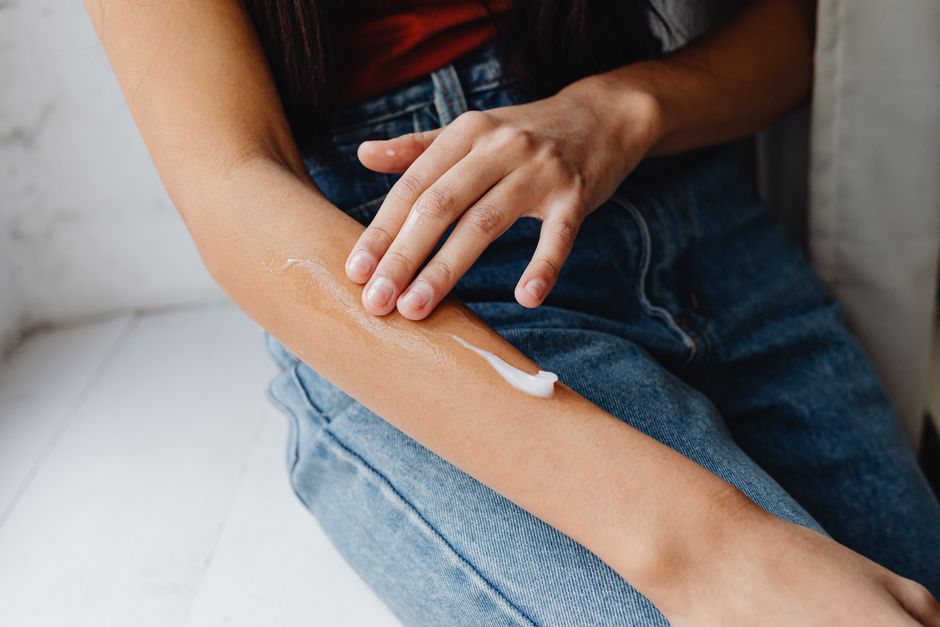
Hydrocortisone does help eczema for most people who use it correctly. It is a topical corticosteroid that reduces the inflammation driving itch and redness in atopic dermatitis, and it is one of the most studied treatments in skin care. The catch is not whether it works. The catch is that many people use too little, stop too soon, or avoid it entirely because of fears that the evidence does not support.
Eczema, most often atopic dermatitis, is a chronic condition where the skin barrier is weakened and the immune system overreacts to irritants and allergens. That reaction produces inflammation, and inflammation produces the itch-scratch cycle that damages skin further. Hydrocortisone interrupts that cycle by calming the immune response in the skin. Understanding how it works, which strength to use, and what the real risks are makes the difference between relief and frustration.
How Does Hydrocortisone Work on Eczema?
Hydrocortisone is a corticosteroid. Applied to the skin, it binds to receptors inside skin cells and signals them to dial down the production of inflammatory chemicals. This reduces redness, swelling, and itch. It does not cure eczema or fix the underlying barrier problem. It controls the flare.
The skin barrier in atopic dermatitis is often leaky. Filaggrin, a protein that helps hold the outer skin layer together, is reduced in many people with eczema, and that allows moisture to escape and irritants to get in. When the immune system detects those irritants, it launches an inflammatory response. Hydrocortisone dampens that response but leaves the barrier issue untouched. This is why moisturizers and barrier repair matter alongside any steroid.
One clarification worth knowing: hydrocortisone is a steroid in the medical sense, meaning a corticosteroid drug. It is not an anabolic steroid. The two share a chemical family but have completely different effects and risks. Confusing them is behind a lot of unnecessary fear.
What Strength of Hydrocortisone Is Used for Eczema?
Topical corticosteroids are grouped by potency, from mild to very strong. Hydrocortisone sits at the mild end. In the United States, 1% hydrocortisone is available over the counter. Higher strengths, including 2.5% hydrocortisone, require a prescription.
Mild hydrocortisone is generally appropriate for mild eczema on sensitive areas such as the face, neck, and skin folds, and for children. Moderate to severe eczema, or eczema on thick skin like the palms and soles, often needs a stronger prescription steroid. Using a mild product on a stubborn flare on thick skin can lead to weeks of inadequate treatment, which fuels the belief that “steroids don’t work for me.”
Potency selection is a clinical judgment. It depends on the body site, the thickness of the skin there, the severity of the flare, and the person’s age. A dermatologist or pharmacist can match the strength to the situation. Using the right strength for a short period is generally safer and more effective than using a weak product indefinitely.
Why Do People Say Hydrocortisone Doesn’t Work?
Most reports of hydrocortisone failing come down to how it was used, not the drug itself. Three problems show up again and again.
- Using too little. People worried about steroids often apply a thin film that does not cover the inflamed area adequately. Under-dosing is common and undermines results.
- Stopping too soon. Eczema inflammation can persist after the visible redness fades. Stopping at the first sign of improvement can let the flare return within days.
- Using the wrong strength. A mild over-the-counter product applied to a severe flare on thick skin may not be enough, and the person concludes steroids are useless.
There is also a psychological trap. Steroid phobia is well documented in dermatology research. Surveys of patients and parents have found widespread worry about thinning skin, systemic effects, and addiction, often far out of proportion to the actual risk when topical steroids are used as directed. That fear leads to under-treatment, which leads to poorly controlled eczema, which leads to more scratching and more skin damage. The fear itself becomes part of the problem.
Is Hydrocortisone Safe for Eczema?
Topical hydrocortisone is generally safe when used as directed for short courses on appropriate areas. The most common side effects are mild and local: brief stinging or burning when applied, especially on broken skin.
More serious side effects are possible but uncommon with mild hydrocortisone used correctly. They include skin thinning, stretch marks, and changes in skin color. These are more associated with prolonged use of stronger steroids, use on thin-skinned areas like the face, and use under occlusion such as with a bandage or diaper. Systemic absorption, where enough steroid enters the bloodstream to affect the body, is rare with mild topical hydrocortisone but is a consideration with potent steroids used over large areas or for long periods.
The evidence position here is worth stating plainly. Short-term use of mild topical hydrocortisone is well established as safe and effective for mild eczema. Long-term continuous use of any topical steroid carries more risk, which is why clinicians generally favor using the lowest effective strength for the shortest time needed, then stepping down. For children and for use on the face, guidance is more conservative, and a clinician should be involved.
How Should Hydrocortisone Be Applied?
The standard approach is to apply a thin layer to the affected area, usually once or twice a day, and to use it only for the duration recommended on the label or by a clinician. Over-the-counter hydrocortisone is generally labeled for short-term use, typically no more than seven days without medical advice. Follow the product label and any instructions from your clinician.
A few practical points make a real difference. Apply to dry skin after bathing, when the skin is still slightly damp, then follow with a moisturizer on top. Moisturizer and steroid can be used together; applying moisturizer first or after does not meaningfully reduce the steroid’s effect, and keeping the skin moisturized supports the barrier. Wash hands after applying to avoid transferring steroid to the eyes or face.
For eczema that keeps returning, some clinicians recommend a proactive approach called weekend therapy, where a topical steroid is applied to previously affected areas a couple of days a week even when the skin looks clear. This is a clinical strategy, not a self-directed one, and it should be set up with a doctor. It reflects a shift in thinking: the goal is to prevent flares, not just chase them.
What Else Matters Beyond Hydrocortisone?
Hydrocortisone treats inflammation. It does not repair the skin barrier, and barrier repair is central to long-term eczema control. Daily moisturizing with a fragrance-free emollient is the backbone of eczema care and is supported by clinical guidelines. Moisturizers reduce dryness, improve the barrier, and can reduce the need for steroids over time.
Identifying and reducing triggers matters too. Common ones include harsh soaps, fragrances, wool, heat and sweat, and stress. For some people, allergens such as dust mites or certain foods play a role; food triggers are more common in young children with moderate to severe eczema and should be evaluated with a doctor rather than eliminated on guesswork.
When eczema does not respond to mild hydrocortisone, or covers large areas, or affects sleep and daily life, that is a signal to see a clinician. Prescription options include stronger topical steroids, topical calcineurin inhibitors, and newer non-steroid topicals. For severe cases, systemic treatments and biologics are available. The point is not that hydrocortisone is the only answer. It is that mild eczema often responds well to it, and persistent or severe eczema deserves a proper treatment plan rather than repeated failed attempts with an over-the-counter tube.
Frequently Asked Questions
Does hydrocortisone help eczema?
Yes. Topical hydrocortisone reduces the inflammation that causes eczema itch, redness, and swelling, and it is well established for mild eczema when used correctly. It controls flares but does not cure the underlying condition.
How long does hydrocortisone take to work on eczema?
Many people notice less itch and redness within a few days of starting treatment. Over-the-counter hydrocortisone is generally labeled for short-term use, typically no more than seven days without medical advice.
Can I use hydrocortisone on my face?
Mild hydrocortisone is sometimes used short-term on the face, but the facial skin is thin and absorbs more, so guidance is more conservative. Ask a clinician before using any steroid on the face, especially for more than a few days.
Is hydrocortisone safe for children with eczema?
Mild topical hydrocortisone is commonly used for eczema in children under clinician guidance, with attention to using the lowest effective strength for the shortest time. Dosing and duration for children should be set by a doctor rather than self-directed.
