
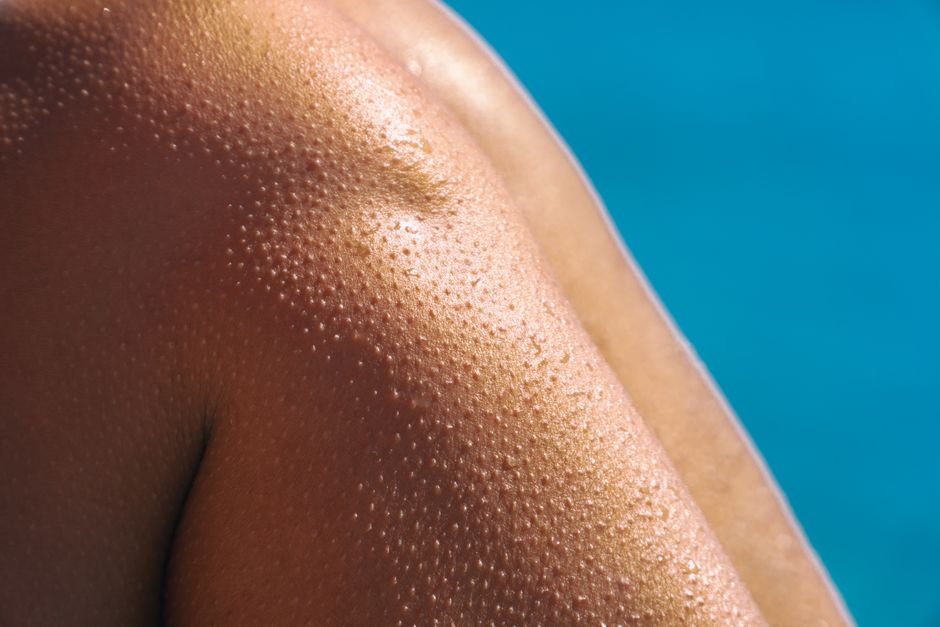
Yes, human skin can absorb water — but only into the outermost layer. The waterproof barrier deeper in your skin keeps water from passing into your bloodstream, muscles, or organs. That is why a long bath makes your fingers wrinkle but does not make you “hydrated” from the outside.
Does Human Skin Absorb Water?
Human skin absorbs water, but the amount and the depth are limited. Water moves into the stratum corneum, the thin outer layer of dead skin cells, and stops there. It does not travel into deeper tissue in any meaningful way.
The stratum corneum is built to hold a small amount of water and then resist taking in more. When you soak in a tub, those outer cells swell and soften. That is the absorption people notice. It is real, but it is surface-level.
This matters because a lot of products and routines are sold on the idea that skin can drink water the way your body drinks a glass of it. It cannot. The outer layer can take on water and lose it again, but that water never reaches your circulation in amounts that would affect hydration status.
How Does Skin Absorb Water and Why Does It Stop at the Surface?
Skin is a barrier first and a sponge second. Its main job is to keep water in your body and keep the outside world out.
The outermost layer, the stratum corneum, works like a brick wall. The “bricks” are flattened dead cells called corneocytes. The “mortar” between them is a mix of fats — ceramides, cholesterol, and fatty acids. This layered structure is often described as a brick-and-mortar model, and it explains most of what skin does with water.
Water can slip into the spaces between the bricks and into the corneocytes themselves. That is why skin swells and softens after a long soak. But the tight packing of the fats below blocks water from moving further inward.
Below the stratum corneum sit the living layers of the epidermis and then the dermis, which contains blood vessels. For water to reach your blood, it would have to cross all of that. Under normal conditions, it does not.
One detail that surprises people: the wrinkling you see on wet fingers is not the skin swelling. It is a nervous system response. Nerves signal blood vessels in the fingers to narrow, which pulls the skin into folds. People with certain nerve injuries do not get wrinkled fingers when soaked. So the wrinkle is not a sign of water absorption at all.
Why Doesn’t Soaking in Water Hydrate Your Body?
Water absorbed into the stratum corneum never reaches your bloodstream in any useful amount. Your body gets water by drinking it, and by eating foods that contain it. Skin is not a route for whole-body hydration.
This is easy to test in your own experience. A long swim does not stop you from being thirsty. If you stayed in water all day without drinking, you would still become dehydrated. The water around you is not the water your body uses.
The outer layer can hold a bit of water for a while, which is why skin feels plump right after a bath. But that water evaporates as the skin dries, and the effect fades. It is temporary surface moisture, not hydration in the physiological sense.
There is a real medical exception worth knowing about, but it is not about hydration. Certain medications can be absorbed through skin, which is the basis for patches used to deliver drugs. That works because those drugs are engineered to cross the barrier. Plain water is not.
Does Drinking Water Actually Help Dry Skin?
Drinking water supports normal skin function, but the link between how much you drink and how your skin looks is weaker than most people assume.
Your body tightly controls its water balance. If you are well hydrated, drinking extra water beyond your needs does not push more moisture into your skin. The body maintains its internal environment within a narrow range and does not simply route surplus water to the skin’s surface.
Severe dehydration can affect skin — it may look dull and lose elasticity. But for someone eating and drinking normally, adding more water on top of that is unlikely to change dry skin. The evidence that drinking extra water improves skin appearance in well-hydrated people is limited.
Dry skin usually has more to do with the barrier itself: how well the stratum corneum holds water and how much water evaporates from it. That is why moisturizers, which slow water loss, tend to help more than drinking more water does.
What Actually Helps Dry Skin?
Moisturizers work by slowing water loss from the skin and, in some cases, adding water-attracting ingredients. They do not “add water” to your body. They help the outer layer hold onto the water it already has.
Ingredients fall into a few broad groups:
- Humectants such as glycerin and hyaluronic acid draw water into the outer layer.
- Emollients such as oils and fatty substances soften and smooth the surface.
- Occlusives such as petrolatum form a film that reduces water loss.
Many products combine these. The occlusive step matters because it addresses the main problem, which is water escaping from the skin, not water failing to get in.
Other steps that can help include short, warm — not hot — showers, gentle cleansers, and applying moisturizer while skin is still slightly damp. These reduce how much the barrier is stripped and how much water evaporates afterward.
If dry skin is severe, persistent, or comes with cracking, bleeding, or itching that disrupts sleep, that is a reason to see a clinician. Dry skin can sometimes be a sign of an underlying condition, and it is worth having it looked at rather than assuming it is just the weather.
Can Skin Absorb Other Things Besides Water?
Skin absorbs some substances far more readily than water, and the list is not always a good thing.
Many chemicals can cross the skin barrier to some degree. This is why workplace safety rules exist for handling certain solvents and pesticides, and why some medications are designed as patches. The barrier is good, but it is not perfect, and it is not selective in the way people might hope.
What gets through depends on the substance. Small molecules, fat-soluble compounds, and things that damage the barrier tend to pass more easily. Water, despite being everywhere, is not one of the easier things to push through.
This is also why the “skin absorbs everything you put on it” claim is too simple. Some things get through, some do not, and the amount depends on the substance, the condition of your skin, and how long it stays on. The honest statement is that skin is a partial barrier, not a sealed one.
Common Myths About Skin and Water
A few claims about skin and water circulate widely and are not supported.
Myth: Soaking in water hydrates you. It does not. The water stays in the outer layer and does not reach your bloodstream in a meaningful amount.
Myth: Wrinkled fingers mean your skin soaked up water. The wrinkles come from a nerve-driven response, not from swelling. People with certain nerve damage do not get them.
Myth: Drinking extra water fixes dry skin. For someone who is already well hydrated, there is little evidence that drinking more changes dry skin. Dry skin is mostly about the barrier and water loss.
Myth: Skin is fully waterproof. It is water-resistant, not waterproof. It holds water in well under normal conditions, but it is not an absolute seal.
Getting these straight matters because it points you toward what actually helps. If dry skin is the problem, the answer usually lives in protecting the barrier, not in drinking more water or soaking longer.
Frequently Asked Questions
Does human skin absorb water?
Yes, but only into the outermost layer, called the stratum corneum. Water does not pass through into your bloodstream or deeper tissues in any meaningful amount.
Can you get hydrated by soaking in water?
No. Water absorbed by the outer skin layer does not reach your circulation in useful amounts, so soaking does not replace drinking water.
Why do fingers wrinkle in water if skin is not absorbing it?
The wrinkles come from a nerve response that narrows blood vessels in the fingers, not from swelling. People with certain nerve injuries do not develop them.
Does drinking more water help dry skin?
For someone who is already well hydrated, the evidence that extra water improves dry skin is limited. Dry skin is mainly about how well the skin barrier holds water and how much evaporates.
