
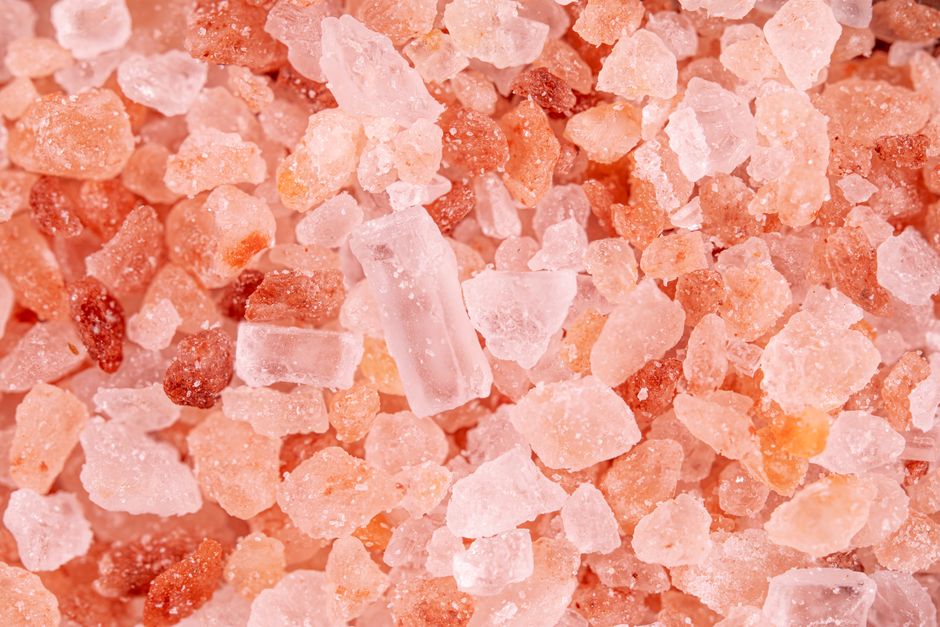
Himalayan pink salt contains almost no iodine. This is true of most rock salts, including the pink variety mined in Pakistan’s Khewra region. The pink color comes from trace minerals like iron oxide, not iodine. If you rely on Himalayan salt for iodine, you are not getting a meaningful amount.
Iodine matters because the body needs it to make thyroid hormones. These hormones control metabolism, growth, and brain development. A shortage can cause real problems, especially in pregnancy and childhood. Most people get iodine from iodized table salt, seafood, dairy, and eggs. Himalayan salt is not a reliable source.
Does Himalayan Salt Contain Iodine?
No. Himalayan pink salt is not a meaningful source of iodine.
Salt comes from two main places. Sea salt is made by evaporating seawater, which naturally holds some iodine. Rock salt, including Himalayan pink salt, is mined from ancient dried seabeds. Over millions of years, the iodine in those deposits largely washed away or broke down. What remains is mostly sodium chloride with small amounts of other minerals.
The trace minerals that give Himalayan salt its color include iron, calcium, magnesium, and potassium. Iodine is not among the minerals present at any useful level. Some lab analyses have detected iodine in Himalayan salt, but the amounts are extremely small. They are far too low to meet the body’s daily needs.
This is the key point. Even if a trace of iodine shows up in a lab test, “contains iodine” and “provides useful iodine” are not the same thing. The amount in Himalayan salt is not enough to prevent iodine deficiency.
Why Is Iodine Added to Regular Table Salt?
Iodized salt exists because iodine deficiency was once common in large parts of the world.
In the early 1900s, goiter — an enlarged thyroid — was widespread in regions far from the ocean. People there ate little seafood and no iodized salt. Public health officials added iodine to table salt to fix the problem. This program, called salt iodization, is one of the most successful public health measures in history.
Today, iodized salt is the main iodine source for most people in the United States. It is inexpensive and effective. The amount added is small but consistent, so a normal diet that includes iodized salt usually covers a person’s needs.
Himalayan salt is not iodized. It is sold as a natural, unprocessed product. That is part of its appeal to some buyers, but it also means it does not carry the iodine that fortified table salt does.
How Much Iodine Do You Actually Need?
The body needs only a small amount of iodine, but it needs it consistently.
The recommended daily allowance for adults is 150 micrograms. For pregnant women it rises to 220 micrograms, and for breastfeeding women it is 290 micrograms. These figures come from the National Institutes of Health and are widely accepted.
To put that in context, a single gram of iodized table salt contains roughly 45 micrograms of iodine. So a normal amount of iodized salt in cooking and at the table can supply a large share of what an adult needs each day.
Himalayan salt, by contrast, does not provide a reliable amount of iodine at all. You cannot count on it to meet the daily requirement. This matters most for people who have removed iodized salt from their diet and replaced it entirely with Himalayan or other specialty salts.





Can You Get Iodine From Other Foods?
Yes. Salt is not the only source, and for many people it is not the main one.
Iodine shows up naturally in several foods. The amounts vary depending on where the food comes from and how it was produced.
- Seafood and seaweed: Fish, shellfish, and sea vegetables are strong sources. Seaweed can vary widely — some types hold very high amounts.
- Dairy products: Milk, cheese, and yogurt contain iodine, partly from what cows eat and partly from processing.
- Eggs: Eggs are a moderate source, mostly in the yolk.
- Iodized salt: A dependable source for most households.
- Some breads: In the US, bread made with iodate dough conditioners can add iodine, though this varies.
Fruits and vegetables contain little iodine unless they were grown in iodine-rich soil. The iodine content of soil varies by region, so produce is not a reliable source.
For people who avoid dairy, seafood, and eggs — vegans, for example — iodized salt often becomes the main iodine source. If that salt is replaced with Himalayan salt, iodine intake can drop.
Does It Matter If You Use Himalayan Salt Instead of Iodized Salt?
It can matter, depending on the rest of your diet.
If you eat seafood, dairy, and eggs regularly, swapping iodized salt for Himalayan salt probably will not cause a problem. Your iodine needs are likely covered by food.
But if your diet is limited — no seafood, no dairy, no eggs — and you use only Himalayan salt, you may not get enough iodine. Over time, low iodine intake can lead to an enlarged thyroid or other thyroid problems. The body cannot make iodine on its own, so it must come from food or supplements.
This is not a reason to fear Himalayan salt. It is a reason to know where your iodine is coming from. Himalayan salt is fine for flavor and for the minerals it does contain. It is simply not an iodine source.
For people who want the taste or texture of Himalayan salt but also want iodine, one option is to use both. Cooking with iodized salt and finishing with Himalayan salt is a common approach. Another option is to make sure other iodine-rich foods are part of the diet.
Is There Any Reason to Choose Himalayan Salt for Iodine?
No. There is no evidence that Himalayan salt provides useful iodine.
Marketing for Himalayan salt often highlights its mineral content. It is true that it contains small amounts of iron, calcium, magnesium, and potassium. But these amounts are tiny. A person would need to eat an unrealistic amount of salt to get meaningful minerals from it — and that much salt would be harmful.
The same logic applies to iodine. Even if trace amounts are present, they are not enough to matter. No study has shown that Himalayan salt can meet a person’s iodine needs.
If you are concerned about iodine, the reliable steps are simple. Use iodized salt in cooking, include iodine-rich foods when you can, and talk to a doctor if you have thyroid symptoms or follow a restricted diet. A doctor can check iodine status if there is a reason to suspect a problem.
What Are the Signs of Iodine Deficiency?
Iodine deficiency can develop slowly and quietly.
The thyroid gland needs iodine to make its hormones. When iodine is low, the thyroid works harder and may enlarge. This swelling in the neck is called a goiter. Other signs can include fatigue, feeling cold, weight gain, and dry skin. In severe cases, low thyroid hormone can affect heart rate, mood, and thinking.
In pregnancy and early childhood, the stakes are higher. Iodine is needed for brain development. Severe deficiency during pregnancy can harm the baby’s growth and brain. This is why pregnant and breastfeeding women have higher iodine needs.
These symptoms are not specific to iodine. Fatigue and weight changes have many causes. A doctor can run tests to find out what is going on. Do not assume a symptom means iodine deficiency without checking.
How Can You Make Sure You Get Enough Iodine?
For most people, a few simple habits cover the need.
Use iodized salt for everyday cooking. It is the easiest and most consistent source for many households. If you prefer Himalayan salt for taste, use it alongside iodized salt rather than as a full replacement.
Include iodine-rich foods when your diet allows. Seafood, dairy, and eggs are the most dependable. Seaweed can be a strong source, but amounts vary so widely that it is hard to rely on for a precise intake.
If you follow a vegan diet, are pregnant or breastfeeding, or have a thyroid condition, talk to a healthcare provider. They can advise on whether your diet provides enough iodine or whether a supplement is appropriate. Iodine supplements should not be taken without guidance, because too much iodine can also cause thyroid problems.
The bottom line is straightforward. Himalayan salt is a flavorful salt with trace minerals. It is not an iodine source. If iodine matters to your health — and it does — get it from iodized salt, iodine-rich foods, or a doctor’s advice.
Frequently Asked Questions
Does Himalayan salt contain iodine?
Himalayan salt contains only trace amounts of iodine, far too little to meet the body’s needs. It is not a reliable iodine source.
Is Himalayan salt iodized?
No, Himalayan salt is not iodized. It is sold as a natural rock salt and does not have iodine added the way fortified table salt does.
Can I use Himalayan salt instead of iodized salt?
You can use it for flavor, but it will not provide iodine. If your diet lacks other iodine sources, using only Himalayan salt may leave you short.
How much iodine do adults need per day?
Adults need about 150 micrograms of iodine daily, while pregnant women need 220 micrograms and breastfeeding women need 290 micrograms. These amounts come from National Institutes of Health recommendations.
