
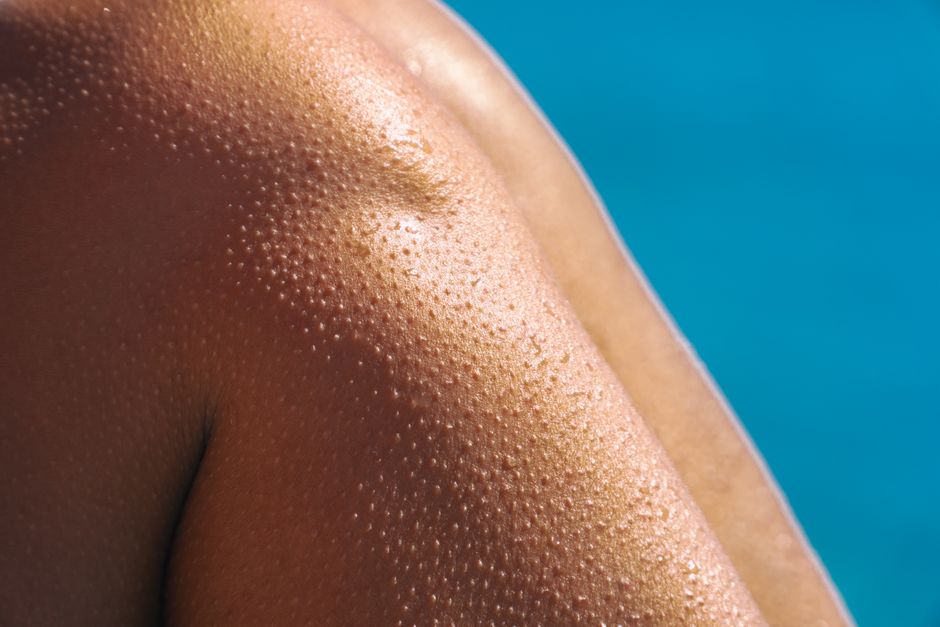
Heat rash does not spread from person to person, and it is not contagious. It also does not spread across the body like an infection. When a rash appears in new areas, it usually means more sweat ducts have become blocked, not that a germ is traveling. Heat rash is a skin reaction to trapped sweat, so it stays in the places where skin stays warm, damp, and covered.
That distinction matters because people often mistake heat rash for something contagious. A rash that keeps showing up in new spots can look like it is spreading. In reality, the trigger is still the same: blocked sweat ducts in areas where sweat cannot escape.
What Is Heat Rash and Why Does It Happen?
Heat rash happens when sweat gets trapped under the skin. Sweat glands release sweat through tiny ducts that open at the surface of the skin. When those ducts get blocked, sweat builds up underneath instead of evaporating. That trapped sweat irritates the surrounding tissue and produces the small bumps and redness people recognize as heat rash.
The medical name is miliaria. It is most common in hot, humid weather, but it can also happen in cooler conditions when someone is dressed too warmly or has a fever. Babies get it often because their sweat ducts are still developing. Adults get it too, especially in skin folds and anywhere clothing traps heat and moisture.
There are a few recognized forms. Miliaria crystallina produces clear, tiny blisters that sit near the surface. Miliaria rubra causes red, itchy bumps and involves deeper blockage. Miliaria pustulosa looks similar to miliaria rubra but includes small pus-filled bumps. A less common form, miliaria profunda, involves deeper blockage and firm, flesh-colored bumps. These are descriptions of how deep the blockage sits, not separate contagious conditions.
Does Heat Rash Spread on Your Body?
Heat rash can appear in new areas over time, but it does not spread the way an infection does. There is no organism moving from one patch of skin to another. Instead, the same conditions that blocked one set of sweat ducts can block more of them.
This is why a rash that starts on the neck might later show up on the chest or in the armpits. Those areas are warm, often covered, and prone to trapped moisture. The rash is not crawling outward. New bumps are forming where the environment supports them.
If a rash truly seems to be expanding quickly, or if it crosses from one part of the body to a completely unrelated area, that is a reason to consider other causes. Heat rash tends to stay in the zones where heat and moisture collect. A rash that behaves differently may not be heat rash at all.
Why Does Heat Rash Look Like It Is Spreading?
Several things make heat rash look more widespread than it is. The bumps are often clustered, so as a cluster grows, the affected area gets larger. New clusters can also form nearby. From the outside, that reads as spreading.
Scratching makes it worse. Rubbing or scratching irritates the skin and can cause redness to extend beyond the original bumps. That added redness is inflammation from the scratching, not the rash itself moving.
Another factor is that the cause is still present. If someone stays hot and sweaty, or keeps wearing the same tight clothing, new ducts keep getting blocked. Removing the trigger is what stops new bumps from forming. The rash does not need to be “stopped” from spreading the way an infection does — the conditions simply need to change.





How to Tell Heat Rash From Something Contagious
Heat rash is not the only thing that produces small red bumps, and some of those other causes are contagious. Telling them apart matters for what you do next.
- Heat rash: small bumps in warm, covered areas. Often itchy or prickly. Improves when the skin cools and dries.
- Fungal infections: often form a ring or a defined border and can be itchy. These can spread and can be passed to others.
- Viral rashes: frequently come with fever, fatigue, or other symptoms and may spread across the body.
- Contact reactions: appear where skin touched something specific, such as a new detergent or plant.
Heat rash rarely comes with fever or feeling unwell. If someone has a rash plus a fever, body aches, or feels sick, that points away from heat rash. A rash with a defined expanding border, or one that spreads to areas that were never hot or sweaty, also suggests another cause.
When the cause is unclear, a clinician can usually tell the difference by looking at the skin and asking a few questions. That is more reliable than guessing from a photo.
What Actually Helps Heat Rash Go Away
The core treatment is cooling and drying the skin. Heat rash fades on its own once sweating stops and the blocked ducts clear. Most cases resolve within a few days when the skin is kept cool and dry.
Practical steps that align with general clinical guidance include:
- Move to a cooler, less humid place.
- Wear loose, breathable clothing, and change out of sweaty clothes.
- Keep the affected skin clean and dry. Pat gently rather than rubbing.
- Avoid heavy creams and ointments, which can trap more moisture.
- Try not to scratch, since scratching worsens irritation and can lead to infection.
Cool compresses or a cool bath can ease itching. Some clinicians suggest calamine lotion for comfort, though it does not speed healing. For itching that is hard to tolerate, a pharmacist can advise on options. There is no evidence that any product makes heat rash clear faster than simply cooling the skin.
One caution worth knowing: heavy ointments and thick moisturizers are commonly used for many skin problems, but with heat rash they can make things worse by blocking sweat further. This is one case where less product is better.
When Heat Rash Needs Medical Attention
Most heat rash is minor and clears with cooling. Some situations call for a clinician’s input.
See a doctor if the bumps become painful, swell, or fill with pus, since that can signal a bacterial infection. Seek care if the rash does not improve after several days of keeping the skin cool and dry, or if it keeps coming back. A fever along with the rash is another reason to get it checked, because that suggests something other than heat rash.
Infants deserve extra care. Heat rash is common in babies, but a rash in a newborn, or a rash with fever, poor feeding, or unusual sleepiness, should be evaluated. No clinical guidelines recommend treating infant rashes with adult products, and some ingredients are not appropriate for young skin. When in doubt, ask a pediatric clinician rather than guessing.
How to Prevent Heat Rash From Coming Back
Prevention comes down to keeping sweat from getting trapped. Since heat rash is caused by blocked ducts, reducing heat and moisture is the whole strategy.
Choose light, loose fabrics that let air reach the skin. Cotton and moisture-wicking materials help. Take breaks from heat and humidity, and shower or rinse off after heavy sweating. Dry skin folds carefully, since these areas trap moisture. Avoid tight clothing and heavy bedding in warm conditions. For people prone to heat rash, these habits do more than any cream.
It also helps to know your own triggers. Some people get heat rash mainly during exercise, others during humid weather, and others when they overdress. Noticing the pattern makes prevention easier, because you can target the specific situation that blocks your sweat ducts.
Frequently Asked Questions
Does heat rash spread from person to person?
No, heat rash is not contagious and cannot be passed to another person. It is caused by blocked sweat ducts in your own skin, not by a germ.
Can heat rash spread to other parts of my body?
It can appear in new areas, but it does not spread like an infection. New bumps form where sweat stays trapped, so cooling and drying the skin stops them from developing.
How long does heat rash usually last?
Most cases clear within a few days once the skin is kept cool and dry. If it lasts longer or keeps returning, see a clinician.
When should I worry about heat rash?
Get it checked if the bumps become painful, swell, or fill with pus, or if you have a fever. These signs suggest infection or a different condition.
